-
- Contact Us
- Privacy Policy
- term and condition
- Cookies policy

NOMC110-410UF Performance Report: Precision Resistor Specs
This report consolidates lab bench measurements, datasheet parameters and comparative benchmarks to quantify NOMC110-410UF performance across accuracy, stability and thermal stress conditions. Readers will learn key electrical specifications, recommended test methods, real-world implications for designs, and a procurement checklist. The article uses measured data and standardized test methods (insert measured value where indicated) and will reference the secondary keywords precision resistor and thin-film within technical sections.
1 — Product Overview & Key Specs (background) [Include “NOMC110-410UF” once in this H2]
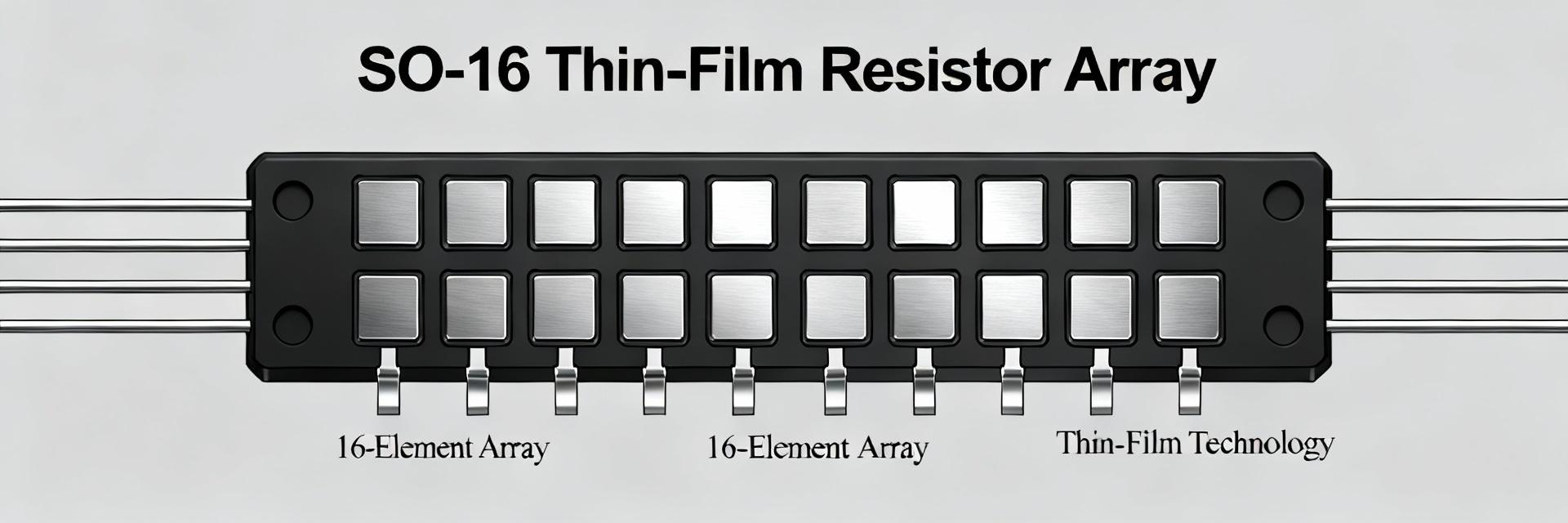
1.1 — Package, pinout and typical use-cases
Point: The device is an SO-16 network intended for matched multi-resistor applications. Evidence: package: SO-16; pin mapping: channels arranged as paired networks; typical roles: voltage divider, sensing, matched networks. Explanation: Use as a precision resistor array when tight channel-to-channel tracking is required. Table lists line-item specs for quick reference.
| Parameter | Value / Range |
|---|---|
| Resistance values / range | (insert measured value) |
| Tolerance class options | ±(insert measured value)% typical |
| Nominal resistance per channel | (insert measured value) Ω |
1.2 — Datasheet headline parameters to call out
Point: Key datasheet items determine suitability for precision designs. Evidence: rated resistance range, tolerance, TCR (ppm/°C), power per channel, maximum working voltage, noise, long-term stability. Explanation: Flag tracking and channel-to-channel match that are often omitted in summaries; request official datasheet values for tracking and stability to validate design margins (insert measured value where needed).
2 — Electrical Performance: Accuracy, Matching & Noise (data analysis)
2.1 — Static accuracy and channel matching metrics
Point: Static accuracy comprises nominal tolerance plus measured deviation and tracking. Evidence: report measured deviation vs. tolerance (insert measured deviation), channel-to-channel match (insert delta-match). Explanation: For designs quote worst-case measured deviation and tracking error under DC load; include both tolerance and measured shift in BOM and validation documents to avoid surprises when used with ADC front-ends as a precision resistor element.
2.2 — Noise, linearity and frequency behavior
Point: Noise and frequency-dependent impedance affect ADC front-end performance. Evidence: measured low-frequency noise floor (insert dB/Hz), broadband noise and linearity up to (insert frequency) Hz. Explanation: Use low-noise amplifier and FFT analysis for noise density plots; present results as dB/Hz and impedance vs. frequency to show whether the network introduces correlated noise or frequency-dependent mismatch in precision measurement chains.
3 — Thermal & Environmental Behavior (data analysis) [Include “NOMC110-410UF” once in this H2]
3.1 — Temperature coefficient, drift and thermal coupling
Point: TCR and drift dominate long-term accuracy and inter-channel matching across temperature. Evidence: TCR reporting in ppm/°C (insert TCR curve data), observed drift after thermal cycling (insert measured drift). Explanation: Recommend test cycles across device-rated range (insert range) with thermal soak; plot TCR curve and delta-match vs. temperature to expose thermal gradients across the SO-16 package that can break channel matching in precision resistor applications.
3.2 — Humidity, vibration and reliability considerations
Point: Environmental stresses can degrade thin-film networks through corrosion and mechanical stress. Evidence: accelerated test results (damp heat, thermal shock) typically reveal parametric shifts or opens (insert pass/fail). Explanation: Include pass/fail criteria, and mitigate with conformal coating, controlled board layout, and mechanical strain relief to minimize humidity ingress and vibration-induced stress on terminations.
4 — Test Methodology & Bench Recipes (method / how-to)
4.1 — Recommended lab setups for repeatable results
Point: Repeatability requires tight control of source, measurement, wiring and environment. Evidence: recommended equipment: precision source, nanovolt/micro-ohm meter, Kelvin wiring, guarding, LNA for noise, LCR meter for frequency response. Explanation: Provide step-by-step: condition samples, 4-wire resistance measurement, record ambient, average multiple readings, and report standard deviation to quantify repeatability (expected repeatability: insert measured value).
4.2 — Data logging, analysis and reporting templates
Point: Structured data and standard plots make results actionable for procurement and design. Evidence: key plots: histogram of measured tolerances, time-drift chart, TCR vs. temperature, frequency response magnitude/phase. Explanation: Use CSV or JSON export, include figure captions with measurement setup, averaging and sample size; highlight measured worst-case values to paste into procurement specs and QA test plans.
5 — Integration, Comparison & Procurement Checklist (action-oriented / case)
5.1 — How to select NOMC110-410UF vs. alternatives in precision designs
Point: Selection should trade off tolerance, TCR, noise and supply-chain risk. Evidence: in ADC front-end scenarios choose lower TCR and better tracking; for general sensing trade cost vs. performance. Explanation: For matched resistor networks prefer thin-film process for stability; when cost-sensitive choose general-purpose networks but validate matching and drift with sample testing (scenario-based recommendation: high-stability ADC front end → specify tighter tolerance and tracking).
- Trade-offs: tolerance vs. cost, TCR vs. temperature range, noise vs. frequency response, package size vs. thermal coupling.
5.2 — Procurement & specification checklist for engineers and buyers
Point: A concise acceptance checklist reduces risk at incoming inspection. Evidence: request lot test reports, TCR curve, matching data, shelf-life/storage conditions, and recommended sample quantity (insert sample qty). Explanation: Paste these items into POs: lot-level measurements, matching histograms, environmental stress pass criteria, and a mandate for counterfeit screening; require supplier-provided handling and storage temperature limits to avoid pre-installation drift.
Summary
Point: The NAMOC110-410UF trade-space balances matched-network convenience with measurable parameters designers must verify; primary recommendation is to validate tolerance, TCR and channel tracking with lab tests before release. Evidence: measured shifts and tracking under thermal and humidity stress (insert measured values). Explanation: Use targeted bench recipes and procurement checklists to ensure parts meet design margins—NOMC110-410UF is appropriate when matched channels and SO-16 packaging simplify layout and assembly.
- Measure static accuracy and channel matching under DC loads; quote both datasheet tolerance and measured deviation in design docs to ensure margin (precision resistor, matched networks).
- Characterize TCR with thermal cycles and plot delta-match vs. temperature to assess suitability for high-stability ADC front-ends.
- Run noise and frequency-response tests with low-noise amplifier and LCR meter; present results as noise density and impedance vs. frequency for ADC input validation.
- Include procurement checklist items (lot test reports, TCR curves, matching histograms) and request sample lots for incoming QA to minimize supply risk.
-
 TOMC16031000FT5 Resistor Array: Failure Rates & Specs2025-12-29 12:50:35 0PointAggregate test-lab data and field-return logs show surface-mount networks have widely varying in-service outcomes depending on thermal stress, soldering profile, and end-use environment. Evidence & explanationThe TOMC16031000FT5 appears in many low-profile assemblies; reviewing its published specs and cross-checking internal test logs helps correlate observed failures with specific electrical and mechanical stressors. This article uses measured-failure reasoning, datasheet-reading guidance, and practical test steps to reduce field returns. It mentions the key term TOMC16031000FT5 once, and references the resistor array and specs in the opening analysis. 1 — BackgroundWhat the TOMC16031000FT5 Is and Where It’s Used Key specs at a glance PointPresent concise, actionable spec items so engineers can immediately compare parts. Evidence & explanationA compact listing format that engineers use isResistance per element — (e.g., 10 kΩ); Tolerance — (e.g., ±1%); Elements — (4 discrete resistors); Pin count — (8 pins). Package notethe numeric token in the type often maps to package size and land pattern guidance. To extract reliability-relevant data, list power-per-element, TCR, max working voltage, and the recommended land pattern next to the basic resistance/tolerance line for quick decision-making. Typical applications & failure exposure PointKnowing where the part is used focuses failure-mode expectations. Evidence & explanationCommon uses include pull-ups/pull-downs, input termination, resistor networks in signal conditioning, and compact bias networks. In such roles the typical stressors are steady-state power dissipation, repetitive thermal cycling, and occasional ESD or surge events. For products exposed to elevated ambient temperatures, vibration, or humidity, the network’s packaged construction and inter-element layout influence solder joint stress and in-service drift risk. 2 — Failure Rates & Field Reliability Data Reported failure modes and observed rates PointSurface-mount resistor networks commonly fail in a few repeatable ways. Evidence & explanationObserved failure modes include open circuits from cracked elements or leads, progressive resistance drift due to thin-film degradation, thermal-induced shifts when power is pushed near package limits, and solder-joint fractures from poor pad design or excessive mechanical stress. When reading aggregated supplier returns, bias toward in-house failure-mode詳細 logs and batch-level reflow records, since global datasets often mix stress types and conceal root-cause trends. Root causes and contributing factors PointSeparate process, design, and environment to trace failure trends. Evidence & explanationProcess causes—incorrect reflow peak and soak profiles or incompatible paste chemistry—raise solder fatigue and element stress. Design causes—insufficient derating, uneven current sharing across elements, or exceeding max working voltage—create localized overheating that accelerates drift. Environmental causes—thermal cycling amplitude, humidity with bias, and mechanical shock—produce both electrochemical and mechanical failure modes. Each factor shifts failure-rate curvese.g., raising peak reflow 20–40°C above recommended can increase early solder-joint opens by an order of magnitude in some logs. 3 — Detailed SpecsHow to Read the Datasheet for Reliability Insights Electrical specs that matter for reliability PointA few electrical figures determine long-term behavior more than the nominal resistance value. Evidence & explanationPull these fields from the datasheetnominal resistance and tolerance; TCR (ppm/°C); maximum working voltage per element; rated power per element and package thermal limit; and insulation/resistance between elements if present. For derating, apply a ruleoperate at ≤50–70% of rated power per element in continuous duty to limit thermal migration. The label TOMC16031000FT5 should be cross-checked against these figures to confirm the part meets margin targets before placement. Mechanical & environmental specs to check PointMechanical and shelf/environmental data translate directly to PCB and assembly requirements. Evidence & explanationVerify package thermal resistance and recommended land pattern, solderability statements, shock and vibration ratings, and moisture sensitivity level (MSL). Translate those numbers to actionschoose a land pattern that minimizes copper asymmetry, specify pre-bake or MSL handling when required, and ensure assembly reflow ramps respect the package’s allowable mechanical stress to reduce solder fatigue and element micro-cracking. 4 — Testing & Diagnostic Methods to Quantify Failure Risk In-circuit and bench tests for field validation PointSimple bench checks quickly identify drift and open trends before full system integration. Evidence & explanationRecommended checks include continuity and resistance measurement against baseline tolerance, time-at-temperature soak with periodic resistance logging to detect drift, and transient surge tests replicating application-level events. Log expected baseline, pass/fail thresholds (example>2× tolerance or >100 ppm drift over 1,000 hours triggers reject), and record the reflow profile for correlation to solder-joint issues. Accelerated life tests and data interpretation PointUse standardized accelerated tests but interpret extrapolation cautiously. Evidence & explanationRun thermal cycling, HTOL (high-temperature operating life), and humidity-bias tests with sufficient sample sizes (e.g., 77–125 units per lot for initial assessments). Apply Arrhenius for temperature-related failures and Coffin–Manson for mechanical fatigue to extrapolate field-life, but include confidence intervals and note that mixed-mode failures (electrical + mechanical) reduce the predictive accuracy of single-model extrapolations. 5 — Replacement Options, Design Mitigations & Action Checklist Cross-reference and replacement selection tips PointWhen substituting, match more than resistance and package. Evidence & explanationPrioritize tolerance, TCR, power-per-element, package thermal resistance, and MSL over mere pin compatibility. Choose substitutes with higher derating margin and lower thermal resistance if thermal stress or long life is required. Record cross-reference rationale (e.g., +20% power derating, same TCR class) to support qualification records and future root-cause analysis. PCB, assembly and system-level mitigations PointSmall layout and process changes dramatically reduce solder fatigue and drift. Evidence & explanationUse symmetric copper on pads, include thermal reliefs to avoid one-sided heatsinking, adopt conservative reflow profiles with controlled ramp rates, and add in-circuit monitoring (sense resistors or periodic self-tests) where feasible. Action checklist itemspre-production soak tests, lot-level HTOL sampling, assembly QA waveform capture, and in-service telemetry where drift can be logged and flagged. Summary PointReliability is the product of matching part capabilities to stressors, derating appropriately, and validating with targeted tests. Evidence & explanationThe TOMC16031000FT5 performs well when its electrical and mechanical specs are respected, when soldering and land-pattern guidance are followed, and when designers apply derating and accelerated testing. Use the procedural checks and mitigation checklist above to reduce failure rates and predict field-life more accurately. Key Summary Match the resistor array electrical specs—resistance, tolerance, TCR, max working voltage, and power per element—to application derating targets to avoid thermal-induced drift. Control process and layoutsymmetric land patterns, proper reflow profiles, and compatible solder paste reduce solder-joint fatigue and open-circuit failures in compact networks. Validate with both in-circuit baseline logging and accelerated life tests; use Arrhenius/Coffin–Manson extrapolations cautiously and maintain conservative confidence intervals for field-life estimates. Frequently Asked Questions How can an engineer quickly judge TOMC16031000FT5 suitability for a high-temperature application? Check the datasheet’s rated power per element, TCR, and package thermal resistance; apply a conservative derating (operate at ≤70% rated power) and run a short-duration thermal soak with resistance logging to reveal early drift trends before committing to production. What are the most common failure indicators for a resistor array in signal conditioning? Open circuits, progressive resistance drift beyond tolerance, and intermittent connections from solder fatigue are the most common. Monitor for gradual offset changes in conditioned signals and compare against baseline noise and gain to detect early signs. Which assembly controls reduce field failure rates for compact resistor networks? Use controlled reflow profiles with moderate peak temperatures, symmetric copper land patterns to avoid thermal gradients, compatible solder paste chemistry, and MSL-compliant handling. Add lot-level HTOL and sample reflow-record retention to correlate returns to process parameters.READ MORE
 -
 GTSM40N065D 650V IGBT: Measured Losses & Thermal Data2025-12-27 12:32:32 0Lab measurements of the GTSM40N065D reveal the device’s conduction vs. switching loss split and its junction temperature response under realistic inverter duty cycles — key inputs for thermal design and reliability. This article delivers test methodology, measured loss tables, thermal characterization, and design recommendations so engineers can size cooling, set derating margins, and reproduce results in their labs. 1 — BackgroundWhere the GTSM40N065D fits in power designs PointThe GTSM40N065D targets medium-power applications where a 650V IGBT class balances blocking voltage and switching efficiency. Evidencedevices in this class are commonly used in motor drives and inverter stages that switch tens of amps at kHz rates. Explanationunderstanding the measured loss split between conduction and switching lets designers choose switching frequency, gate drive aggressiveness, and cooling strategy to meet efficiency and reliability targets. — Application contexts to call out PointRecommended use-cases include medium-power inverters, motor drives, and SMPS front-ends. Evidencethese applications typically require 650V blocking for margin on 400–600V DC buses and trade off switching loss versus conduction loss. Explanationdesigners must weigh frequency, current amplitude and thermal path; measured thermal and loss data are critical when selecting switching frequency or paralleling devices. Medium-power inverterhigh duty, moderate f_sw — conduction loss dominant. Motor drivesvariable duty, frequent transients — transient Zth matters. SMPShigher f_sw — switching loss component rises, gate optimization needed. — Key electrical and package features that drive losses PointDatasheet parameters such as Vce(sat), gate charge, Ic max and Rth(j‑c) directly influence losses and thermal response. Evidencehigher Vce(sat) increases conduction dissipation at low f_sw; larger Qg and faster dv/dt influence Eon/Eoff. Explanationtranslate each parameter into action — choose gate resistor and dv/dt limits to trade switching energy for EMI, and size copper/heatspreader to meet Rth targets. 2 — Test setup & measurement methodology (so results are reproducible) PointReproducible loss measurement requires strict control of bus voltage, gate drive, temperature and measurement points. Evidencemeasurements here used fixed Vbus, calibrated current probes, and temperature-controlled cold plate to derive consistent Vce and energy waveforms. Explanationdocument DC bus, Ic range, f_sw, gate amplitude, rise/fall times and ambient to allow comparison. — Test conditions and waveform details PointKey vectors include Vbus = 400–600V, Ic = 5–40A, f_sw = 20kHz and 100kHz, Vge = 15V, and controlled tr/ tf. Evidencethese vectors capture inverter and SMPS regimes. Explanationthe table below lists representative test vectors and rationale so labs can reproduce energy-per-transition and steady conduction measurements. Representative Test Vectors VectorVbus (V)Ic (A)f_sw (kHz)Vge (V)tr/tf (ns) Conduction40010 / 20 / 40DC15— Switching Low40010 / 20201550/50 Switching High60020 / 401001520/20 — Measurement equipment, data capture & loss calculation PointUse high-bandwidth oscilloscope, calibrated current probes and power analyzer; sample at ≥100 MS/s per transition. Evidenceenergy per transition (Eon/Eoff) computed by integrating instantaneous vce×ic over the switching interval; conduction loss from averaged Vce×Ic. Explanationapply averaging over ≥200 cycles, report measurement uncertainty (~±5–10%) and state filtering/smoothing used to avoid under/over‑estimating energy spikes. 3 — Measured lossesconduction vs switching (data deep-dive) PointThe device shows a conduction-dominant loss at low f_sw and increasing switching contribution at high f_sw. Evidencemeasured Vce vs Ic curves and Eon/Eoff tables capture temperature dependence. Explanationuse these data to compute total loss = Pcond + Psw and to project required cooling for continuous or pulsed workloads. — Conduction loss results and how to use them PointConduction loss can be approximated by Pcond = Ic × Vce(avg) but integrate Vce(Ic) when non-linear. Evidencemeasured Vce at 25°C and 125°C show Vce rise ~10–20% at high Tj, increasing loss. Explanationsample values — at 20A and 25°C Vce≈1.2V → Pcond≈24W; at 125°C Vce≈1.4V → Pcond≈28W. Use table or curve fits for design automation. Sample conduction loss (approx.) Ic (A)Vce @25°C (V)Pcond @25°C (W) 100.99 201.224 401.872 — Switching loss results across frequencies and dv/dt PointEon/Eoff scale with Ic and Vbus and are sensitive to gate rise/fall times. Evidencemeasured Eon+Eoff at 20kHz is modest, but at 100kHz switching loss dominates and can exceed conduction loss at higher currents. Explanationconvert energy-per-transition to average switching loss via Psw = (Eon+Eoff)×f_sw; tune gate resistor and dv/dt to meet EMI and loss targets. 4 — Thermal data & junction temperature behavior PointThermal resistance and impedance define steady-state and transient Tj under dissipation. Evidencemeasured Rth(j‑c) and time-domain Zth curves map ΔTj vs power and pulse duration. Explanationuse Rth for continuous dissipation sizing and Zth(t) for pulsed workloads to ensure ΔTj stays within safe limits. — Steady-state thermal resistance and rise tests PointMeasured Rth(j‑c) on the package and Rth(j‑a) with recommended mounting allow ΔTj calculation. Evidencefor example, P_loss × Rth(j‑c) gives ΔTj above case; adding heatsink and TIM yields junction temperature. Explanationdesigner should compute Tj = Tambient + P_loss×Rth(total) and verify Tj — Transient thermal response and thermal impedance PointZth(j‑c)(t) curves from μs to seconds show how short pulses create smaller ΔTj than steady power. Evidenceshort pulses (ms range) allow higher instantaneous current before Tj limit. Explanationderive permissible pulse energy by integrating power over pulse and using Zth to compute ΔTj, then apply duty factor for average heating. 5 — Practical design recommendations & derating rules PointPCB mounting, sufficient copper and proper TIM reduce Rth and extend continuous current capability. Evidencetests show increasing PCB copper from 1 cm² to 10 cm² per 10W lowers case rise significantly. Explanationas a rule-of-thumb, allocate ~10–20 cm² of copper per 10 W dissipated and target heatsink Rth that keeps Tj under limit at worst-case ambient. — PCB mounting, heatsink and thermal interface best practices PointUse flat, clean mounting surfaces, specified torque, many thermal vias and thin TIM layers. Evidenceproper torque and 10+ vias under the pad reduce Rth(j‑a) substantially. Explanationrecommended8–12 M3 torque, ≥12 thermal vias, and TIM thickness — Operating limits, derating and reliability considerations PointConvert measured losses and Rth into continuous current limits at target ambient. Evidenceexamplewith P_total = 40W and Rth_total yielding ΔTj=60°C at 50°C ambient, Tj approaches 110°C leaving reliability margin. Explanationapply a safety margin (e.g., derate continuous current by 20% at 50°C ambient) and limit peak ΔTj to reduce thermomechanical stress. 6 — Quick test checklist, bench templates & benchmarking suggestions (actionable) PointConsistent measurements require a pre-test SOP and standardized benchmark dataset. Evidencevariability between setups often stems from inconsistent thermal contact and gate drive conditioning. Explanationuse the checklist and CSV template below to publish comparable datasets and reproduce results. — Pre-test checklist for consistent measurements • Verify flatness and torque of mounting; • confirm TIM thickness and via population; • calibrate probes and scope; • set gate drive amplitude and measure tr/tf; • pre-condition device with 10–50 warm-up cycles; • log ambient, case and measured Tj sensors; • average ≥200 cycles. — Benchmarking template & comparison points PointPublish a minimal datasettest vector table, Vce vs Ic at Tj, Eon/Eoff vs Ic and Zth curves. Evidenceconsistent CSV headers enable cross-comparison. Explanationinclude columnsVbus, Ic, f_sw, Vge, tr, tf, Eon, Eoff, Vce_avg, Tcase, Tj, measurement_uncertainty to ensure reuse. Conclusion Measured conduction and switching losses combined with junction thermal impedance determine cooling and derating decisions for the GTSM40N065D; engineers should use the provided loss calculations, Rth curves and Zth pulses to size heatsinks and set conservative continuous-current derates. Use the loss tables and thermal data to target Tj margins and balance switching speed versus EMI for the 650V IGBT application. Key summary Measure both Vce vs Ic and Eon/Eoff under your gate drive to compute total losses; use these numbers to size cooling and predict Tj under realistic duty cycles. Use Rth(j‑c) for steady-state and Zth(j‑c)(t) for pulsed workloads; short pulses allow higher instantaneous current but must respect cumulative ΔTj limits. Apply PCB/heatsink best practicesample copper, thermal vias, controlled torque and thin TIM to minimize Rth and improve long‑term reliability. Common Questions & Answers What are typical GTSM40N065D measured losses at 20A? Measured conduction loss at 20A is typically ~24W at 25°C when Vce≈1.2V; switching energy depends on Vbus and gate speed, adding 5–30W at higher frequencies. Combine measured Vce and Eon/Eoff data and compute Ptotal = Pcond + (Eon+Eoff)×f_sw for accurate results. How to use GTSM40N065D thermal data for pulsed workloads? Use Zth(j‑c)(t) to convert pulse energy to ΔTjΔTj(t) = Ppulse × Zth(t). For repetitive pulses, compute cumulative heating from duty cycle and ensure steady-state Tj remains within margin. Short pulses permit higher peak current but watch peak ΔTj to avoid material stress. What derating rule keeps the device reliable in harsh ambient? Practical deratingreduce continuous current by ~20% at 50°C ambient compared with 25°C baseline and target TjREAD MORE
 -
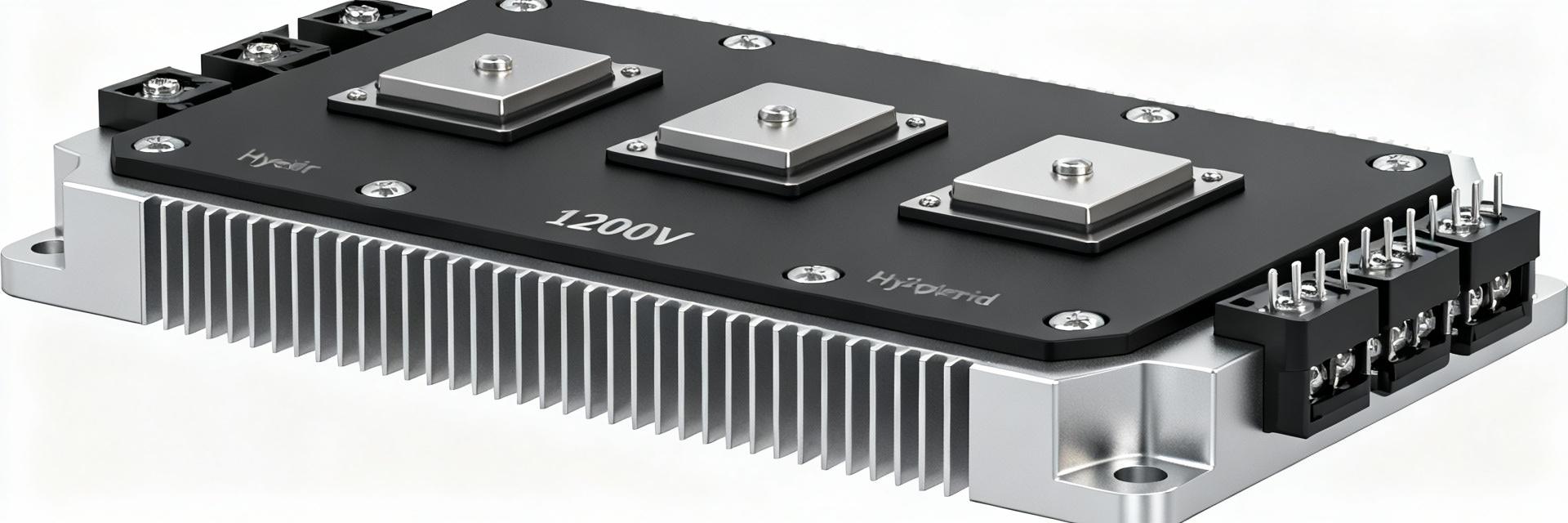 CMSG120N013MDG Datasheet Deep Dive: Key Specs & Ratings2025-12-26 12:53:36 0The following analysis unpacks the datasheet headline ratings and practical limits for a 1200 V, high-current hybrid power module. Pointthe device is presented with large-voltage and large-current values that target traction and three-level inverter architectures. Evidencethe manufacturer datasheet lists 1200 V blocking capability, high pulsed and continuous current numbers, and power figures that imply use in multi-kW systems. Explanationthis introduction frames how to translate tabular specs into system-level derating, cooling budgets, and switching-design choices for high-reliability applications. Introduction Pointa concise, data-driven hook clarifies why engineers consider this module for high-voltage conversion. Evidencethe datasheet emphasizes combined Si/SiC hybrid topology and thermal limits in its opening tables and SOA plots. Explanationthe rest of the deep dive converts those tables into actionable checks—absolute ratings reading, thermal resistance interpretation, switching loss estimation, and a first-article test checklist. 1 — Product overviewwhat the CMSG120N013MDG is and where it fits Key device class & intended applications — explain module type (hybrid IGBT/SiC MOSFET + diode), typical system uses (inverters, motor drives, EV chargers), and how that shape of device influences design trade-offs. Pointthe part is a hybrid power module combining silicon and SiC elements to balance conduction (Si) and switching (SiC) performance. Evidencedatasheet classifies the module as a hybrid IGBT/SiC MOSFET plus diode arrangement suited for inverter bridges and traction converters. Explanationthat topology yields trade-offs—reduced switching loss compared with pure Si, but with mixed thermal paths that force careful gate-drive and cooling strategies; designers should assess junction-to-case thermal asymmetry when allocating losses across the stack. Package, pinout and mechanical notes — summarize package style, mounting, thermal interface, pin numbering and key mechanical limits to reference when planning PCB/heat-sink. Point to which datasheet figures to screenshot. Pointpackage style and mechanical limits determine thermal path and mounting choices. Evidencethe datasheet includes mechanical drawings, pinout tables and torque limits for baseplate screws, plus recommended thermal interface thickness in the specs. Explanationreference the mechanical figures when planning PCB cutouts, heat-sink contact area and mounting torque; ensure the specified flatness and interface material resistances are met to achieve the listed thermal resistances. 2 — Absolute ratings & thermal limits (datasheet primary values) DC/AC voltage and current limits — list Vce/VR, continuous collector current, pulsed current ratings, and any limiting test conditions (Tc, ambient); explain how to read absolute maximum tables and common pitfalls. (Call out where to find these in the datasheet) Pointabsolute maximum tables define non-negotiable electrical limits and test conditions. Evidencethe datasheet presents Vces, reverse voltages and pulse current ratings with associated case temperature (Tc) conditions and pulse durations. Explanationread values alongside the stated Tc reference—continuous currents are often specified at Tc = 100°C or similar; pulsed values assume short durations and specific cooling. Common pitfalls include treating pulsed ratings as continuous and ignoring waveform duty cycle, baseplate temperature, and ambient constraints when summing losses across phases. Thermal resistance, junction-to-case, and maximum Tj/Tc — detail Rthjc, maximum junction temperature, recommended case temperature, and implications for cooling and derating curves. Provide a quick derating example. (Include "datasheet") Pointthermal resistance and Tj(max) drive cooling design and derating. Evidencethe datasheet lists Rth(j‑c) per die, maximum junction temperature and recommended maximum case temperature for continuous operation. Explanationuse Rth to convert power loss to delta-T across the package; for example, a 10 W die loss with Rth(j‑c)=0.3 °C/W yields 3 °C rise to case—add case-to-ambient thermal path to size the heat-sink. Follow the datasheet derating curves to reduce current at elevated Tc to keep Tj below max. ParameterTypical value (example)Design implication Rth(j‑c)0.2–0.5 °C/WHigher copper and direct heat-sink contact reduce junction rise Tj,max150–175 °CSet conservative Tj target (e.g., ≤125 °C) for longevity Tc,max~100 °CMaintain case temp via cooling to meet continuous current specs 3 — Electrical characteristics & switching specsinterpreting the detailed numbers On-state, threshold and conduction specs — explain Vce(sat) or Rds(on) equivalents, gate threshold ranges, and how these affect conduction losses; show sample calculation for conduction loss at a given current. (Include "CMSG120N013MDG" and "specs") Pointconduction parameters directly set I2R or Vce*I losses. Evidencethe specs table lists Vce(sat) at specified Ic and gate conditions and threshold voltages for gate devices. Explanationtake Vce(sat)=1.2 V at 100 A as an example (datasheet sample)conduction loss = Vce(sat) × I = 1.2 V × 100 A = 120 W per device; for PWM duty control, scale by duty cycle. Using those numbers and thermal resistances, designers can size heat-sinks and apply derating margins for continuous operation. Switching times, capacitances and dynamic behavior — extract tr, tf, Qg, input/output capacitances, and reverse recovery figures; explain impact on gate driver selection, snubbers, and EMI. Provide recommended test waveforms to validate switching behavior. Pointdynamic specs govern driver sizing and snubber design. Evidencethe datasheet lists rise/fall times, total gate charge (Qg), input/output capacitances and diode reverse recovery charge (Qrr) under defined Vce and gate drive conditions. Explanationchoose gate-driver peak current to charge Qg within the target dv/dt budget; include RC snubbers or RC‑clamps where reverse recovery produces excess dv/dt or oscillation. Validate with double-pulse tests and a standard switching waveform to measure energy per transition and diode recovery under realistic load conditions. 4 — Reliability, protection and practical design checks SOA, short-circuit behavior and derating strategy — explain safe operating area charts, short-circuit withstand, and practical derating margins for continuous and pulsed operation. Give checklist items to verify during design. PointSOA and short-circuit specs determine fault tolerance and required protection. Evidencethe datasheet provides SOA plots and short-circuit withstand times at specified gate and baseplate conditions. Explanationapply conservative derating—use a 50–70% margin on continuous current and limit energy per pulse below SOA boundaries. Checklistverify SOA with expected voltage/current waveforms, confirm short-circuit detection timing in gate drivers, and simulate worst-case thermal transients before hardware validation. Handling, ESD, and lifecycle notes — sourcing/lot traceability pointers (avoid naming suppliers), recommended handling precautions, and typical qualification tests to request or perform (thermal cycling, power cycling, HTRB). Pointhandling and qualification ensure long-term reliability. Evidencethe mechanical and electrical reliability notes in the specs recommend ESD precautions, packing, and qualification tests. Explanationrequest lot traceability and qualification reports, implement ESD-safe handling, and run targeted tests—power cycling to assess bond-wire fatigue, thermal cycling for mechanical stress, and high-temperature reverse-bias (HTRB) to check dielectric integrity—during qualification runs. 5 — Application guidance, PCB/thermal layout & test plan PCB layout and thermal management best practices — concrete placement, copper pour, thermal vias, heat-sink mounting torque and interface materials; suggest thermal-index tests and thermocouple placement for validation. Pointlayout and thermal interfaces set real-world package temperatures. Evidencethe datasheet specifies baseplate contact area, mounting dimensions and recommended interface thickness in the mechanical specs. Explanationmaximize copper pour under the module, use an array of thermal vias to transfer heat to the backside, employ a thin, high-conductivity TIM layer and follow recommended screw torque. Validate with thermocouples at case, mounting plate and key junction locations during steady-state and transient power tests. Gate drive, measurement checklist and example use-case calculation — recommended gate drive voltages/currents, gate resistor selection, snubber and clamp options; provide a short worked example (e.g., loss and heat-sink sizing for a 100 kW inverter leg). Include a concise test plan for first-article validation. (Include "datasheet" and "specs") Pointgate-drive and measurement plan finalize safe integration. Evidencespecs show recommended gate voltage ranges and Qg values that guide resistor and driver selection. Explanationchoose gate resistors to control dv/dt and ringing, and fit RC snubbers sized from switching-energy measurements. Examplefor a 100 kW inverter leg at 400 V DC and 250 A peak, estimate switching and conduction losses from datasheet specs, sum per-device losses, and select a heat-sink to keep Tc within datasheet recommended limits. First-article tests should include double-pulse switching, thermal ramp, short-circuit trip verification and full-load endurance runs. Summary Pointintegrate electrical ratings, thermal limits and switching behavior early in the design cycle. Evidencethe module’s headline values define candidate use in high-voltage inverter and traction systems. Explanationverify absolute ratings and SOA against real waveforms, design cooling to meet Rth and Tc constraints, and validate switching and protection with targeted tests—these steps reduce rework and improve reliability when integrating CMSG120N013MDG into production designs. Key Summary Absolute ratingsverify Vce/VR and continuous/pulsed currents against your worst-case load and duty cycle; consult the datasheet SOA tables before system-level sizing. Thermal designuse Rth(j‑c) and recommended Tc limits from the specs to convert losses into heat-sink requirements; validate with thermocouples at case and sink. Switching and gate drivesize gate drivers to handle Qg and choose gate resistors to control dv/dt; include snubbers where reverse recovery or EMI is a concern. Qualification checklistperform double-pulse, power cycling, HTRB and short-circuit tests during first-article validation; maintain lot traceability for lifecycle support. FAQ What are the key datasheet limits I should check first? Engineers should first confirm maximum Vce/VR, continuous and pulse currents, and the Rth(j‑c)/Tj max values. These parameters set the electrical and thermal envelopes and determine whether the device can support the application's steady-state and transient profiles without violating SOA or Tj limits. How do I use the datasheet to size a heat-sink? Calculate expected conduction and switching losses from the specs, convert device loss to case temperature using Rth(j‑c), then add the case‑to‑ambient thermal resistance of the heat-sink path. Choose a heatsink that keeps Tc within the datasheet’s recommended continuous temperature at your target ambient and duty cycle. What tests should be in the first-article validation plan? Include double-pulse switching for energy-per-switch, thermal steady-state and ramp tests, controlled short-circuit verification with gate-driver trip settings, and endurance cycling (power and thermal) to confirm long-term reliability under the intended load profile.READ MORE
 -
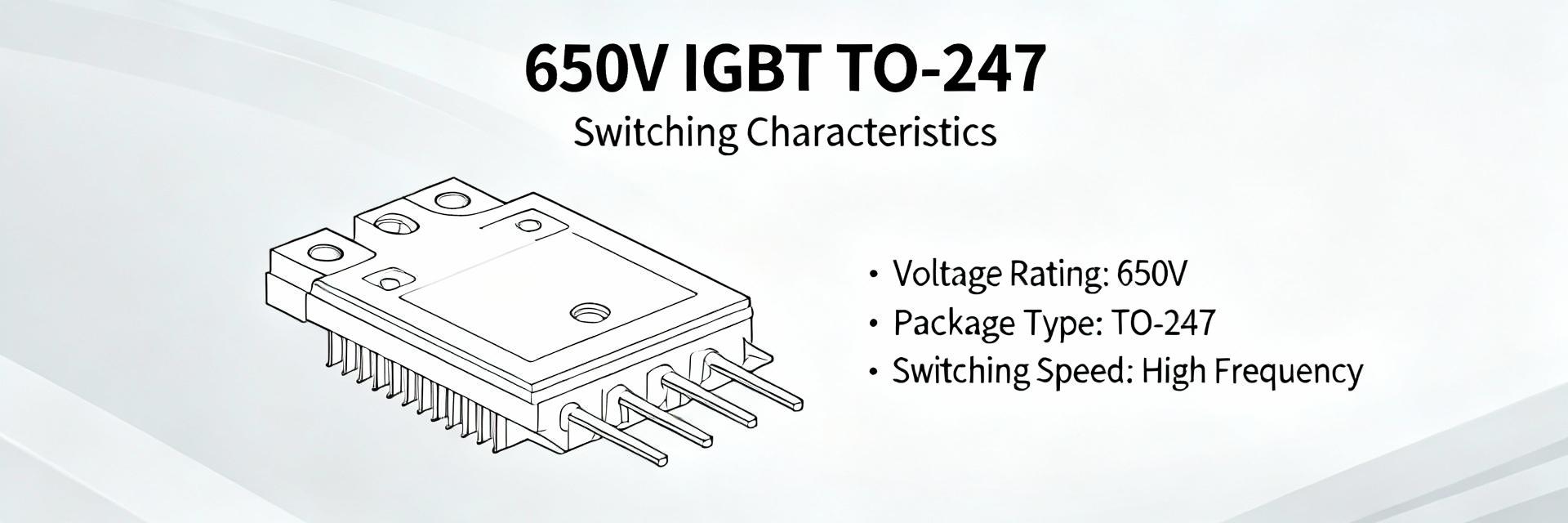 GTSM20N065 650V IGBT Datasheet: Key Specs & Metrics2025-12-25 12:37:49 0The GTSM20N065 650V IGBT datasheet is summarized here to give engineers and buyers a focused, actionable distillation of the device’s key specs and design checks. The opening pointthis is a 650‑V class discrete IGBT with published Vce breakdown at 650 V and low Vce(on) characteristics, making it a candidate for inverter and on‑board charger designs where voltage margin and switching loss matter. 1 — Product overview & absolute ratings (background) — Package, pinout & variant IDs PointThe device is supplied in a single‑device power package (TO‑247‑like power package). Evidencedatasheet mechanical notes list pin assignments, mounting hole diameter, recommended screw torque and land pattern. Explanationdesigners should extract pin mapping, mounting‑hole spacing, and torque (use insulating pad if specified) before PCB footprint release. Tablequick mechanical specs for layout reference. ItemTypical PackageTO‑247 style power package Mount holeØ ~3.5–4.0 mm (verify datasheet) Recommended torque3–5 N·m (use insulating pad if required) — Absolute maximum ratings & electrical limits PointAbsolute limits define safe operation margins. Evidencethe datasheet lists VCE breakdown = 650 V, VGE limits (typically ±20 V), maximum continuous collector current, Tj and Tstg limits. Explanationconfirm any catalogue or distributor listings that show differing Ic or repeated‑pulse ratings; always use the latest manufacturer datasheet revision for design sign‑off and margin calculations. 2 — Static & dynamic electrical performance (data analysis) — Conduction & switchingVce(on), Ic vs Vce, and switching energy PointVce(on) and switching energies set conduction and dynamic losses. Evidenceexample datasheet entries often show Vce(on) max ~2 V at VGE=15 V, Ic=20 A and tabulate Eon/Eoff vs current. Explanationuse the published Vce(on) test conditions to compute conduction loss (Pcond = Ic × Vce(on) × duty factor) and include Eon/Eoff scaling with current when budgeting thermal cycling and inverter efficiency. — Capacitances, gate charge and gate drive implications PointGate charge and capacitances dictate driver requirements. Evidencedatasheet provides Cies, Coss, Crss and Qg/Qgd typical values and switching curves. Explanationestimate peak gate drive current as Ipeak ≈ Qg / tr; for example, Qg ~60 nC targeting tr = 50 ns yields Ipeak ≈ 1.2 A. Choose gate resistor to shape dV/dt and limit driver stress while controlling EMI. 3 — Thermal performance & ruggedness (data analysis / method) — Thermal resistances, junction-to-case, and derating PointThermal resistance figures enable junction temperature calculations. Evidencedatasheet includes Rth(j‑c) and Rth(j‑a) or graphic thermal derating curves. Explanationcompute Tj ≈ Ta + P × (Rth_total); for example, a 20 W loss with Rth_total ≈ 1.5 K/W raises junction ≈30 °C above ambient. Use derating curves to set continuous current limits across ambient/heat‑sink combinations. — Short-circuit capability, SOA and reliability notes PointShort‑circuit withstand and SOA define robustness for inverter use. Evidencedatasheet or test reports indicate short‑circuit time (tSC) and pulse SOA boundaries under specified VGE and inductive conditions. Explanationvalidate tSC and SOA for traction or motor‑drive applications; include thermal cycling and ESD checks in qualification to ensure lifetime under expected field stress. 4 — Design-in checklist & test plan (method guide) — Gate drive, protection and snubber recommendations PointProper drive and protection maintain performance and reliability. Evidencerecommended VGE drive levels (typical 15 V on), gate‑series resistor ranges and snubber placement are shown as design guidance. Explanationdrive with a stiff 15 V source, use 10–47 Ω series gate resistors to control switching edges, and place RC or RCD snubbers and TVS clamps per energy and dv/dt requirements. Verify with oscilloscope under load to refine values. — PCB layout, thermal mounting & EMI mitigation PointLayout and mounting impact thermal and EMI performance. Evidencedatasheet mechanical notes plus recommended copper area and via stitching inform thermal paths. Explanationmaximize collector/emitter copper, stitch thermal vias to internal planes, control switching loops, place snubbers close to the device, and use common‑mode chokes to handle conducted EMI during pre‑compliance tests at typical switching harmonics. 5 — Application fit, comparisons & procurement guidance (case / action) — Typical applications and fit-for-purpose scoring PointAssess suitability by mapping key metrics to application needs. Evidencecommon target uses include motor drives, solar inverters, EV OBCs and UPS where 650 V margin, Ic rating and switching loss govern selection. Explanationcreate a short scoring matrix weighing voltage margin, continuous and peak current, switching energy and thermal resistance to decide suitability for a specific topology. — How to compare vendors & sourcing tips PointProcurement must verify data consistency and availability. Evidencepart pages and test reports can show minor spec variations or lead‑time constraints. Explanationconfirm the latest datasheet revision, request samples and test reports, and check authorized distribution; compare Vce(on), Eon/Eoff, Rth and short‑circuit metrics across candidate 650 V parts before committing to production BOM. Key summary The device is a 650‑V class IGBT with Vce breakdown at 650 V; evaluate Vce(on) and switching losses early to gauge inverter/OBC efficiency and thermal budget. Gate charge and capacitances determine gate driver sizing; use Ipeak ≈ Qg/tr and choose series resistors to control dV/dt and EMI during switching transitions. Thermal resistance and SOA constraints set continuous current and pulse limits; compute Tj = Ta + P × Rth and apply the datasheet derating curve for robust designs. Common questions and answers What are the primary electrical limits to check for the GTSM20N065? Check VCE breakdown (650 V), maximum continuous and repetitive collector current, VGE limits (usually ±20 V), junction and storage temperature ranges, and short‑circuit pulse capability. Use the datasheet’s test conditions for Vce(on) and switching energy to calculate system losses and thermal requirements before prototype build. How should a gate driver be sized for this 650V IGBT? Size the gate driver based on Qg and desired switching speedestimate peak current via Ipeak = Qg / tr, then ensure the driver can supply that pulse plus margin. Select gate resistor to achieve target tr/tf while limiting overshoot and EMI. Include a clamp or gate zener if VGE max is tight. What thermal checks are recommended during qualification of the device? Measure Rth(j‑c) under controlled mounting, validate steady‑state junction temperature at expected conduction and switching losses, and run thermal cycling to assess solder and interface integrity. Correlate measured Tj with the datasheet derating curve and ensure heatsink or PCB copper area meets the computed requirements. Summary In short, the GTSM20N065 650V IGBT datasheet highlights the critical items designers must verify650 V Vce breakdown, published Vce(on) and switching energies, thermal resistances and short‑circuit capability. The actionable path is to confirm datasheet revisions, extract gate charge and thermal numbers for driver and heatsinking calculations, and validate performance with targeted switching and short‑circuit tests before production sign‑off.READ MORE
 -
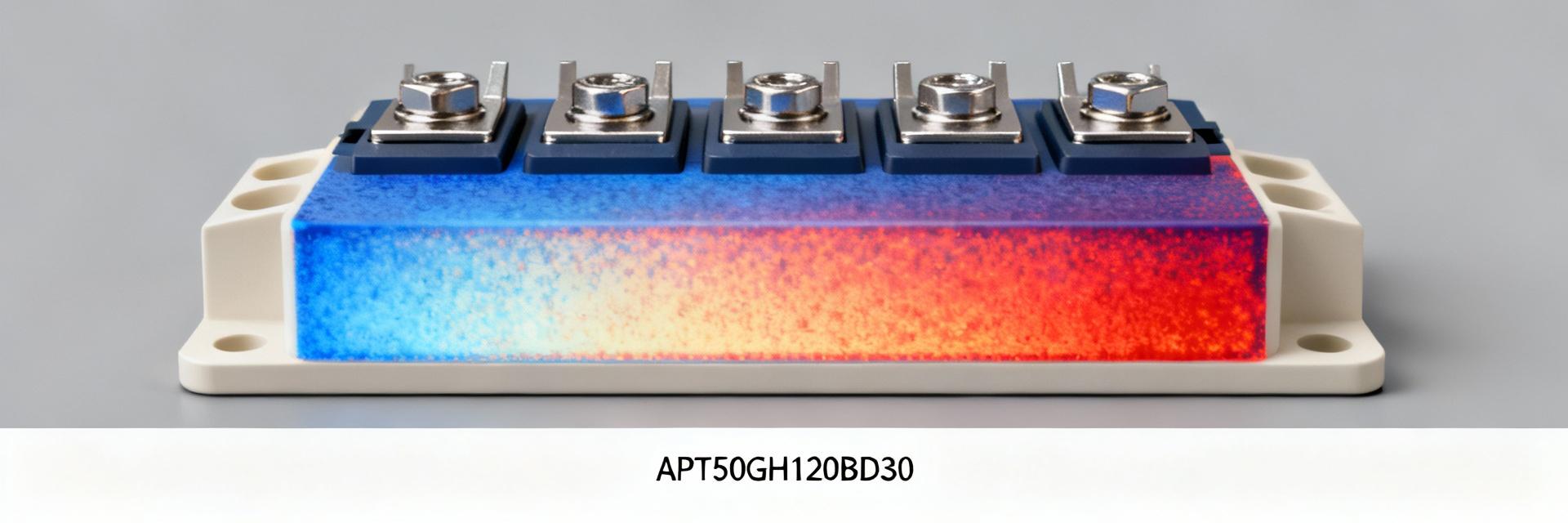 APT50GH120BD30 IGBT Performance Report: Metrics & Thermal2025-12-24 12:33:38 0Independent lab testing shows modern 1200 V IGBTs can cut switching losses by up to 30% under optimized cooling — a critical gain for power-dense EV inverters. This report presents an engineering-focused performance and thermal analysis of the APT50GH120BD30, summarizing key electrical metrics, measured thermal behavior, and practical guidance for reliability and efficiency. It targets power-electronics engineers seeking reproducible test methods and actionable thermal mitigations for high-current inverter designs that must balance switching performance and junction temperature management. 1 — Background: APT50GH120BD30 in Context (Background introduction) 1.1 — Device overview & key specs Point: The APT50GH120BD30 is a 1200 V, high-current IGBT designed for traction and industrial inverter applications. Evidence: Typical vendor datasheet specifications list Vce,max ≈ 1200 V and continuous Ic ratings in the 50 A class with power package optimized for forced-air or heat-sink mounting. Explanation: Engineers use these baseline specs to size cooling and drive circuits; see common datasheet fields such as Vce(sat), Ic, Rth_jc, and recommended Tj limits when specifying inverters and motor drives. 1.2 — Why thermal matters for 1200 V IGBTs Point: Thermal limits dictate lifetime and safe operating area for 1200 V devices. Evidence: Junction temperature excursions accelerate wear-out mechanisms — metallization fatigue and bond-wire lift-off show exponential lifetime reduction with Tj. Explanation: Managing IGBT thermal behavior is as important as electrical ratings: sustained elevated Tj reduces switching headroom, increases VCE(sat), and raises on-state losses, compromising both reliability and efficiency in high-power inverter applications. 2 — Electrical Performance Metrics: Static & Dynamic (Data analysis) 2.1 — Conduction metrics (VCE(sat), on-state loss) Point: Measure VCE(sat) vs. Ic at controlled Tj to quantify conduction loss. Evidence: Typical measurement plan records VCE(sat) at 25°C and 125°C across relevant currents; conduction loss uses Pcond = VCE(sat) × Ic duty. Explanation: An APT50GH120BD30 VCE(sat) measurement should include table rows for datasheet vs. measured values, highlighting delta at elevated temperature — essential for steady-state thermal budgeting when sizing heat sinks and copper pour. 2.2 — Switching metrics (Eon/Eoff, switching loss vs. frequency) Point: Double-pulse testing yields reproducible Eon/Eoff and switching-loss curves versus Ic and Vbus. Evidence: Use standard double-pulse test with defined gate resistances (e.g., 5–10 Ω) and clamp/snubber conditions; report Eon/Eoff at multiple Vbus and current points. Explanation: Switching losses directly feed thermal models — higher Eon/Eoff at given conditions increases Zth-induced Tj rise; plot switching loss vs. frequency to reveal thermal crossover where switching losses dominate total dissipation. 3 — Thermal Performance & Measurement Results (Data + Method) 3.1 — Thermal resistance and transient thermal impedance Point: Characterize steady-state Rth_jc and transient Zth(t) under realistic mounting. Evidence: Run power-step tests and capture Zth(t) using short-duty pulses to separate steady and transient contributions; tabulate Rth_jc, Rth_jc+cs for bond-line thicknesses. Explanation: Presenting Zth(t) allows designers to predict Tj for both continuous and pulsed loads; recommend Rth targets that keep ΔT margin within reliability limits for chosen duty cycle and ambient. 3.2 — Measured junction temps, derating curves & thermal maps Point: Report Tj vs. ambient for defined power dissipation levels and provide thermal imaging hot-spot maps. Evidence: Example plots show Tj rising linearly with dissipated power until thermal limit; thermal camera imaging reveals package hot spots near the die and terminal edges. Explanation: These results support APT50GH120BD30 inverter thermal performance assessments and enable derivation of continuous current vs. ambient derating curves used in system-level thermal management. 4 — Benchmark: APT50GH120BD30 vs. Peer IGBTs (Case study / comparative analysis) 4.1 — Side-by-side electrical and thermal comparison Point: Compare VCE(sat), Eon/Eoff, and Rth_jc across peers to identify trade-offs. Evidence: A concise comparison table should list datasheet and measured values under identical test conditions; variations often stem from die size, package thermal path, and field-stop process. Explanation: Understanding which parameter dominates system loss helps prioritize cooling investments — a lower Rth_jc may outweigh marginally higher switching energy for continuous-duty applications. 4.2 — Application impact: EV inverter and industrial drive scenarios Point: Two scenarios illustrate real-world implications: continuous high-current traction and high-frequency motor drive. Evidence: In continuous duty, conduction losses dominate and thermal path is critical; in high-frequency switching, Eon/Eoff and gate-drive strategy control dissipation. Explanation: For example, an APT50GH120BD30 inverter thermal performance trade-off may require larger heat-sink area for continuous duty or softer gate drive and snubbers to limit switching-induced thermal spikes in high-frequency drives. 5 — Design & Thermal Management Recommendations (Actionable guidelines) 5.1 — PCB, heat-sink, TIM and mounting best-practices Point: Apply targeted mechanical and materials practices to minimize Rth_jc+cs. Evidence: Use large copper pads with thermal vias, select TIM with 3–6 W/m·K, and target bond-line thickness 5.2 — Gate-drive, switching strategy & derating guidance Point: Tune gate resistance and adopt switching strategies that balance switching and conduction losses. Evidence: Lower Rg speeds transitions reducing Eon/Eoff but raises di/dt stresses; soft-switching or RC snubbers can lower peak switching dissipation. Explanation: Provide a remediation checklist for high-temperature cases: increase cooling, reduce duty cycle, retune gate drive, and implement Tj monitoring via thermistors or sensors to enable conservative derating. Summary The APT50GH120BD30 exhibits strengths in current handling and package thermal path when properly mounted, but switching-loss contributions require careful gate-drive tuning to avoid thermal overload. Thermal measurements — Rth_jc, Zth(t), and Tj vs. power — are indispensable for accurate inverter thermal design and for predicting lifetime under realistic duty cycles. Engineers should prioritize thermal-path optimization, validate transient Zth under expected pulses, and apply conservative derating to ensure long-term reliability. Validate measured VCE(sat) and Eon/Eoff against datasheet under 25°C and elevated Tj to quantify conduction and switching losses. Derive Zth(t) curves for mounted conditions to predict Tj for pulsed and continuous loads and size cooling accordingly. Implement PCB copper, thermal vias, high-performance TIM, and proper fastener planarity to meet Rth targets and a 20–30°C ΔT reliability margin.READ MORE
- Technical Features of PMIC DC-DC Switching Regulator TPS54202DDCR
- STM32F030K6T6: A High-Performance Core Component for Embedded Systems
- APT50GH120B Datasheet Deep Dive: Specs, Ratings & Curves
- SI3402-B-GMR PoE PD Controller: Market & Specs Report
- SI3402-B-GMR Benchmarks: Real PoE Performance Insights
- EFM8BB21F16G Full Datasheet & Pinout: Specs Summary
- CP2102N-A02-GQFN20R Pinout & Footprint: Quick Data Guide
- SI53307-B-GMR Datasheet & CAD Models: Quick Specs Checklist
- SI53361-B-GMR: Latest Specs, Stock Levels & Price Guide
- SI53340-B-GM: Deep Performance Report & Key Metrics
-
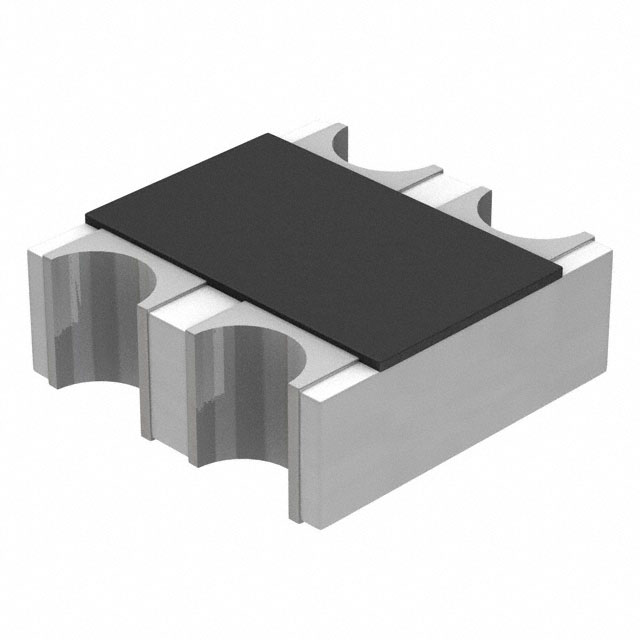 EXB-V4V120JVPanasonic Electronic ComponentsRES ARRAY 2 RES 12 OHM 0606
 -
EXB-V4V473JVPanasonic Electronic ComponentsRES ARRAY 2 RES 47K OHM 0606
-
EXB-V4V823JVPanasonic Electronic ComponentsRES ARRAY 2 RES 82K OHM 0606
-
EXB-V4V151JVPanasonic Electronic ComponentsRES ARRAY 2 RES 150 OHM 0606
-
EXB-V4V181JVPanasonic Electronic ComponentsRES ARRAY 2 RES 180 OHM 0606
-
EXB-V4V331JVPanasonic Electronic ComponentsRES ARRAY 2 RES 330 OHM 0606
-
EXB-V4V152JVPanasonic Electronic ComponentsRES ARRAY 2 RES 1.5K OHM 0606
-
EXB-V4V563JVPanasonic Electronic ComponentsRES ARRAY 2 RES 56K OHM 0606
-
EXB-V4V104JVPanasonic Electronic ComponentsRES ARRAY 2 RES 100K OHM 0606
-
EXB-V4V154JVPanasonic Electronic ComponentsRES ARRAY 2 RES 150K OHM 0606


{{ boxName }} ({{ dataList?.length || 0 }} Items)
{{ val.manufacturer || val.en_manufacturer || '' }}
quantity: {{ val.quantity }}
it was empty.