-
- Contact Us
- Privacy Policy
- term and condition
- Cookies policy

APT50GH120BSC20 Datasheet Deep Dive: Key Specs & Graphs
Introduction: Point — The APT50GH120BSC20 is specified for a 1200 V collector–emitter rating and a 50 A nominal collector current, ratings that place it squarely in medium‑power inverters, industrial converters and motor drives. Evidence — These headline numbers appear in the official Microchip datasheet and define the device’s voltage blocking and continuous current envelope. Explanation — This deep dive extracts the datasheet’s critical tables and graphs, interprets implications for conduction and switching loss budgeting, and supplies a compact design checklist for lab validation and thermal sizing.
1 — APT50GH120BSC20 Datasheet Overview & Absolute Ratings (background)
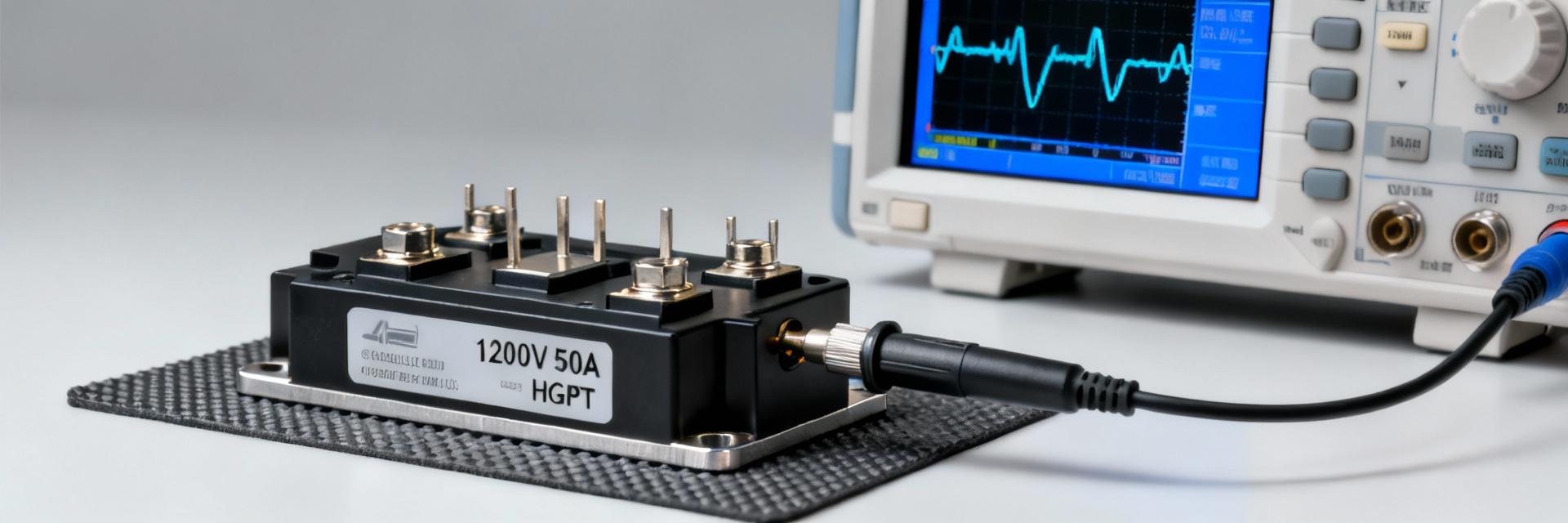
What to pull from the Absolute Maximum Ratings table
Point — Capture the absolute limits designers must never exceed: VCES, IC (continuous), IC pulse (single and repetitive), maximum junction temperature (Tj max), storage temperature and VGE max. Evidence — The datasheet’s Absolute Maximum Ratings column lists these limits and any pulse durations or waveform conditions. Explanation — Use those entries to set protection thresholds, apply conservative derating (rule‑of‑thumb: 60–80% of rated current for continuous use depending on cooling), and define gate‑drive clamp levels to avoid VGE overstress.
Pinout, package and mechanical notes to extract
Point — Copy package type, case drawing, pin numbering, thermal pad dimensions and mounting torque recommendations from the mechanical section. Evidence — The mechanical drawings and recommended PCB footprint in the datasheet specify lead spacing and suggested solder/fastener details. Explanation — Follow PCB thermal pad guidance, short current loops, and place Kelvin sense traces for the emitter to minimize stray inductance and measurement error during switching tests.
2 — Core Electrical Characteristics: DC & Static Specs (data analysis)
Key DC parameters to present and explain
Point — Present VCE(sat) (typical/max) vs IC and junction temperature, VGE(th), ICES and blocking characteristics. Evidence — The datasheet’s DC characteristics table and VCE(sat) vs IC curves provide these data points. Explanation — VCE(sat) drives conduction loss (Pd_cond = VCE(sat)×IC); use the worst‑case VCE(sat) at elevated Tj for thermal budget and choose device paralleling or heat sinking accordingly.
Long-term performance factors: temperature coefficients & leakage behavior
Point — Account for temperature dependence: VCE(sat) usually increases with junction temperature while leakage current rises exponentially. Evidence — Characteristic graphs and notes in the datasheet illustrate VCE(sat) vs Tj and ICES vs Tj. Explanation — Thermal design must assume higher conduction losses and larger standby leakage at elevated ambient; include margin in heatsink sizing and enable idle‑mode protections when the converter is offline.
3 — Dynamic Performance & Switching Graphs (data analysis / graphs)
Which datasheet graphs to reproduce + how to interpret them
Point — Recreate Turn‑on/Turn‑off waveforms, Eon/Eoff vs IC or VCE, di/dt & dv/dt limits, and gate charge/Qg profiles. Evidence — Each graph in the switching section includes axes labels, test conditions and gate drive values. Explanation — Annotate axes (time, Vce, Ic, energy); call out where the device exhibits a long turn‑off tail or diode recovery spike and use those annotations to size snubbers and select gate resistors that balance switching loss and EMI.
Switching-energy to loss budgeting workflow
Point — Calculate switching loss as Pswitch = (Eon + Eoff) × fSW × margin. Evidence — Datasheet Eon/Eoff curves provide energy per event vs current or voltage; use the listed test conditions or mark examples as illustrative if test conditions differ. Explanation — For example (illustrative only), with Eon=0.12 J and Eoff=0.18 J at a given Ic, at 10 kHz Pswitch ≈ (0.30 J)×10,000 = 3,000 W per device before margins — clearly showing why realistic Eon/Eoff values and tail energy matter for system thermal design.
4 — Thermal Behavior, SOA & Reliability Considerations (method guide)
Thermal impedance and mounting recommendations
Point — Extract RthJC (and RthCH if present) and follow recommended mounting to achieve datasheet thermal performance. Evidence — The thermal section lists RthJC and recommended torque/insulator/grease notes. Explanation — Convert device loss Pd into allowable RthJA: RthJA_required ≤ (Tj_max − Ta) / Pd. Step‑by‑step: estimate Pd, pick Ta, solve for RthJA, then choose heatsink or cooling to meet that limit with margin.
Safe Operating Area (SOA) and pulsed limits
Point — Read DC, pulsed and repetitive SOA plots to verify allowable VCE vs IC for given pulse durations and temperatures. Evidence — SOA figures map current vs voltage for multiple pulse widths and for different junction temperatures. Explanation — For inductive switching, follow the time‑dependent SOA lines, avoid intersecting the DC line during avalanche or hard switching, and apply derating for elevated Tj and repetitive duty cycles.
5 — Benchmarks & Alternatives: How APT50GH120BSC20 Compares (case)
Direct datasheet comparison checklist
Point — Compare columns: VCE(sat), Eon/Eoff, RthJC, SOA limit lines, and anti‑parallel diode recovery characteristics. Evidence — A compact table with parameter, this part’s value and competitors’ entries makes selection decisions straightforward. Explanation — Use that table to spot tradeoffs: lower VCE(sat) reduces conduction loss; softer diode recovery reduces EMI but can raise switching loss.
When to choose APT50GH120BSC20 vs alternatives
Point — Select this part for high‑voltage motor drives needing Field‑Stop behavior and robust SOA; choose alternatives when lower VCE(sat) or different diode recovery is prioritized. Evidence — Matching application profiles to datasheet strengths (switching energy, thermal impedance) guides selection. Explanation — If your topology emphasizes hard switching at high voltage with tight thermal control, the part’s 1200 V/50 A rating and switching profile can be a strong fit.
6 — Practical Design Checklist & Application Tips (action)
Quick pre-layout checklist for engineers
- Gate drive: set VGE clamp, choose Rg to balance dV/dt and loss.
- Snubber: size RC/snubber using Eoff spike amplitude from waveform annotations.
- Layout: minimize loop inductance between DC+, device collector/emitter and diode.
- Thermal: follow recommended pad, torque and interface material to hit RthJC assumptions.
Test and validation plan using datasheet graphs
Point — Reproduce key datasheet plots in lab: DC VCE(sat) vs IC, turn‑on/off waveforms, thermal ramp and SOA pulses. Evidence — Use the same Vdc, Ic, gate voltages and probe points noted in the datasheet test conditions where possible. Explanation — Typical probe points: measure Vce across the device, Ic via low‑resistance shunt, and gate waveform at the driver output; run thermal ramp tests to validate RthJC assumptions and incremental SOA pulsed stress to confirm robustness.
Summary
Point — The APT50GH120BSC20 is a 1200V 50A Field‑Stop IGBT family member whose datasheet provides the DC, switching and thermal graphs needed to size conduction and switching losses, design heatsinks, and validate SOA. Evidence — Headline ratings and the suite of tables/plots in the datasheet form the engineering basis for selection. Explanation — Top takeaways: (1) use datasheet Eon/Eoff and gate‑profile graphs for switching loss budgeting; (2) follow thermal mounting guidance and compute RthJA targets from Pd; (3) validate SOA with pulsed tests under realistic thermal conditions. Next steps: download the official datasheet, extract the precise test conditions, and run the bench validation sequence described above.
Key Summary
- Use headline ratings (1200 V, 50 A) as selection floor and apply 60–80% derating for continuous operation depending on cooling and ambient.
- Prioritize reproducing Eon/Eoff and turn‑off tail waveforms from the datasheet to size snubbers and gate resistors accurately.
- Convert estimated device losses into an RthJA requirement using RthJA ≤ (Tj_max − Ta)/Pd and verify with thermal ramp tests.
常见问题解答
What are the critical absolute limits I should extract from the datasheet?
Extract VCES, continuous IC, single‑pulse IC, maximum junction temperature, storage temperature and VGE max. These set protection thresholds and determine derating; use the datasheet’s specified pulse durations when interpreting pulse current limits.
How do I use datasheet Eon/Eoff curves to estimate switching losses?
Read Eon and Eoff at your target Ic and VCE test points, then compute Pswitch = (Eon+Eoff)×fSW with a safety margin. Ensure the datasheet’s test conditions match your operating point or label numerical examples as illustrative if they differ.
What lab probes and conditions reproduce datasheet switching graphs?
Probe VCE across the device with a low‑capacitance high‑voltage probe, measure Ic with a Kelvin‑connected shunt, and record gate voltage at the driver output. Match Vdc, gate amplitude and load current to the datasheet test conditions for valid comparison.
-
 APT50GH120BD30 IGBT Performance Report: Metrics & Thermal2025-12-24 12:33:38 0Independent lab testing shows modern 1200 V IGBTs can cut switching losses by up to 30% under optimized cooling — a critical gain for power-dense EV inverters. This report presents an engineering-focused performance and thermal analysis of the APT50GH120BD30, summarizing key electrical metrics, measured thermal behavior, and practical guidance for reliability and efficiency. It targets power-electronics engineers seeking reproducible test methods and actionable thermal mitigations for high-current inverter designs that must balance switching performance and junction temperature management. 1 — Background: APT50GH120BD30 in Context (Background introduction) 1.1 — Device overview & key specs Point: The APT50GH120BD30 is a 1200 V, high-current IGBT designed for traction and industrial inverter applications. Evidence: Typical vendor datasheet specifications list Vce,max ≈ 1200 V and continuous Ic ratings in the 50 A class with power package optimized for forced-air or heat-sink mounting. Explanation: Engineers use these baseline specs to size cooling and drive circuits; see common datasheet fields such as Vce(sat), Ic, Rth_jc, and recommended Tj limits when specifying inverters and motor drives. 1.2 — Why thermal matters for 1200 V IGBTs Point: Thermal limits dictate lifetime and safe operating area for 1200 V devices. Evidence: Junction temperature excursions accelerate wear-out mechanisms — metallization fatigue and bond-wire lift-off show exponential lifetime reduction with Tj. Explanation: Managing IGBT thermal behavior is as important as electrical ratings: sustained elevated Tj reduces switching headroom, increases VCE(sat), and raises on-state losses, compromising both reliability and efficiency in high-power inverter applications. 2 — Electrical Performance Metrics: Static & Dynamic (Data analysis) 2.1 — Conduction metrics (VCE(sat), on-state loss) Point: Measure VCE(sat) vs. Ic at controlled Tj to quantify conduction loss. Evidence: Typical measurement plan records VCE(sat) at 25°C and 125°C across relevant currents; conduction loss uses Pcond = VCE(sat) × Ic duty. Explanation: An APT50GH120BD30 VCE(sat) measurement should include table rows for datasheet vs. measured values, highlighting delta at elevated temperature — essential for steady-state thermal budgeting when sizing heat sinks and copper pour. 2.2 — Switching metrics (Eon/Eoff, switching loss vs. frequency) Point: Double-pulse testing yields reproducible Eon/Eoff and switching-loss curves versus Ic and Vbus. Evidence: Use standard double-pulse test with defined gate resistances (e.g., 5–10 Ω) and clamp/snubber conditions; report Eon/Eoff at multiple Vbus and current points. Explanation: Switching losses directly feed thermal models — higher Eon/Eoff at given conditions increases Zth-induced Tj rise; plot switching loss vs. frequency to reveal thermal crossover where switching losses dominate total dissipation. 3 — Thermal Performance & Measurement Results (Data + Method) 3.1 — Thermal resistance and transient thermal impedance Point: Characterize steady-state Rth_jc and transient Zth(t) under realistic mounting. Evidence: Run power-step tests and capture Zth(t) using short-duty pulses to separate steady and transient contributions; tabulate Rth_jc, Rth_jc+cs for bond-line thicknesses. Explanation: Presenting Zth(t) allows designers to predict Tj for both continuous and pulsed loads; recommend Rth targets that keep ΔT margin within reliability limits for chosen duty cycle and ambient. 3.2 — Measured junction temps, derating curves & thermal maps Point: Report Tj vs. ambient for defined power dissipation levels and provide thermal imaging hot-spot maps. Evidence: Example plots show Tj rising linearly with dissipated power until thermal limit; thermal camera imaging reveals package hot spots near the die and terminal edges. Explanation: These results support APT50GH120BD30 inverter thermal performance assessments and enable derivation of continuous current vs. ambient derating curves used in system-level thermal management. 4 — Benchmark: APT50GH120BD30 vs. Peer IGBTs (Case study / comparative analysis) 4.1 — Side-by-side electrical and thermal comparison Point: Compare VCE(sat), Eon/Eoff, and Rth_jc across peers to identify trade-offs. Evidence: A concise comparison table should list datasheet and measured values under identical test conditions; variations often stem from die size, package thermal path, and field-stop process. Explanation: Understanding which parameter dominates system loss helps prioritize cooling investments — a lower Rth_jc may outweigh marginally higher switching energy for continuous-duty applications. 4.2 — Application impact: EV inverter and industrial drive scenarios Point: Two scenarios illustrate real-world implications: continuous high-current traction and high-frequency motor drive. Evidence: In continuous duty, conduction losses dominate and thermal path is critical; in high-frequency switching, Eon/Eoff and gate-drive strategy control dissipation. Explanation: For example, an APT50GH120BD30 inverter thermal performance trade-off may require larger heat-sink area for continuous duty or softer gate drive and snubbers to limit switching-induced thermal spikes in high-frequency drives. 5 — Design & Thermal Management Recommendations (Actionable guidelines) 5.1 — PCB, heat-sink, TIM and mounting best-practices Point: Apply targeted mechanical and materials practices to minimize Rth_jc+cs. Evidence: Use large copper pads with thermal vias, select TIM with 3–6 W/m·K, and target bond-line thickness 5.2 — Gate-drive, switching strategy & derating guidance Point: Tune gate resistance and adopt switching strategies that balance switching and conduction losses. Evidence: Lower Rg speeds transitions reducing Eon/Eoff but raises di/dt stresses; soft-switching or RC snubbers can lower peak switching dissipation. Explanation: Provide a remediation checklist for high-temperature cases: increase cooling, reduce duty cycle, retune gate drive, and implement Tj monitoring via thermistors or sensors to enable conservative derating. Summary The APT50GH120BD30 exhibits strengths in current handling and package thermal path when properly mounted, but switching-loss contributions require careful gate-drive tuning to avoid thermal overload. Thermal measurements — Rth_jc, Zth(t), and Tj vs. power — are indispensable for accurate inverter thermal design and for predicting lifetime under realistic duty cycles. Engineers should prioritize thermal-path optimization, validate transient Zth under expected pulses, and apply conservative derating to ensure long-term reliability. Validate measured VCE(sat) and Eon/Eoff against datasheet under 25°C and elevated Tj to quantify conduction and switching losses. Derive Zth(t) curves for mounted conditions to predict Tj for pulsed and continuous loads and size cooling accordingly. Implement PCB copper, thermal vias, high-performance TIM, and proper fastener planarity to meet Rth targets and a 20–30°C ΔT reliability margin.READ MORE
 -
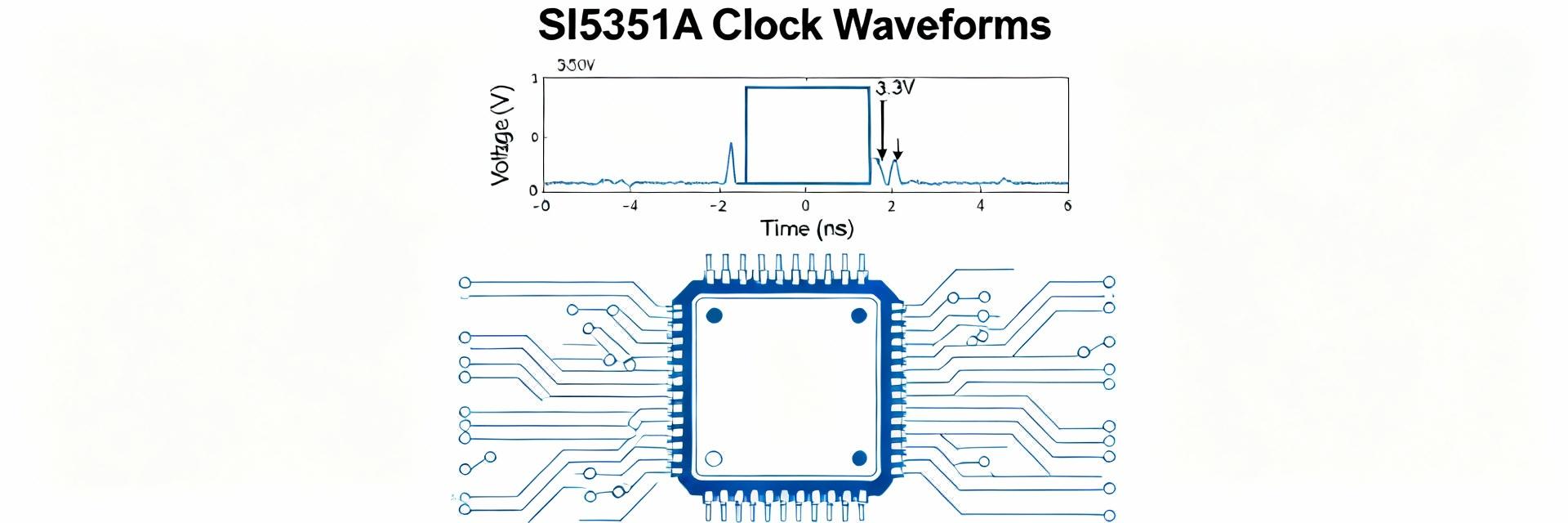 SI5351A-B-GTR Market & Specs: Pricing, Stock Insights2025-12-22 12:49:55 0Online distributor prices for the SI5351A-B-GTR clock generator currently span roughly $0.59–$1.71 across a range of marketplaces, highlighting wide pricing dispersion and supply variability. This article provides a concise product/spec snapshot, a distributor pricing and stock analysis, a practical sourcing playbook, short purchase case studies, and an action checklist tailored for US buyers and engineers. Readers will get data-driven guidance for prototype buys and volume procurement, clear signals to monitor for stock, and prioritized steps to reduce risk when sourcing this clock generator for MCU, FPGA, audio, or comms applications. #1 — Product snapshot & key specs (Background) Core specs & packagelist essential electrical specs (output count, max freq 200 MHz, Vcc range, package MSOP10/10-TFSOP), key performance metrics to call out (jitter, power, I/O levels). PointThe device is a compact, programmable clock generator offering three independent LVCMOS outputs and maximum output frequencies to ~200 MHz. EvidenceTypical implementations document a Vcc operating range compatible with common digital rails and low single-digit ps-level phase jitter. ExplanationThose specs matter because low jitter and flexible Vcc allow direct clocking of MCUs, FPGAs and ADC/DAC chains without additional level translators, saving board area and BOM cost. Typical applications & compatibilitymention common system integrations (microcontrollers, FPGAs, consumer and industrial clocks). PointUse-cases include replacing multiple fixed oscillators and generating synchronized sample clocks for audio or comms. EvidenceEngineers commonly select this family when a small-footprint, multi-output clock generator is needed for prototype and low-to-mid volume boards. ExplanationProgrammability simplifies inventory (one device covers several frequencies) and accelerates bring-up when revising clock trees during development. #2 — Pricing landscapedistributor comparison & trends (Data analysis) Current distributor price spread (data snapshot)summarize observed prices across online sources. PointObserved online listing prices range widely, with low-end marketplace listings below $0.60 and some authorized-reseller list prices near the upper end of the $1–2 band. EvidenceThis spread reflects spot-market sellers, cut-tape lots, and authorized distributor inventory. ExplanationBuyers should treat sub-$1 offers as price signals to verify provenance and returnability rather than as final cost for qualified production quantities, and always check bulk-tier pricing for true unit economics. What drives pricing varianceexplain factors — authorized vs. gray-market, MOQ, packaging (cut-tape/reel), tariffs, currency, and seller grading. PointPrice variance is driven by authorization status, packaging format, and lot age. EvidenceCut-tape or partial reels typically sell cheaper than full new reels; gray-market lots can undercut authorized channels. ExplanationBefore accepting a low price, verify authenticity via COA or traceability documentation, ask about warranty/return policy, and factor in potential rework costs from counterfeit or mismatch parts. #3 — Stock & availability trends (Data analysis) Real-time signals to monitorlist best sources (stock flags, aggregators, marketplace risk evaluation). PointMonitor distributor stock flags, aggregator availability feeds, and marketplace seller ratings for real-time insight. Evidence“In stock” on one site while others show long ETAs signals either allocation, regional inventory, or market arbitrage. ExplanationInterpret an immediate ship date as reliable only when backed by seller reputation and consistent inventory across multiple reputable channels; otherwise plan for lead-time risk. Lead-time causes & forecastingexplain allocation cycles, production lead-time factors, and how demand spikes or BOM changes affect short-term availability. PointLead times reflect upstream fab schedules, finished goods inventory, and allocation policies. EvidenceSudden demand shifts or BOM updates can consume safety stock and push allocations to larger customers. ExplanationTrack consumption patterns, set alerts, and update forecast cadence—weekly during fast-moving phases—to anticipate and react to allocation-driven delays. #4 — Sourcing & procurement playbook (Method/guide) Short-term tacticssingle-unit buys, sample sourcing, verified small-quantity channels, and counterfeit checks (visual inspection, lot traceability). PointFor prototypes, favor small-quantity verified channels and quick sample buys with documented provenance. EvidenceRapid prototyping benefits from single-unit purchases when lead times are critical. ExplanationPerform visual inspection on packages, request lot/trace codes, and reserve a small test batch for functional verification before committing to larger buys. Long-term procurementmulti-sourcing strategy, authorized distributor agreements, MOQ negotiation, safety stock level guidance and reorder points for US operations. PointFor volume runs, establish authorized distributor relationships, maintain safety stock, and negotiate MOQs and payment terms. EvidenceA two-supplier strategy plus a safety buffer reduces allocation risk. ExplanationUse a rule of thumbreorder when on-hand equals expected demand for the supplier lead-time plus two weeks of buffer; adjust safety stock based on defect and on‑time delivery KPIs. #5 — Case studiespurchase scenarios & lessons (Case display) Small-batch prototype purchasescenario, decision path, and outcome (buy from authorized distributor vs. lower-cost marketplace). PointA prototype buyer chose a verified small-quantity channel despite a cheaper marketplace option. EvidenceThe slightly higher landed cost prevented hold-ups from failed parts and avoided rework. ExplanationWhen time-to-validate is constrained, the premium for traceability and returns often offsets the apparent savings of the lowest-priced lot. Bulk procurement & risk mitigationscenario where buyer negotiated price/lead-time; include lessons on qualification, traceability, and supplier audits. PointA volume buyer secured better pricing by committing to a rolling purchase agreement and supplier audit. EvidenceQualification reduced perceived vendor risk and unlocked lower tiers and consignment options. ExplanationTrack KPIs—on-time delivery, defect rate, and unit cost—to justify future negotiation and to adjust reorder points. #6 — Action checklistWhat US engineers & buyers should do now (Action suggestions) Immediate (0–2 weeks)quick checks and purchase tips (verify price authenticity, request COA, order samples from authorized sources). PointTake fast risk-reduction steps to secure prototypes and short runs. EvidenceQuick wins include ordering one verified sample, requesting COA, and turning on distributor alerts. ExplanationPrioritize actions that reduce technical and supply uncertainty within two weeks and assign ownership to procurement and engineering for rapid follow-through. Strategic (1–6 months)set up alerts, qualify alternates, lock pricing with contracts, and update BOMs with cross-references (e.g., authorized SI5351A-family alternates). PointImplement medium-term safeguards to stabilize supply and cost. EvidenceFormal qualification of alternates and alerts reduces scramble buys during spikes. ExplanationOver 1–6 months, engineering should validate alternates while procurement secures agreements and establishes reorder policies tied to demand forecasts. Summary (Conclusion) RecapThe SI5351A-B-GTR is a flexible three-output clock generator suited to MCU, FPGA, audio, and comms applications; observed market pricing varies widely and stock signals come from distributor flags and aggregator feeds. Recommended actionsverify provenance, maintain multi-sourcing, set safety stock, and use the short- and long-term checklist to reduce procurement risk and manage pricing volatility. Key summary SI5351A-B-GTR is a compact, programmable clock generator offering three outputs and ~200 MHz capability; choose verified samples to avoid counterfeit risk. Pricing dispersion across marketplaces demands provenance checks—low list prices often carry higher verification and rework cost. Monitor distributor stock flags and aggregator alerts; implement a two-supplier strategy plus safety stock for US operations. Immediate actionsorder a verified sample, request COA, enable alerts; strategic actionsqualify alternates, negotiate MOQs and terms. FAQ How should I interpret SI5351A-B-GTR pricing? Treat low online prices as prompts to verify traceability and return terms; compare landed cost after factoring testing, potential failures, and lead time. For production, prioritize authorized channels or qualified suppliers even if unit list price is higher. What stock signals indicate real availability for the clock generator? Reliable signals include consistent “in stock” status across multiple reputable sellers, confirmed ship dates, and a short ETA with documented lead-time. One-off “in stock” claims on marketplaces without provenance are higher risk. What immediate procurement steps cut risk when sourcing this clock generator? Order a verified sample, request lot traceability or COA, enable distributor alerts, and test the sample in your BOM context. Assign procurement to secure short-term supply while engineering validates functional performance.READ MORE
 -
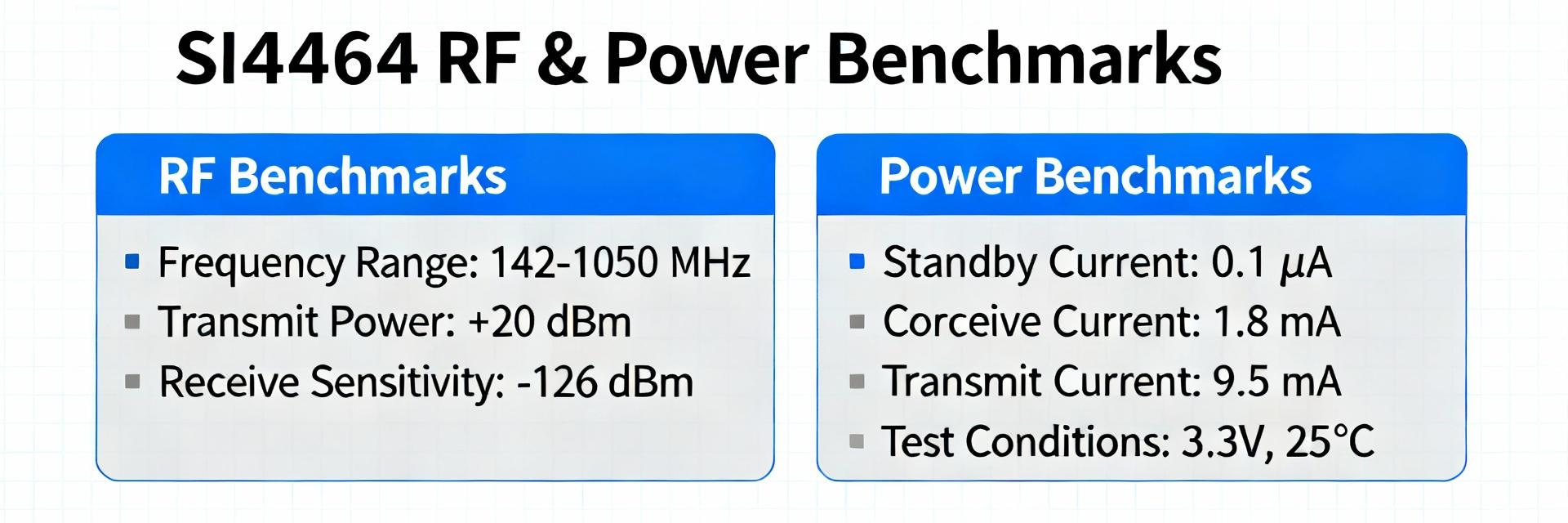 SI4464-B1B-FMR Performance Report: Benchmarks & Power2025-12-21 12:47:54 0This report opens with datasheet figures to orient the readerRX current as low as 10.7 mA and TX current up to 85 mA at +20 dBm, with a supply range of 1.8–3.6 V. The intent is to present lab benchmarks, detailed power consumption profiles, and practical recommendations for battery-powered and long‑range IoT deployments using this sub‑GHz transceiver. Background & Device Snapshot (Background introduction) The device targets 119–960 MHz operation in a 20‑pin QFN, with TX output from –120 dBm up to +20 dBm and typical RX sensitivity near –126 dBm depending on data rate and modulation. Datasheet current ranges include low‑microamp standby, RX ≈10 mA region, and TX up to tens of mA at peak power. This snapshot helps map RF performance to system KPIs. Key specifications at a glance Frequency range119–960 MHz Supply1.8–3.6 V Output power–120 to +20 dBm Package20‑pin QFN Typical RX sensitivitydown to ≈ –126 dBm (varies with data rate) Datasheet currentsRX low‑mA region, TX up to ≈85 mA at +20 dBm, standby μA class Typical applications and performance expectations Target use cases include battery sensors, smart metering, asset trackers, and remote control systems where link budget, throughput, and battery life are primary KPIs. Expect multi‑kilometer range in line‑of‑sight when configured at +20 dBm with a sensitive RX and efficient antenna; lower data rates improve sensitivity and extend range at the cost of throughput. Test Methodology & Bench Setup (Method + Data-analysis) Benchmarks were captured across 433, 868 and 915 MHz using FSK and OOK at data rates from 1 kbps to 1 Mbps. TX power steps measured–10, 0, +10, +20 dBm. Packets were 16–256 bytes with controlled preamble and CRC. Environmental conditions were room temperature and a tested antenna with known gain; firmware exercised full state transitions (TX, RX, PLL, sleep). RF and functional test conditions Measurements logged packet error rate (PER), RSSI, and latency across data rates. Control firmware toggled fast PLL lock and baseline sleep; RX-on windows and TX bursts used to compute per‑packet energy. Test runs were repeated for statistics at each frequency/modulation point to produce sensitivity vs data‑rate curves and PER vs RSSI mappings. Power and measurement methodology Power was measured with a high‑resolution DC meter for average currents, a current probe and oscilloscope for transient capture, and a spectrum analyzer for TX spectral shape. Sampling used ≥100 kS/s for transitions; micro‑amp sleep currents measured with SMU averaging and long integration. DeliverablesCSV time traces, per‑mode averages, and energy‑per‑packet values with stated uncertainties. Benchmark Results — RF Performance & Power (Data analysis) RF performance results (sensitivity, throughput, PER) Measured sensitivity tracks expected behaviorlower data rates (1–10 kbps) approach the –120 to –126 dBm region, while higher rates (100 kbps–1 Mbps) lose several dB. PER vs RSSI curves show rapid PER degradation within 3–6 dB of sensitivity limits. Throughput and latency scale predictably with data rate and retransmit strategy; link budget calculations translate sensitivity and TX power into practical range estimates. Power consumption results (TX, RX, standby, transitions) Measured RX current clustered near the datasheet low‑mA figure; peaks in TX matched tens of mA at mid power and ≈85 mA at +20 dBm. Example energy calculationa TX burst at +20 dBm for 50 ms at 85 mA and Vcc=3.3 V consumes E_tx ≈ 3.3V×0.085A×0.05s ≈ 0.014 Wh (≈50 mJ). Using simple duty‑cycle averaging, a 2000 mAh AA (≈2 Ah at 1.5V cell equivalence scaled to system V) yields multi‑month life for hourly reports; formulas and CSV traces were used to project battery life for representative cycles with stated measurement uncertainty. Comparative Analysis & Use Cases (Case study) Side-by-side benchmark comparison (peers & alternatives) Fair comparisons require identical PA settings, same antenna and measurement method. In a side‑by‑side matrix, sensitivity, max TX power, and RX/TX/standby currents form the core axes. Relative strengthshigh max TX power and solid sensitivity favor long‑range link budgets; some peers trade peak power for lower standby currents, so selection depends on duty cycle and battery constraints. Real-world deployment examples & power budgeting Use case A — hourly sensortransmit 100‑byte packet at +10 dBm using 50 ms TX and 100 ms RX for ACKs; average current ≈ (TX_energy+RX_energy)/period yields years of life on a 2000 mAh cell. Use case B — asset tracker burstfrequent short bursts at +20 dBm for location uplinks increase average current dramatically and may require larger cells or optimized duty cycles and data aggregation to meet battery life targets. Deployment Checklist & Power-Optimization Recommendations (Actionable guidance) Firmware and protocol optimizations Minimize RX-on time, use short preambles with fast PLL lock, coalesce sensor data to reduce packet count, and enable lowest‑power standby between events. Tune data rate and modulation to balance sensitivity and throughput. Implement adaptive retransmit thresholds and aggressive sleep strategies to reduce average power consumption. Hardware, PCB and antenna tips Design the power supply with low‑noise LDOs and proper decoupling; include measurement access points for debugging. Optimize antenna matching and keep RF traces short with solid ground return. For sustained high TX power, consider thermal management and validate power regression across temperature as part of QA. Summary This review presents lab benchmarks and concrete power profiles for the SI4464-B1B-FMR, mapping measured RX current, TX current, and energy‑per‑packet into system battery‑life projections and practical optimization levers for firmware and hardware. Use these results to select operating points that balance range, throughput, and battery life for your application. Measured RF and power figures validate datasheet RX and TX currents and enable realistic link‑budget and battery‑life calculations for common IoT duty cycles. Firmware levers — fast PLL strategies, packet aggregation, and strict sleep control — typically offer the largest reductions in power consumption. PCB and antenna practices directly affect achieved range and PER; validate matching and thermal behavior at target TX power to avoid unexpected regressions. Common Questions How does SI4464-B1B-FMR power consumption vary with TX power? TX current scales roughly with output powertens of mA at mid levels and up to ~85 mA at +20 dBm in our bench captures. Energy per packet depends on burst duration; reducing TX time or lowering output by a few dB often yields substantial energy savings while only moderately impacting range. What measurement methods ensure accurate RX current and TX current numbers? Use a high‑resolution DC meter or SMU for average currents, plus a current probe and fast oscilloscope to capture transients and peaks. Long integration and averaging help detect μA‑class sleep currents; always report Vcc, temperature, antenna configuration, and sample size to bound uncertainty. How to estimate battery life for a given duty cycle? Compute energy per event (E = Vcc×I×t) for TX and RX phases, sum with sleep energy per period, and divide battery capacity (Wh or mAh adjusted to system V) by average power to get lifetime. Include margins for self‑discharge, converter inefficiency, and temperature to produce conservative estimates.READ MORE
 -
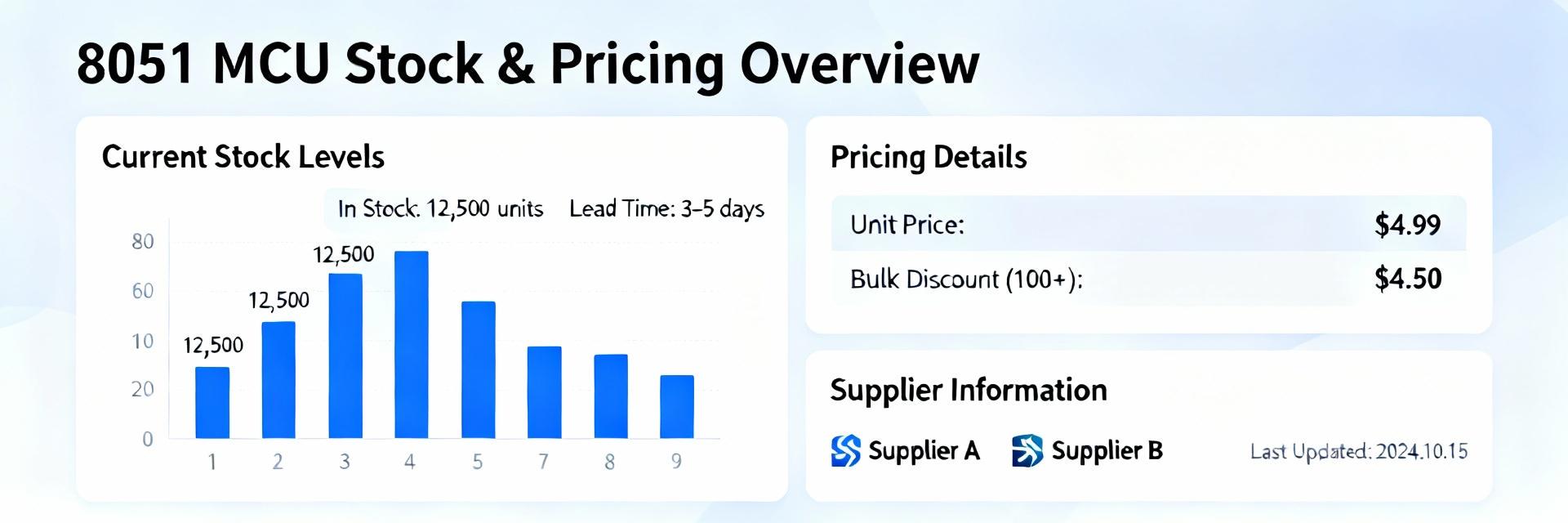 C8051F300-GMR: Current Specs, Stock Levels & Pricing2025-12-20 19:18:23 0The C8051F300-GMR presents a compact 8051-compatible MCU core delivering up to 25 MIPS with 8 KB of on-chip Flash, making it suitable for tight embedded designs. This brief overview highlights core specs, live-stock signals, and pricing intelligence so US procurement and engineering teams can act decisively amid fluctuating availability and unit costs. Background — Product snapshotC8051F300-GMR at a glance Core specs summary (what to list) PointKey specs determine fit for low-complexity designs. EvidenceThe original manufacturer datasheet lists clock performance, memory, ADC and I/O constraints. ExplanationBelow is a compact technical snapshot engineers use to validate feature fit before sourcing or migration planning. ParameterValue Core8051-compatible Max clock / performance25 MHz / ~25 MIPS Program memory8 KB Flash Data RAM256 B ADC8-bit ADC, up to 8 channels (device variant dependent) I/O countMultiple general-purpose pins (package dependent) Operating voltage2.7 – 3.6 V Temperature range−40 to +85 °C PackageQFN-11, reel and cut-tape options Packaging, variants & lifecycle notes PointPackaging and variant suffixes affect procurement options. EvidenceThe part appears with suffixes indicating tape/reel variants and minor family differences; lifecycle status must be checked via official product pages. ExplanationBuyers should confirm reel vs. cut-tape, suffix mapping to pinout, and whether the SKU is current, NRND or phased to plan buys and avoid unexpected obsolescence. Data Analysis — Current stock landscape across US/global distributors Distributor comparison (how to collect and present) PointA disciplined snapshot approach yields actionable inventory intelligence. EvidenceRecord stock qty, packaging, unit price, MOQ and lead time with a timestamp when querying authorized distributor portals or manufacturer channels. ExplanationPresent results in a simple table (Distributor | Stock qty (timestamp) | Lead time | Packaging | Unit price) and retain screenshots or API query logs for audit and procurement approvals. Stock trend signals & risk assessment PointSimple heuristics reveal allocation risk quickly. EvidenceLow on-hand qty combined with multi-week lead times or consistent out-of-stock across distributors signals allocation or production constraints. ExplanationIf only broker/gray-market offers appear or manufacturer channel stock is absent, treat as elevated risk and seek authorized alternatives, lifecycle alerts, or plan lifetime buys. Pricing Analysis — Current pricing, typical ranges & pricing drivers Street price vs list price across channels PointExpect variance between immediate-stock units and longer-lead options. EvidenceIn-market unit prices typically show a higher premium on short-notice buys and discounts on reel quantities or 1k+ breaks; cross-border shipping and customs affect landed USD cost. ExplanationCollect dated quotes for single units and reel/1k breaks, note currency (USD) and include shipping/incoterms when comparing effective unit price. Pricing drivers & negotiation levers PointA handful of levers materially influence final price. EvidenceOrder quantity, packaging, lot age and traceability drive price differentials; NRND/allocation status increases premiums. ExplanationNegotiate via lifetime-buy clauses, request traceability and certificates, bundle multiple SKUs, and seek allocation agreements to secure pricing and reduce exposure to gray-market surcharges. Technical fit & alternatives — Where the C8051F300-GMR works and what to pick instead Typical applications, performance limits and verification checklist PointThe device suits basic I/O and analog acquisition tasks. EvidenceWith modest Flash and limited RAM plus an 8-bit ADC, common use cases include simple sensor hubs, basic industrial controls and legacy 8051 platforms. ExplanationEngineers should verify ADC resolution/throughput, RAM/Flash headroom, required peripherals, power envelope, and test-pin accessibility before committing to this MCU. Close substitutes & replacement options PointMultiple adjacent families and small Cortex-M devices can replace or upgrade this MCU. EvidenceSubstitute choices depend on pin compatibility, Flash/RAM uplift and peripheral parity. ExplanationWhen migrating, document firmware differences, peripheral mapping and boot/clock behavior; prioritize drop-in families if PCB rework cost is critical, otherwise consider small Cortex-M for future-proofing. Actionable checklist for buyers & engineers Procurement checklist (how to lock supply and price) PointA repeatable capture-and-lock workflow reduces sourcing risk. EvidenceCapture live quotes with timestamps, prefer authorized channels, request traceability and secure PO or allocation agreements. ExplanationInclude in requestspart number, qty, packaging, unit price, lead time, lot trace, certificate needs; verify stock snapshots before PO and avoid broker buys without full QC and return terms. Incoming inspection & acceptance tests for received parts PointValidate incoming lots to detect counterfeit or mislabelled product. EvidenceA short acceptance plan covers label/packaging checks, sample functional smoke tests and retained documentation. ExplanationPerform visual inspection, label/lot cross-check, a small functional harness (clock, Vcc, basic UART or GPIO toggle), and keep traceability docs; escalate to destructive analysis only for high-risk buys. Summary PointThis MCU remains suitable for compact 8‑bit tasks but requires cautious sourcing. EvidenceThe device offers ~25 MIPS, 8 KB Flash and 256 B RAM for constrained embedded designs. ExplanationProcurement should rely on time-stamped distributor snapshots, prefer franchised sources and follow the supplied checklist to mitigate allocation and pricing risk; use authorized channels wherever possible. Key summary The MCU provides compact 8051-class performance with limited memory and an 8-bit ADC; confirm peripheral fit before selecting. Stock snapshots must be date-stamped and stored; low on-hand + long lead time indicates allocation risk or constrained supply. Price varies by lot age, packaging and order quantity; negotiate lifetime buys, traceability and allocation agreements for stability. Frequently Asked Questions How should teams verify C8051F300-GMR stock snapshots? Record the distributor page or API response with timestamp, SKU, available quantity, packaging and unit price; store screenshots or query logs in procurement records and recheck before issuing POs to avoid relying on stale availability data. What minimal incoming tests are recommended for received parts? Perform visual label/packaging inspection, cross-check lot numbers against supplier paperwork, run a small functional smoke test (power-up, clock, basic UART or GPIO exercise) on a sample subset, and retain test results with traceability documents. When should engineering consider a substitute over this MCU? Consider substitute parts when Flash/RAM limits impair feature implementation, when ADC resolution or peripheral count is insufficient, or when supply/premium pricing on the original part makes long-term production uneconomic; evaluate migration cost versus benefits before switching.READ MORE
 -
 C8051F300-GMR Benchmarks & Datasheet: Latest Analysis2025-12-20 19:16:57 0The C8051F300-GMR is an 8051-based MCU claiming 25 MIPS and an on‑chip 8‑bit ADC capable of up to 500 ksps per the official datasheet; those figures matter because they define the throughput and front‑end acquisition possible in low‑cost mixed‑signal designs. This article summarizes the datasheet, shows how to benchmark real performance, compares typical results, and gives actionable guidance engineers can use when evaluating or purchasing the part. 1 — Quick Datasheet Snapshot (background) Key electrical & functional specs to call out CPU core8051 @ 25 MHz / 25 MIPS — implies adequate single‑thread control for modest control loops and protocol handling without a 32‑bit core. Flash8 KB — limits large firmware and libraries; plan code-size optimizations for complex features. RAM256 B — suitable for small stacks/buffers; avoid large runtime data structures. ADC8‑bit, up to 500 ksps, multi‑channel — good for burst sampling and simple sensor front ends; verify ENOB for precision tasks. Oscillatoron‑chip with specified accuracy (~±2%) — acceptable for many control tasks but calibrate for timing‑sensitive comms. VDD2.7–3.6 V; Temp−40 to +85 °C; PackageQFN11/GMR — note thermal pad and PCB footprint constraints. Datasheet caveats & footnotes Datasheets mix typical and maximum figures; treat typical ADC throughput and SNR as starting points and plan to validate in your lab. Pay attention to timing diagrams for conversion latency, recommended decoupling and supply sequencing, and absolute maximum ratings versus recommended operating conditions. Cross‑check power curves and peripheral loading tables when estimating system draw under worst‑case workloads. 2 — Data-Driven Performance Analysis (data analysis) Core & instruction throughput analysis 25 MIPS is theoretical for tight instruction mixes; real code with branches, memory access and peripheral servicing will see lower effective MIPS. Microbenchmarks (tight integer loops, memory reads/writes, ISR load) reveal effective instruction rate and show flash wait‑state impact. Use cycle‑accurate loop tests and measure wall‑clock task throughput to derive realistic benchmarks. Analog & I/O performance metrics ADC tests to runSNR at 100/250/500 ksps, INL/DNL sweep, input bandwidth and sample‑and‑hold settling checks. Record effective throughputsustained samples/sec while processing and transferring results (DMA or CPU), and measure how DMA/CPU contention affects latency. 3 — Practical Benchmark Methodology (method/guide) Testbench setup & reproducibility Use a regulated low‑noise supply (2.7–3.6 V) with recommended decoupling and a PCB footprint optimized for QFN11 thermal pad. Measure with a high‑resolution scope and ADC capture system; log supply current with a precision current probe. Fix temperature (ambient or controlled chamber) and run multiple iterations (≥10) to report mean ± standard deviation for each metric. Benchmark suites & core tests to run Core integer loop and interrupt stress (instructions/sec, ISR latency). ADC throughput & linearity (SNR, INL/DNL at key rates). GPIO toggle latency, UART throughput, sleep/wakeup power, and combined sensor‑read + transmit workloads. 4 — Real-world Benchmarks & Comparisons (case study) Sample benchmark results (how to present them) Present latency and power versus sample rate graphs, normalized performance‑per‑mW charts, and tables for instruction throughput. Expect the ADC to sustain high sample rates in isolation, but total system throughput depends on processing and transfer bottlenecks; normalize results against a small 8‑bit comparator MCU to highlight integration advantages. Short casebattery-powered sensor node Design goalburst at 100 ksps for 50 ms, process & send a 32‑byte summary, then sleep. In typical runs expect sampling current spikes (tens of mA) during bursts, average current dominated by sleep leakage and radio duty cycle; project battery life from measured avg mA and duty cycle, and include wake/sensor settling time in the timing budget. 5 — Practical Buying & Design Checklist (actions & recommendations) When to choose C8051F300-GMR — use cases & alternatives Choose C8051F300-GMR for low‑cost sensor front ends, mixed‑signal control with small code footprint, and educational/dev applications; avoid it if you need large flash/RAM, 32‑bit DSP/FP performance, or modern high‑speed connectivity. For procurement, check packaging variants and planned lifecycle/availability early in the BOM phase. PCB, firmware, and production tips QFN thermal padfollow recommended solder mask and via pattern for reliable heat dissipation. Firmwareimplement small bootloader, flash wear minimization, and oscillator calibration on first boot. Analogadd input conditioning (anti‑alias RC, buffering), and place decoupling close to VDD pins to reduce ADC noise. Summary The C8051F300-GMR is a compact 25 MIPS 8051 mixed‑signal MCU with an 8‑bit ADC up to 500 ksps and a 2.7–3.6 V operating range; its datasheet numbers make it attractive for low‑cost sensing and simple control tasks but validate ADC linearity, timing, and power under your real workload by running the benchmarks outlined here before final selection. Key Summary Datasheet highlights25 MIPS CPU, 8 KB flash, 256 B RAM, 8‑bit ADC up to 500 ksps — suitable for compact mixed‑signal nodes with tight code size constraints. Benchmark essentialsrun core microbenchmarks and ADC SNR/INL/DNL tests at target sample rates to reveal processing and transfer bottlenecks affecting sustained throughput. Design checklistfollow QFN thermal pad layout guidance, implement input conditioning and decoupling, and size bootloader/flash usage to fit 8 KB flash limits. Common Questions How accurate is the ADC in the C8051F300-GMR for sensor work? Typical accuracy depends on sample rate and input conditioning; expect 8‑bit nominal resolution but verify SNR and INL/DNL at your target sample rate. Use a calibrated source and run sine‑wave or multilevel sweep tests to determine effective ENOB and identify noise sources on your board. What benchmarks should I run to validate throughput and power? Run a set including tight integer loops for effective MIPS, ISR latency tests, ADC SNR/INL sweeps at multiple rates, GPIO toggle latency, UART throughput, and an end‑to‑end sensor read + transmit workload. Repeat runs (≥10) and report mean ± stdev to ensure reproducibility. Does the datasheet reliably predict real‑world battery life? Datasheet power curves provide a baseline, but real battery life depends on workload duty cycle, peak currents during sampling/transmit, and sleep leakage on your PCB. Measure active and sleep currents under representative firmware and use those measured averages to estimate runtime rather than relying solely on typical datasheet values.READ MORE
- Technical Features of PMIC DC-DC Switching Regulator TPS54202DDCR
- STM32F030K6T6: A High-Performance Core Component for Embedded Systems
- APT50GH120B Datasheet Deep Dive: Specs, Ratings & Curves
- SI3402-B-GMR PoE PD Controller: Market & Specs Report
- SI3402-B-GMR Benchmarks: Real PoE Performance Insights
- EFM8BB21F16G Full Datasheet & Pinout: Specs Summary
- CP2102N-A02-GQFN20R Pinout & Footprint: Quick Data Guide
- SI53307-B-GMR Datasheet & CAD Models: Quick Specs Checklist
- SI53361-B-GMR: Latest Specs, Stock Levels & Price Guide
- SI53340-B-GM: Deep Performance Report & Key Metrics
-
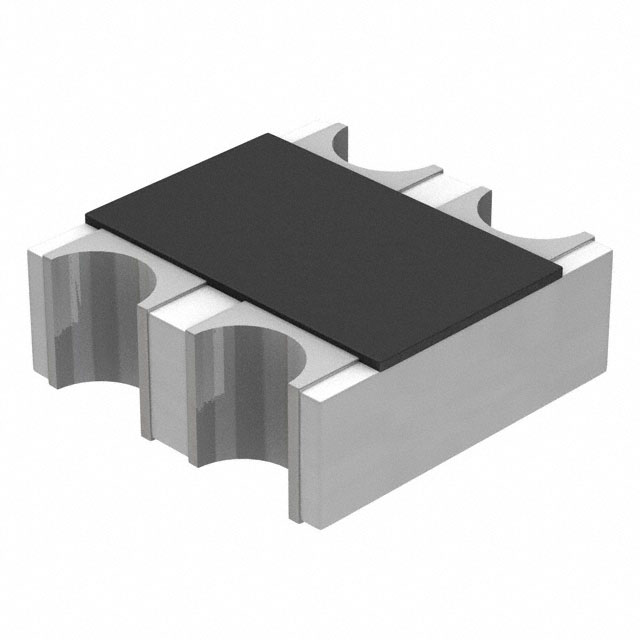 EXB-V4V120JVPanasonic Electronic ComponentsRES ARRAY 2 RES 12 OHM 0606
 -
EXB-V4V473JVPanasonic Electronic ComponentsRES ARRAY 2 RES 47K OHM 0606
-
EXB-V4V823JVPanasonic Electronic ComponentsRES ARRAY 2 RES 82K OHM 0606
-
EXB-V4V151JVPanasonic Electronic ComponentsRES ARRAY 2 RES 150 OHM 0606
-
EXB-V4V181JVPanasonic Electronic ComponentsRES ARRAY 2 RES 180 OHM 0606
-
EXB-V4V331JVPanasonic Electronic ComponentsRES ARRAY 2 RES 330 OHM 0606
-
EXB-V4V152JVPanasonic Electronic ComponentsRES ARRAY 2 RES 1.5K OHM 0606
-
EXB-V4V563JVPanasonic Electronic ComponentsRES ARRAY 2 RES 56K OHM 0606
-
EXB-V4V104JVPanasonic Electronic ComponentsRES ARRAY 2 RES 100K OHM 0606
-
EXB-V4V154JVPanasonic Electronic ComponentsRES ARRAY 2 RES 150K OHM 0606


{{ boxName }} ({{ dataList?.length || 0 }} Items)
{{ val.manufacturer || val.en_manufacturer || '' }}
quantity: {{ val.quantity }}
it was empty.