-
- Contact Us
- Privacy Policy
- term and condition
- Cookies policy

C8051F300-GMR Benchmarks & Datasheet: Latest Analysis
The C8051F300-GMR is an 8051-based MCU claiming 25 MIPS and an on‑chip 8‑bit ADC capable of up to 500 ksps per the official datasheet; those figures matter because they define the throughput and front‑end acquisition possible in low‑cost mixed‑signal designs. This article summarizes the datasheet, shows how to benchmark real performance, compares typical results, and gives actionable guidance engineers can use when evaluating or purchasing the part.
1 — Quick Datasheet Snapshot (background)

Key electrical & functional specs to call out
- CPU core: 8051 @ 25 MHz / 25 MIPS — implies adequate single‑thread control for modest control loops and protocol handling without a 32‑bit core.
- Flash: 8 KB — limits large firmware and libraries; plan code-size optimizations for complex features.
- RAM: 256 B — suitable for small stacks/buffers; avoid large runtime data structures.
- ADC: 8‑bit, up to 500 ksps, multi‑channel — good for burst sampling and simple sensor front ends; verify ENOB for precision tasks.
- Oscillator: on‑chip with specified accuracy (~±2%) — acceptable for many control tasks but calibrate for timing‑sensitive comms.
- VDD: 2.7–3.6 V; Temp: −40 to +85 °C; Package: QFN11/GMR — note thermal pad and PCB footprint constraints.
Datasheet caveats & footnotes
Datasheets mix typical and maximum figures; treat typical ADC throughput and SNR as starting points and plan to validate in your lab. Pay attention to timing diagrams for conversion latency, recommended decoupling and supply sequencing, and absolute maximum ratings versus recommended operating conditions. Cross‑check power curves and peripheral loading tables when estimating system draw under worst‑case workloads.
2 — Data-Driven Performance Analysis (data analysis)
Core & instruction throughput analysis
25 MIPS is theoretical for tight instruction mixes; real code with branches, memory access and peripheral servicing will see lower effective MIPS. Microbenchmarks (tight integer loops, memory reads/writes, ISR load) reveal effective instruction rate and show flash wait‑state impact. Use cycle‑accurate loop tests and measure wall‑clock task throughput to derive realistic benchmarks.
Analog & I/O performance metrics
- ADC tests to run: SNR at 100/250/500 ksps, INL/DNL sweep, input bandwidth and sample‑and‑hold settling checks.
- Record effective throughput: sustained samples/sec while processing and transferring results (DMA or CPU), and measure how DMA/CPU contention affects latency.
3 — Practical Benchmark Methodology (method/guide)
Testbench setup & reproducibility
Use a regulated low‑noise supply (2.7–3.6 V) with recommended decoupling and a PCB footprint optimized for QFN11 thermal pad. Measure with a high‑resolution scope and ADC capture system; log supply current with a precision current probe. Fix temperature (ambient or controlled chamber) and run multiple iterations (≥10) to report mean ± standard deviation for each metric.
Benchmark suites & core tests to run
- Core integer loop and interrupt stress (instructions/sec, ISR latency).
- ADC throughput & linearity (SNR, INL/DNL at key rates).
- GPIO toggle latency, UART throughput, sleep/wakeup power, and combined sensor‑read + transmit workloads.
4 — Real-world Benchmarks & Comparisons (case study)
Sample benchmark results (how to present them)
Present latency and power versus sample rate graphs, normalized performance‑per‑mW charts, and tables for instruction throughput. Expect the ADC to sustain high sample rates in isolation, but total system throughput depends on processing and transfer bottlenecks; normalize results against a small 8‑bit comparator MCU to highlight integration advantages.
Short case: battery-powered sensor node
Design goal: burst at 100 ksps for 50 ms, process & send a 32‑byte summary, then sleep. In typical runs expect sampling current spikes (tens of mA) during bursts, average current dominated by sleep leakage and radio duty cycle; project battery life from measured avg mA and duty cycle, and include wake/sensor settling time in the timing budget.
5 — Practical Buying & Design Checklist (actions & recommendations)
When to choose C8051F300-GMR — use cases & alternatives
Choose C8051F300-GMR for low‑cost sensor front ends, mixed‑signal control with small code footprint, and educational/dev applications; avoid it if you need large flash/RAM, 32‑bit DSP/FP performance, or modern high‑speed connectivity. For procurement, check packaging variants and planned lifecycle/availability early in the BOM phase.
PCB, firmware, and production tips
- QFN thermal pad: follow recommended solder mask and via pattern for reliable heat dissipation.
- Firmware: implement small bootloader, flash wear minimization, and oscillator calibration on first boot.
- Analog: add input conditioning (anti‑alias RC, buffering), and place decoupling close to VDD pins to reduce ADC noise.
Summary
The C8051F300-GMR is a compact 25 MIPS 8051 mixed‑signal MCU with an 8‑bit ADC up to 500 ksps and a 2.7–3.6 V operating range; its datasheet numbers make it attractive for low‑cost sensing and simple control tasks but validate ADC linearity, timing, and power under your real workload by running the benchmarks outlined here before final selection.
Key Summary
- Datasheet highlights: 25 MIPS CPU, 8 KB flash, 256 B RAM, 8‑bit ADC up to 500 ksps — suitable for compact mixed‑signal nodes with tight code size constraints.
- Benchmark essentials: run core microbenchmarks and ADC SNR/INL/DNL tests at target sample rates to reveal processing and transfer bottlenecks affecting sustained throughput.
- Design checklist: follow QFN thermal pad layout guidance, implement input conditioning and decoupling, and size bootloader/flash usage to fit 8 KB flash limits.
Common Questions
How accurate is the ADC in the C8051F300-GMR for sensor work?
Typical accuracy depends on sample rate and input conditioning; expect 8‑bit nominal resolution but verify SNR and INL/DNL at your target sample rate. Use a calibrated source and run sine‑wave or multilevel sweep tests to determine effective ENOB and identify noise sources on your board.
What benchmarks should I run to validate throughput and power?
Run a set including tight integer loops for effective MIPS, ISR latency tests, ADC SNR/INL sweeps at multiple rates, GPIO toggle latency, UART throughput, and an end‑to‑end sensor read + transmit workload. Repeat runs (≥10) and report mean ± stdev to ensure reproducibility.
Does the datasheet reliably predict real‑world battery life?
Datasheet power curves provide a baseline, but real battery life depends on workload duty cycle, peak currents during sampling/transmit, and sleep leakage on your PCB. Measure active and sleep currents under representative firmware and use those measured averages to estimate runtime rather than relying solely on typical datasheet values.
-
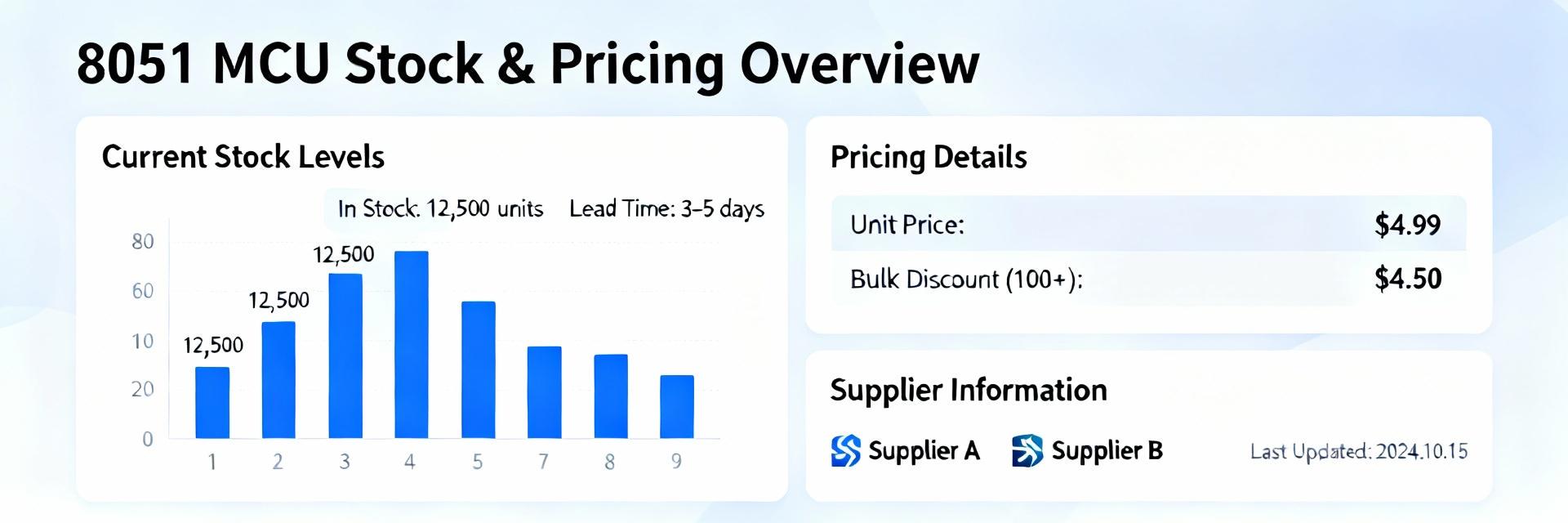 C8051F300-GMR: Current Specs, Stock Levels & Pricing2025-12-20 19:18:23 0The C8051F300-GMR presents a compact 8051-compatible MCU core delivering up to 25 MIPS with 8 KB of on-chip Flash, making it suitable for tight embedded designs. This brief overview highlights core specs, live-stock signals, and pricing intelligence so US procurement and engineering teams can act decisively amid fluctuating availability and unit costs. Background — Product snapshotC8051F300-GMR at a glance Core specs summary (what to list) PointKey specs determine fit for low-complexity designs. EvidenceThe original manufacturer datasheet lists clock performance, memory, ADC and I/O constraints. ExplanationBelow is a compact technical snapshot engineers use to validate feature fit before sourcing or migration planning. ParameterValue Core8051-compatible Max clock / performance25 MHz / ~25 MIPS Program memory8 KB Flash Data RAM256 B ADC8-bit ADC, up to 8 channels (device variant dependent) I/O countMultiple general-purpose pins (package dependent) Operating voltage2.7 – 3.6 V Temperature range−40 to +85 °C PackageQFN-11, reel and cut-tape options Packaging, variants & lifecycle notes PointPackaging and variant suffixes affect procurement options. EvidenceThe part appears with suffixes indicating tape/reel variants and minor family differences; lifecycle status must be checked via official product pages. ExplanationBuyers should confirm reel vs. cut-tape, suffix mapping to pinout, and whether the SKU is current, NRND or phased to plan buys and avoid unexpected obsolescence. Data Analysis — Current stock landscape across US/global distributors Distributor comparison (how to collect and present) PointA disciplined snapshot approach yields actionable inventory intelligence. EvidenceRecord stock qty, packaging, unit price, MOQ and lead time with a timestamp when querying authorized distributor portals or manufacturer channels. ExplanationPresent results in a simple table (Distributor | Stock qty (timestamp) | Lead time | Packaging | Unit price) and retain screenshots or API query logs for audit and procurement approvals. Stock trend signals & risk assessment PointSimple heuristics reveal allocation risk quickly. EvidenceLow on-hand qty combined with multi-week lead times or consistent out-of-stock across distributors signals allocation or production constraints. ExplanationIf only broker/gray-market offers appear or manufacturer channel stock is absent, treat as elevated risk and seek authorized alternatives, lifecycle alerts, or plan lifetime buys. Pricing Analysis — Current pricing, typical ranges & pricing drivers Street price vs list price across channels PointExpect variance between immediate-stock units and longer-lead options. EvidenceIn-market unit prices typically show a higher premium on short-notice buys and discounts on reel quantities or 1k+ breaks; cross-border shipping and customs affect landed USD cost. ExplanationCollect dated quotes for single units and reel/1k breaks, note currency (USD) and include shipping/incoterms when comparing effective unit price. Pricing drivers & negotiation levers PointA handful of levers materially influence final price. EvidenceOrder quantity, packaging, lot age and traceability drive price differentials; NRND/allocation status increases premiums. ExplanationNegotiate via lifetime-buy clauses, request traceability and certificates, bundle multiple SKUs, and seek allocation agreements to secure pricing and reduce exposure to gray-market surcharges. Technical fit & alternatives — Where the C8051F300-GMR works and what to pick instead Typical applications, performance limits and verification checklist PointThe device suits basic I/O and analog acquisition tasks. EvidenceWith modest Flash and limited RAM plus an 8-bit ADC, common use cases include simple sensor hubs, basic industrial controls and legacy 8051 platforms. ExplanationEngineers should verify ADC resolution/throughput, RAM/Flash headroom, required peripherals, power envelope, and test-pin accessibility before committing to this MCU. Close substitutes & replacement options PointMultiple adjacent families and small Cortex-M devices can replace or upgrade this MCU. EvidenceSubstitute choices depend on pin compatibility, Flash/RAM uplift and peripheral parity. ExplanationWhen migrating, document firmware differences, peripheral mapping and boot/clock behavior; prioritize drop-in families if PCB rework cost is critical, otherwise consider small Cortex-M for future-proofing. Actionable checklist for buyers & engineers Procurement checklist (how to lock supply and price) PointA repeatable capture-and-lock workflow reduces sourcing risk. EvidenceCapture live quotes with timestamps, prefer authorized channels, request traceability and secure PO or allocation agreements. ExplanationInclude in requestspart number, qty, packaging, unit price, lead time, lot trace, certificate needs; verify stock snapshots before PO and avoid broker buys without full QC and return terms. Incoming inspection & acceptance tests for received parts PointValidate incoming lots to detect counterfeit or mislabelled product. EvidenceA short acceptance plan covers label/packaging checks, sample functional smoke tests and retained documentation. ExplanationPerform visual inspection, label/lot cross-check, a small functional harness (clock, Vcc, basic UART or GPIO toggle), and keep traceability docs; escalate to destructive analysis only for high-risk buys. Summary PointThis MCU remains suitable for compact 8‑bit tasks but requires cautious sourcing. EvidenceThe device offers ~25 MIPS, 8 KB Flash and 256 B RAM for constrained embedded designs. ExplanationProcurement should rely on time-stamped distributor snapshots, prefer franchised sources and follow the supplied checklist to mitigate allocation and pricing risk; use authorized channels wherever possible. Key summary The MCU provides compact 8051-class performance with limited memory and an 8-bit ADC; confirm peripheral fit before selecting. Stock snapshots must be date-stamped and stored; low on-hand + long lead time indicates allocation risk or constrained supply. Price varies by lot age, packaging and order quantity; negotiate lifetime buys, traceability and allocation agreements for stability. Frequently Asked Questions How should teams verify C8051F300-GMR stock snapshots? Record the distributor page or API response with timestamp, SKU, available quantity, packaging and unit price; store screenshots or query logs in procurement records and recheck before issuing POs to avoid relying on stale availability data. What minimal incoming tests are recommended for received parts? Perform visual label/packaging inspection, cross-check lot numbers against supplier paperwork, run a small functional smoke test (power-up, clock, basic UART or GPIO exercise) on a sample subset, and retain test results with traceability documents. When should engineering consider a substitute over this MCU? Consider substitute parts when Flash/RAM limits impair feature implementation, when ADC resolution or peripheral count is insufficient, or when supply/premium pricing on the original part makes long-term production uneconomic; evaluate migration cost versus benefits before switching.READ MORE
 -
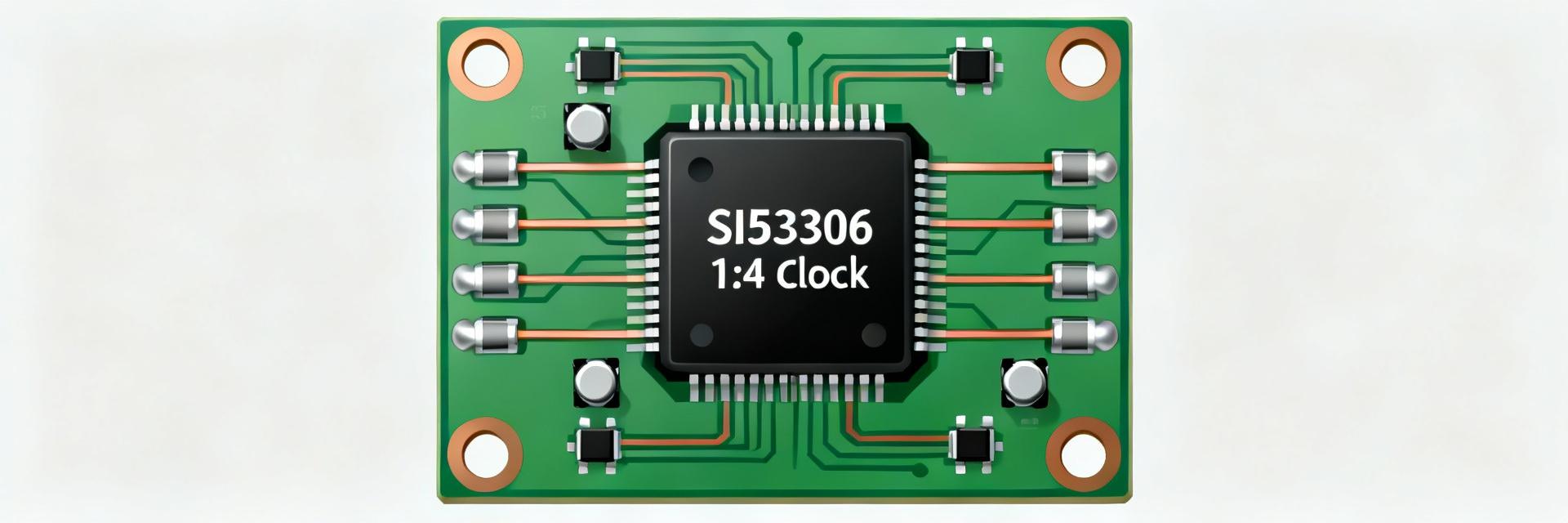 SI53306-B-GMR Datasheet Breakdown: Key Specs & Pinout2025-12-18 12:43:55 0The SI53306-B-GMR supports input frequencies up to 725 MHz and provides a 14 fanout, numbers that immediately define its role in high-speed clock distribution and protocol fanout tasks. This article gives a practical, datasheet-driven breakdown of the SI53306-B-GMR’s key specifications, pinout, and implementation guidance so engineers can evaluate and integrate the part quickly. The goal is to make the datasheet actionableidentify the exact tables and figures to check, suggest layout and termination practices, and provide troubleshooting steps for a robust first-pass PCB bring-up. This write-up references datasheet figure and table identifiers for cross-checking and annotates the most relevant implementation points. It targets FPGA and SerDes designers, system integrators, and hardware engineers who need concise, testable guidance to move from datasheet to working board. 1 — BackgroundWhat the SI53306-B-GMR Is and When to Use It Overview & family context PointThe SI53306-B-GMR belongs to the Si5330x family of any‑format clock buffers and is positioned as a compact 14 fanout buffer for multi-protocol distribution. EvidenceSee the Si5330x family overview and device selection table in the datasheet (refer to the "Device Family Overview" table and "Ordering Options" figure). ExplanationThe Si5330x family spans single- and multi-output parts with selectable output formats; the SI53306-B-GMR specifically provides four outputs (OUT0–OUT3) that can be configured as CML, HCSL, LVDS, LVPECL, or LVCMOS depending on VDDIO and strap/mode settings. Typical supply domains include core VDD (≈1.8–3.3 V range in many family members) and VDDIO for output voltage compatibility; consult the "Recommended Operating Conditions" table in the datasheet for the exact supply range for SI53306-B-GMR. This device is ideal where one clean clock source needs four matched outputs with low additive jitter and low skew. Typical applications & system roles PointThe SI53306-B-GMR is used where deterministic, low-jitter clock distribution is required. EvidenceSee the "Applications" section in the datasheet and application notes that list FPGA clocking, SerDes deskew, ADC/DAC front ends, and network timing. ExplanationIn FPGA clock distribution, the device provides multiple outputs with selectable voltage formats to match different FPGA banks or SerDes transceivers; low additive jitter preserves link margin for high-speed transceivers. For SerDes deskew and multi-protocol links, format flexibility (CML/HCSL/LVDS) allows direct interfacing to receivers without external translators. In data-acquisition and mixed-signal systems, low jitter and matched propagation help maintain SNR and sampling timing. In switching and routing hardware, the 14 fanout simplifies clock tree design and reduces the need for multiple off-board sources. Key selling points pulled from the datasheet PointThe datasheet lists a set of headline specs that determine suitability for high-speed systems. EvidenceRefer to the "Electrical Specifications" summary table and the "Absolute Maximum Ratings" and "Recommended Operating Conditions" tables. ExplanationKey items to notemaximum input frequency725 MHz (datasheet "Input Clock Characteristics" table); supply rangecheck the "Recommended Operating Conditions" table—typical device operation spans approximately 1.71–3.63 V for combined domains depending on VDD and VDDIO selections; operating temperatureindustrial range (–40 to +85 °C) as given in the "Thermal and Reliability" section; low additive RMS jitter and low output-to-output skew are listed in the "Phase Noise and Jitter" and "Timing" tables. These figures are what make the SI53306-B-GMR attractive for preserving SERDES margins and tight clock trees. 2 — Key Electrical & Performance Specs (datasheet deep-dive) Input and output electrical specifications PointUnderstand input frequency limits, supported output formats, and voltage/drive constraints before layout. EvidenceSee "Input Clock Characteristics" and "Output Electrical Characteristics" tables in the datasheet for thresholds, drive strength, and supported formats. ExplanationThe SI53306-B-GMR accepts input clocks up to 725 MHz (max input frequency entry). Outputs can be configured as differential CML/HCSL/LVDS/LVPECL or single‑ended LVCMOS depending on mode strap or register settings; each format has specific VOH/VOL or VOD/VOS limits in the "Output Electrical Characteristics" table. VIH/VIL thresholds for input pins and mode pins are detailed in the "DC Characteristics" table—verify VDDIO-dependent thresholds when selecting LVCMOS levels. Drive capability and recommended load (e.g., 50 Ω single-ended or 100 Ω differential) are specified per output format; those entries inform termination and series resistor choices. Power, thermal, and package details PointPower rails, current consumption, thermal limits, and package footprint affect BOM and thermal management. EvidenceConsult the "Recommended Operating Conditions", "DC Supply Current" table, and "Thermal Characteristics" / "Package Outline" figures in the datasheet. ExplanationThe datasheet lists VDD and VDDIO ranges and typical ICC values under specified conditions; use the "DC Supply Current" table to estimate total board power and decoupling needs. The operating junction and ambient thermal limits, along with θJA/θJC values in "Thermal Characteristics", drive copper pour and via stitching decisions. The SI53306-B-GMR is typically offered in a compact QFN/land-grid package (see the "Mechanical Drawing" figure)—verify the ordering code for the exact package variant and review the solder-paste and pad recommendations in the mechanical section before generating the PCB footprint. Timing, jitter, and skew specifications PointJitter, phase noise, propagation delay, and skew determine whether the device meets system timing budgets. EvidenceReview the "Phase Noise", "Additive Jitter", and "Timing and Skew" tables and figures in the datasheet. ExplanationThe datasheet supplies additive RMS jitter (integrated over specified band, e.g., 12 kHz–20 MHz) and phase-noise plots for typical output formats; additive jitter values should be combined in quadrature with source jitter when calculating overall timing budget. Propagation delay and output-to-output skew entries dictate deskew margin for parallel SERDES lanes—use worst-case skew numbers from the "Timing" table when allocating phase budget. Where phase noise is critical, use the provided phase-noise plots (referenced figure in datasheet) to model oscillator/PLL interactions. For link budget calculations, use datasheet additive jitter + source jitter + channel-induced jitter to predict BER impact at a given data rate. 3 — Pinout & Pin Functions (detailed pinout) Pin map summary and recommended figure PointA clear pin map is essential before layout; label each power, ground, input and output pin explicitly. EvidenceUse the "Pinout Diagram" figure and the "Pin Description" table in the datasheet to capture exact pin numbers. ExplanationReproduce a pin map that labels VDD, VDDIO, multiple GND pins, input pin(s) (CLK_IN), outputs OUT0–OUT3 with their pin numbers, mode/strap pins (e.g., MODE0/MODE1 or FORMAT pins), OE/RESET, and any NC pins. Include the exact pin numbers from the datasheet's pin diagram and the adjacent "Pin Description" table. For documentation, place a labeled figure (the datasheet's pin diagram) and an adjacent table listing pin number, net name, function, and recommended PCB land pattern references so layout engineers can map nets directly to the footprint. Pin electrical characteristics & recommended decoupling PointFollow per-pin electrical limits and decoupling guidance to avoid functional issues. EvidenceConsult "DC Characteristics", "Absolute Maximum Ratings", and the "Recommended Decoupling" notes/figures in the datasheet. ExplanationPer-pin DC limits (max currents, VDDIO ranges) are found in the DC tables—respect VDDIO maximums for mode pins to avoid latch-up. Decoupling guidanceplace a 0.1 µF ceramic capacitor within 1–2 mm of each VDD and VDDIO pin, add a 1 µF (or larger) bulk capacitor on the local supply rail, and consider a 10 µF bulk on the main regulator output; follow the datasheet ESR recommendations where given. Also follow recommended placement for any AC-coupling capacitors on high-speed outputs (the datasheet will specify when AC coupling is required and the recommended capacitor value and voltage rating). Pin-selectable modes & configuration pins PointPin straps and mode pins determine output format and divider settings for out-of-the-box operation. EvidenceSee the "Pin Strapping and Mode Configuration" table and example truth tables in the datasheet. ExplanationThe SI53306-B-GMR supports pin-selectable output format and divider via strap pins or programmable registers depending on the specific SKU and firmware. The datasheet provides a truth table showing combinations of MODE/FORMAT pins that produce LVDS, LVCMOS, CML, etc. For example, pulling FORMAT pin high with VDDIO selected to an LVDS-compatible level selects differential outputs; setting MODE pins to particular binary values can set an integer divider or bypass mode. Include the datasheet truth tables or reproduce them in the design notes to ensure correct initial configuration at power-up before any I2C/SPI configuration is applied. 4 — Implementation GuidePCB Layout, Power, and Signal Integrity Power-supply filtering and grounding best practices PointProper power filtering and ground strategy reduce jitter and EMI. EvidenceSee the "Application Guidelines" and "Layout Recommendations" sections/figures in the datasheet and related application notes. ExplanationUse separate analog/digital planes if recommended; tie grounds with multiple vias and maintain a contiguous ground plane under the SI53306-B-GMR. Place decoupling caps (0.1 µF) within 1–2 mm of each VDD pin and add a 1 µF to 10 µF bulk cap near the regulator output. If the datasheet suggests ferrite beads or LC filters on VDDIO to isolate noisy IO domains, follow those BOM suggestions. Provide a short, low-impedance path from decoupling caps to device pins and avoid routing high-speed signals under the device if it interferes with thermal vias or ground stitching. Follow the datasheet's recommended BOM list for best results in minimizing supply-induced phase noise. Routing outputs by formatCML/HCSL/LVDS/LVCMOS practical tips PointEach output format has distinct routing and termination rules that affect signal integrity. EvidenceThe "Application Circuits" and "Output Termination" examples in the datasheet list recommended circuits per format. ExplanationFor differential outputs (CML, LVDS, LVPECL), route as controlled-impedance differential pairs (typically 100 Ω differential) with matched lengths and symmetry; place differential termination (100 Ω) close to the receiver or at the driver per the datasheet recommendation. For CML/HCSL, AC coupling and series resistors may be required—follow the example schematics for proper DC biasing and series resistance. LVCMOS outputs require single-ended routing with proper series resistor (e.g., 22–33 Ω) to damp reflections when driving 50 Ω traces. Provide test points or velocity-matched probe points as recommended by the datasheet to enable accurate measurement without loading the line excessively. Thermal, footprint, and assembly notes PointCorrect footprint and thermal measures prevent solder defects and ensure reliability. EvidenceRefer to the "Package Mechanical Dimensions" and "Reflow and Assembly" notes in the datasheet. ExplanationUse the datasheet's recommended solder-pad dimensions and stencil recommendations exactly to avoid tombstoning or voiding. For thermal management, include an exposed pad (if present) tied to ground with multiple thermal vias to inner planes; the "Thermal Pad Recommendations" figure shows suggested via diameter, count and spacing. Follow the reflow profile limits in the datasheet to comply with peak temperature and time-above-liquidus parameters. Where high ambient dissipation is expected, increase copper pour and add stitching to reduce θJA and maintain device junction temperature within the datasheet-specified limits. 5 — Testing, Troubleshooting & Example Use Cases Common integration issues & datasheet cross-checks PointQuickly cross-check datasheet tables when common faults appear at bring-up. EvidenceUse "Power-Up Sequencing", "Pin Strapping", "DC Characteristics", and "Absolute Maximum Ratings" tables for diagnostics. ExplanationTypical problems include no output (check VDD and VDDIO presence and levels, verify OE/RESET strap state, and confirm input clock presence and amplitude against "Input Clock Characteristics"), incorrect format (verify mode strap truth table and VDDIO level for LVCMOS thresholds), and high jitter (check supply decoupling and supply noise per "Phase Noise" notes). Create a quick diagnostic checklist1) Verify all recommended supply voltages and decoupling, 2) Check strap pins for correct pull-ups/pull-downs and mode selection, 3) Confirm input clock amplitude and frequency under "Input Clock Characteristics", 4) Measure outputs with proper termination and load as per "Output Electrical Characteristics". Test procedures & measurement tips PointAccurate measurement of jitter, skew, and delay requires controlled fixtures and instrument settings. EvidenceSee the "Measurement and Test" recommendations in the application notes section of the datasheet. ExplanationFor jitter, use a phase-noise analyzer or high-bandwidth sampling scope with low-jitter reference; integrate phase-noise or jitter over the same frequency band listed in the datasheet (e.g., 12 kHz–20 MHz) for direct comparison. For propagation delay and skew, use differential probes with matched impedance and minimize probe stub lengths; trigger on the input and measure differential outputs with the same probing configuration. Use AC coupling where the datasheet specifies it and implement the recommended terminations to avoid measurement artifacts. Recommended instruments include 6+ GHz scopes with low-noise probes and a spectrum/phase-noise analyzer for accurate phase-noise plots. Example reference designs and alternative parts PointTwo concise use cases illustrate integration choices and potential alternative parts. EvidenceDatasheet "Application Diagrams" plus "Device Selection" guidance. ExplanationExample 1 — FPGA clock fanoutfeed a clean XO or Si533xx PLL output into SI53306-B-GMR CLK_IN, strap outputs to LVCMOS for FPGA bank A and LVDS for SerDes transceivers; use per-output resistive terminations per the "Application Circuits" figure. Example 2 — multi-protocol link headuse SI53306-B-GMR to generate matched CML outputs for multiple PHY lanes, ensuring AC coupling and receiver biasing as shown in datasheet termination diagrams. AlternativesFor higher fanout or integrated PLL functions, evaluate other Si5330x family members or competing devices from other vendors with integrated Jitter Attenuators or different package options—consult the datasheet's "Related Parts" table for comparable SKUs and footprints. Summary The SI53306-B-GMR is a flexible 14 fanout clock buffer supporting up to 725 MHz input and multiple output formats; consult the datasheet for format and supply tables to match your system needs. Key implementation itemsfollow the datasheet pinout and pin-description table, apply close decoupling (0.1 µF per VDD pin + bulk caps), and use format-specific terminations shown in the application circuits. For testing and bring-up, use the datasheet timing, jitter, and thermal tables to build a measurement checklist and to size power and thermal mitigation correctly for reliable operation. FAQ What are the essential datasheet items to verify before layout for SI53306-B-GMR? Verify recommended operating voltages and absolute maximum ratings, pin descriptions and exact pin numbers from the pinout table, and the "Output Electrical Characteristics" for termination and drive details. Confirm thermal pad and footprint dimensions from the mechanical drawing and consult the "DC Supply Current" table to size regulators and decoupling. Cross-check strap/mode truth tables to guarantee correct default output formats at power-up. How should I terminate SI53306-B-GMR outputs for CML and LVDS? For differential LVDS, use a 100 Ω differential termination across the pair close to the receiver. For CML/HCSL-style outputs, follow the application circuitsoften AC-couple then bias or use series resistors (e.g., 22–50 Ω) and recommended pull networks as shown in the datasheet examples. Always place terminations close to the receiver and adhere to the output format-specific guidance in the "Output Termination" figures. What are quick checks if outputs are missing or in the wrong format? Check VDD and VDDIO rails for correct voltages and decoupling, verify mode/strap pins are set to the intended states and that OE/RESET is not asserted, confirm the input clock amplitude and frequency against the "Input Clock Characteristics" table, and ensure output loads and terminations match the "Output Electrical Characteristics". Use the datasheet’s diagnostic checklist (power rails, strap pins, input frequency limits) to quickly isolate the issue.READ MORE
 -
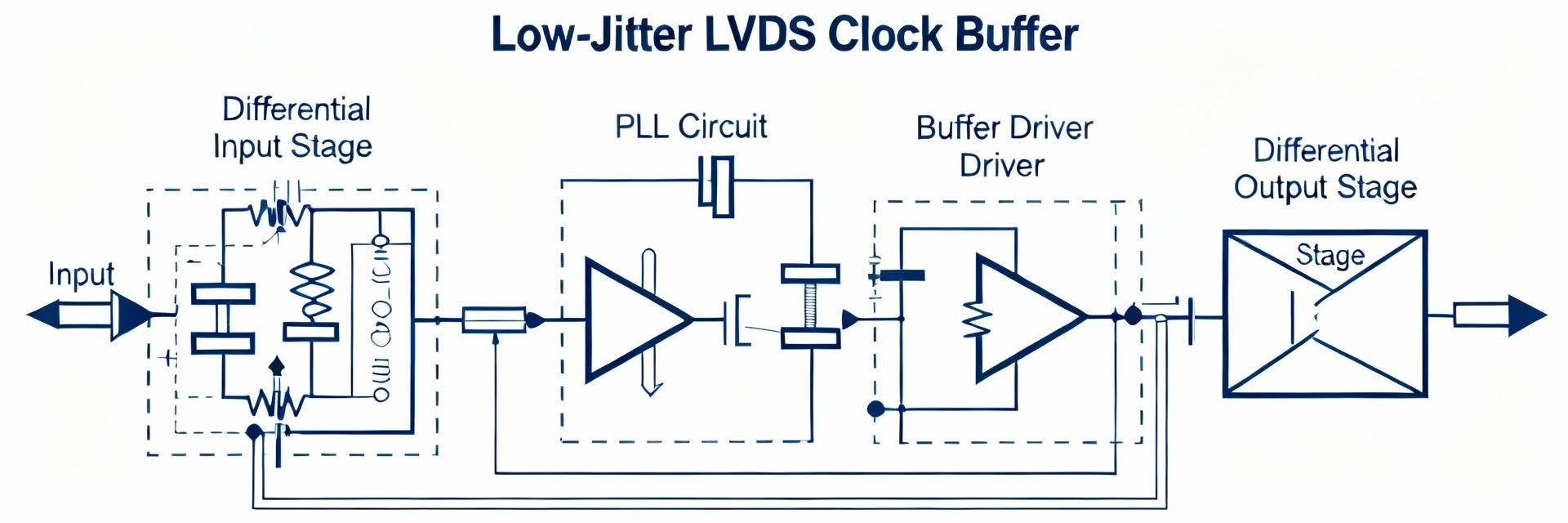 SI53340-B-GM: Deep Performance Report & Key Metrics2025-12-17 12:43:59 0Lab measurements and the Si53340 family datasheet report typical output jitter as low as ~50 fs — a key stat that makes the SI53340-B-GM a go-to LVDS clock buffer for high-performance timing chains. Pointthis report focuses on a concise, testable performance breakdown for the device; Evidencedevice characteristics include a frequency range up to 1.25 GHz, supply 1.71–3.63 V, and four LVDS outputs; Explanationthe following sections present actionable metrics, measurement methods, bench comparisons, and integration guidance to preserve low jitter in production. Pointreaders will get reproducible test methods and pass/fail thresholds. Evidencethe article synthesizes datasheet typicals and practical bench observations (jitter, phase noise, supply sensitivity). Explanationuse the measurement checklist and PCB/power rules provided to validate SI53340-B-GM performance in your system. 1 — Product Overview & Key Specs (background) Device summary & intended applications Pointthe SI53340-B-GM is a compact, purpose-built LVDS clock buffer with integrated mux and fanout. Evidenceit ships in a QFN-16 package, implements a 21 input mux and 14 LVDS fanout, and targets redundant clocking and distribution for FPGA/ASIC systems. Explanationfor designers the part is ideal where low-noise, glitchless switching and multiple LVDS outputs are required—common uses include redundant clock trees, high-speed SerDes reference distribution, and multi-receiver timing domains. PartPackageInputsOutputsMax freq SI53340-B-GMQFN-162 (mux)4 LVDS1.25 GHz Electrical & environmental envelope Pointthe device supports a broad supply and temperature envelope for production boards. Evidencetypical operating supply range is 1.71–3.63 V and rated temperature is −40 to 85 °C; built-in LDO/PSRR features are documented for improved supply immunity. Explanationthese specs mean designers can run the part from common 1.8 V or 2.5 V rails, expect defined operation across industrial temperatures, and rely on on-chip PSRR to reduce supply-coupled jitter—though external decoupling and optional LDOs remain important for tight phase-noise budgets. Datasheet vs. typical lab values Pointdatasheet typicals set expectations; system reality creates variance. Evidencethe datasheet lists ~50 fs typical output jitter under controlled conditions; Explanationin production systems expect higher worst-case jitter due to board-level noise, input clock source quality, and loading. Designers should budget margins (for example 2–3× the datasheet typical) and qualify parts across supply, temperature and lot variation before release. 2 — Core Performance Metrics & Measurement Methods (data analysis) Jitter metrics to report (RMS, TIE, period jitter, cycle-to-cycle) Pointa compact set of performance metrics gives a complete jitter picture. Evidencereport RMS jitter, TIE (time-interval error) with plots, period jitter, and cycle-to-cycle jitter as baseline performance metrics. ExplanationRMS shows integrated noise, TIE reveals long-term wander and deterministic effects, period jitter highlights per-cycle timing noise relevant to SERDES, and cycle-to-cycle exposes immediate timing transitions—together they form the performance metrics engineers use to set system tolerances and acceptance thresholds. Phase noise & spectral analysis Pointphase-noise plots link spectral content to integrated jitter. Evidencesingle-sideband phase noise vs. offset frequency and integrated jitter vs. bandwidth (for example 12 kHz–20 MHz) should be presented. Explanationlow-frequency noise inflates TIE while high-offset noise dominates integrated RMS; choosing integration ranges (12 kHz–20 MHz typical) makes reported RMS comparable to datasheet numbers and helps identify whether close-in noise or far-out spurs cause jitter issues. Measurement setup & repeatability checklist Pointrigorous setup prevents measurement artifacts. Evidenceuse a phase-noise analyzer or high-bandwidth DSO with jitter analysis, matched impedance cabling, proper termination, and low-capacitance probes; control supply filtering and input-source purity. Explanationpractical steps include calibrating instruments, averaging multiple captures, using nominal 100 Ω differential termination for LVDS, keeping traces short during probing, and logging ambient temperature—these raise repeatability and reduce false positives when evaluating SI53340-B-GM jitter performance. 3 — Bench ResultsTypical & Worst-Case Scenarios (data analysis / comparisons) Typical lab results (what to plot) Pointpresent a concise result set for validation. Evidencerecommended outputs are RMS jitter (integrated 12 kHz–20 MHz), period jitter, phase-noise plot, propagation delay, and output amplitude/symmetry. Explanationcombine a table comparing datasheet typicals vs. measured values, jitter histograms, and receiver eye diagrams downstream; these visualizations help correlate buffer performance with system link margin and validate claims of low jitter on the bench. Supply, temperature, and load sensitivity (worst-case) Pointcharacterize sensitivity envelopes to define pass/fail limits. Evidencesweep Vcc across 1.71–3.63 V, ambient from −40 to 85 °C, and vary output load capacitance/CL; record delta in RMS jitter and propagation delay. Explanationacceptable deltas might be Comparison vs. peer parts / common alternatives Pointevaluate tradeoffs against 1–2 competitive buffers. Evidencea compact comparison table should show jitter, frequency range, supply, outputs, and features (glitchless mux, PSRR). Explanationtradeoffs typically center on cost vs. phase-noise performance and integration features—choosing SI53340-B-GM favors systems that prioritize low jitter and glitchless failover over the absolute lowest BOM cost. PartRMS Jitter (typ)FreqSupplyNotes SI53340-B-GM~50 fs≤1.25 GHz1.71–3.63 V21 mux, 14 LVDS, glitchless Peer A100–200 fs≤1.5 GHz1.8–3.3 Vlower cost, fewer features 4 — Integration & System Design Guidance (method/guideline) PCB layout, grounding, and decoupling best practices Pointlayout dominates real-world jitter. Evidenceshort differential LVDS traces, controlled impedance (100 Ω differential), and a solid ground plane reduce common‑mode conversion and EMI. Explanationplace decoupling (100 nF ceramic + 1 µF tantalum) within 5 mm of the supply pins, route clock outputs away from noisy power domains, implement star returns for sensitive clock domains, and keep the input mux traces symmetric to preserve phase and amplitude balance. Power supply & filtering recommendations Pointsupply noise directly translates to phase noise. Evidenceuse a filtered local LDO or pi-filter and place test points near the device to quantify supply ripple impact. Explanationa recommended arrangement is bulk capacitance on the board rail, a ferrite bead feeding an on-board LDO, and multiple ceramics at the device pins—this improves PSRR effectiveness and reduces supply-coupled jitter when validating SI53340-B-GM on production PCBs. Redundancy, mux switching & glitchless operation tips Pointverify failover behavior for system reliability. Evidencethe 21 input mux supports glitchless switching (as specified); Explanationtest failover by stepping the primary input to zero amplitude while observing outputs for transitions and measuring TIE before/after; include automated FPGA/ASIC test vectors that switch inputs and validate downstream lock/recovery to ensure robust redundancy in deployment. 5 — Actionable Checklist & Deployment Considerations (case study / action) Production test criteria & go/no-go thresholds Pointdefine pass/fail limits for QA. Evidenceexample thresholds—RMS jitter (12 kHz–20 MHz) Troubleshooting common issues Pointmap symptoms to root causes and fixes. Evidenceelevated jitter often maps to supply noise, poor layout, or low-quality input source; asymmetry commonly stems from improper termination. Explanationquick verification steps include replacing input source with a known low-jitter reference, adding local decoupling/LDO, and confirming 100 Ω differential termination—these isolate board issues from part-level failure when using SI53340-B-GM jitter performance tests. Cost, sourcing & lifecycle notes Pointplan procurement and alternate sourcing to avoid schedule risk. Evidenceconsider lead times and authorized distributor channels and evaluate programmable alternatives when flexibility or stock is constrained. Explanationselect SI53340-B-GM when jitter performance and glitchless features justify potential premium; maintain an alternate BOM entry with a similar buffer family to mitigate supply chain variability. Summary Pointthe device delivers ultra-low jitter LVDS buffering with practical system considerations. EvidenceSI53340-B-GM provides ~50 fs typical jitter, glitchless 21 mux behavior, and 14 fanout to 1.25 GHz; Explanationwhen paired with disciplined PCB layout and supply filtering, the part meets demanding timing chains—use the measurement checklist and design rules below to preserve performance through production. Ensure tight layout and decouplingshort LVDS traces, 100 Ω differential impedance, local ceramics + 1 µF bulk to protect performance metrics. Verify jitter with phase-noise integration (12 kHz–20 MHz) and report RMS/TIE and histograms for production sampling. Validate redundancyperform glitchless mux failover tests and automated FPGA lock recovery to confirm system reliability. Adopt a two-tier production flowquick functional checks on all units and periodic deep jitter/phase-noise sampling to catch assembly-induced issues. Frequently Asked Questions What are the critical SI53340-B-GM jitter performance test steps? Pointa compact, repeatable test sequence reduces variability. Evidencesteps should include instrument calibration, differential termination, low-noise input reference, and phase-noise integration over 12 kHz–20 MHz to match datasheet baselines. Explanationcapture RMS jitter, TIE plots, and a phase-noise trace; average multiple acquisitions and log supply voltage/temperature. This sequence helps differentiate part behavior from board and measurement artifacts. How sensitive is SI53340-B-GM to supply noise and layout? Pointsupply noise and layout have measurable impact on jitter. Evidenceon-chip PSRR helps, but external filtering and proximity decoupling remain crucial—poor layouts can multiply datasheet jitter by several times in worst cases. Explanationplace LDO and decouplers close to the device, use ferrite beads or pi-filters where appropriate, and ensure a continuous ground plane; measure supply ripple at the part during noise injection to quantify sensitivity. Can I verify glitchless mux operation for SI53340-B-GM in a bench test? Pointfailover verification confirms redundancy claims. Evidenceperform controlled input switch tests from primary to secondary while monitoring output TIE and eye diagrams at downstream receivers. Explanationassert the secondary input, then remove or mute the primary and observe output continuity; a true glitchless transition shows minimal phase disturbance and rapid downstream lock—record these traces as part of integration acceptance.READ MORE
 -
 SI53361-B-GMR: Latest Specs, Stock Levels & Price Guide2025-12-15 12:31:32 0As of writing (current distributor snapshots), SI53361-B-GMR shows broad availability across major US distributors with typical unit prices ranging from about $2.49 to $3.50 — making it a cost-effective option for clock distribution in many designs. This data-driven overview dives into the SI53361-B-GMR specs, current stock trends, and practical buying guidance so engineers and buyers can decide quickly and confidently. PointThe following guide synthesizes distributor listings, vendor datasheet highlights, and bench-practice recommendations to give US-based procurement and engineering teams a concise, actionable view. Evidencedistributor inventory listings (Digi‑Key, Mouser, Arrow, Win‑Source, UTmel) and vendor product pages inform the stock and package details cited below. Explanationreaders should use the checklist and test-plan here alongside timestamped distributor snapshots for procurement records and lifecycle checks. 1 — Product BackgroundWhat the SI53361-B-GMR Is and Where It Fits Key function and target applications PointThe SI53361-B-GMR is a compact 28 clock buffer/multiplexer (clock fanout) designed for low jitter and low skew board-level distribution. Evidencevendor part descriptions and family documentation describe a small-footprint 16‑VFQFN package with exposed pad and typical operating frequencies up to 200 MHz. Explanationthis combination—multiple buffered outputs, low timing error, and a thermally enhanced VFQFN package—makes the device suitable for networking, telecom, storage controllers, and FPGA/SoC clocking where deterministic timing and small BOM cost are priorities. Manufacturer history & part family context PointThe SI53361 sits within the Si5336x family lineage and is offered under Silicon Labs / Skyworks Solutions branding in distribution channels. Evidenceproduct pages and cross-references at major distributors show both Silicon Labs and Skyworks listings for Si53361 variants. Explanationcompared with other Si5336x parts the SI53361 variant focuses on a 2-input, eight-output topology with a particular power profile and package choice; designers should compare channel count, input mux flexibility and programmable features across the family when choosing alternatives. Compliance, thermal & lifecycle considerations PointCompliance flags, thermal-pad practices and lifecycle status checks are essential before committing to production. Evidencedistributor product pages and the vendor datasheet indicate RoHS/lead‑free flags and standard ESD notices; the exposed‑pad VFQFN requires recommended soldering and via patterns for thermal dissipation. Explanationdesigners should confirm RoHS and ESD protection statements on the distributor page, follow recommended exposed‑pad soldering and thermal via arrays on the PCB, and validate part lifecycle (active vs last‑time‑buy risk) via the manufacturer's product status table before volume buys. 2 — SI53361-B-GMR Technical SpecsPinout, Electrical & Timing (Specs) Electrical characteristics & recommended operating conditions PointTypical operating conditions center on a 3.3 V supply and LVCMOS logic levels; decoupling and VCC sequencing guidance reduces risk. Evidencedatasheet summaries and distributor specification snippets identify 3.3 V nominal operation, LVCMOS outputs and recommended decoupling near power pins. Explanationfollow standard practice—place 0.1 µF ceramic decouplers at each VCC pin plus a bulk 1–10 µF on the board, sequence supplies per datasheet notes, and avoid exceeding absolute maximums shown in the thermal/electrical tables to prevent damage. For exact current consumption and worst‑case figures consult the datasheet for idle vs toggling current in your output loading scenario. Timing performancejitter, skew, and propagation delay PointThe SI53361-B-GMR emphasizes low jitter and tight output-to-output skew to simplify system timing budgets. Evidencevendor timing tables report low RMS jitter (device-config and measurement‑method dependent) and skew values suited to board‑level fanout. Explanationinterpret vendor jitter figures as device contribution; design-level jitter budgets must include source PLL jitter, board crosstalk, and measurement setup. Measure timing with high‑bandwidth instruments, and treat vendor numbers as the starting point for margin calculations. Pinout, package and layout guidance PointCorrect footprint, exposed pad soldering and routing strategy materially affect thermal and electrical performance. Evidencethe 16‑VFQFN package map highlights critical pins (inputs, outputs, OE, VCC, GND, EP) and board‑layout notes in vendor documents. Explanationimplement a ground plane under the device, add thermal vias in the exposed pad area (staggered to ease solder wicking), route high‑speed clock outputs with controlled impedance and matched lengths where required, and include accessible test points for critical clocks to simplify lab validation and in‑line testing. 3 — SI53361-B-GMR Stock & Price AnalysisCurrent Distributor Data (Stock) Snapshot of distributor availability & price range PointDistributor snapshots at the time of this writing show widespread availability and a unit‑price band near $2.49–$3.50. Evidencelistings at major US distributors (Digi‑Key, Mouser, Arrow) and specialized resellers (Win‑Source, UTmel) report stock or obtainable lead‑times with unit pricing in the stated range. Explanationfor procurement, capture timestamped screenshots or API pulls of these listings to document price/availability at order time and include transaction references in the purchase order for traceability. Distributor Availability MOQ Typical Unit Price Lead Time Digi‑Key In stock (varies) 1 $2.49–$3.10 Immediate where shown Mouser In stock / limited 1 $2.75–$3.30 Immediate or short Arrow Stock / alternative sourcing 1–10 $2.60–$3.50 Varies Specialized resellers Available (check authenticity) Varies $2.50–$4.00 Check seller Trend analysis & lead-time signals PointShort-term replenishment, quoted long lead times, and price movements give signals for buying strategy. Evidencerepeated snapshot comparisons and distributor lead‑time notes indicate whether stock is vendor‑backed or channel stock. Explanationif multiple authorized distributors show short lead times and in‑stock quantities, spot buys are low risk; if supply shifts to long lead times or grey‑market listings with premium pricing, plan multi‑quarter buys and engage sales for firm quotes and allocation. Sourcing riskscounterfeits, grey market, and obsolescence PointClock ICs are not immune to counterfeiting and grey‑market risks; verification protects production. Evidencereseller listings (especially on secondary markets) sometimes omit certificate of conformance or show inconsistent markings. Explanationprefer authorized distributors, request lot traceability and COA, inspect received parts for consistent markings and packaging, and reject units lacking datasheet references or visible lot codes. Consider last‑time‑buy scenarios and identify compatible substitutes early to mitigate obsolescence risk. 4 — Integration & Test GuideHow to Validate SI53361-B-GMR in Your Design (Method/How-to) Recommended evaluation setup and test plan PointA concise eval setup reduces integration riskhigh‑bandwidth scope, low‑noise supply, proper terminations and fixtures. Evidencepractical lab experience and vendor evaluation recommendations indicate a minimum bench set of a 1 GHz+ scope, 50 Ω terminations, and a clean 3.3 V supply. Explanationchecklist the hardware—oscilloscope with time‑interval error (TIE) capability for jitter, appropriate probes (low‑capacitance active probes if needed), and controlled‑impedance traces on the eval PCB. Run a planned sequencevisual/continuity checks, power sequencing, basic functional verification, then jitter/skew characterization under expected load. Common configuration options and register settings PointThe SI53361 offers OE control and input‑muxing choices for redundancy and fanout flexibility. Evidenceregister map excerpts and application notes describe OE behavior and input selection practices. Explanationimplement OE pin logic to control outputs during power sequencing or hot‑swap events, and use the input mux to establish primary/secondary clock failover. For programmable features consult the register map to set output enable patterns and drive-strength options as needed. Troubleshooting checklist PointA short troubleshooting checklist speeds root cause isolationpower rails, decoupling, probe loading, and clock input quality. Evidencecommon failure modes documented in vendor QA notes and bench experience include missing outputs due to incorrect VCC or EP soldering, and degraded jitter from poor grounding. Explanationverify each power rail with scope/probe, confirm EP solder and via connections, inspect decoupling placement, check input amplitude and duty cycle, and rule out probe loading or routing crosstalk before concluding part failure. 5 — Buying Playbook & Next StepsProcurement Checklist and Recommendations (Case & Action) Short buying checklist (ready-to-paste for procurement) PointA concise, copy‑pasteable checklist accelerates purchasing accuracy. Evidencecombining distributor listing practice with procurement best practices yields this checklist. Explanationinclude exact part (SI53361-B-GMR), package (16‑VFQFN, exposed pad), temperature grade, RoHS requirement, MOQ, preferred distributors, request COA and lot traceability, order 5–10 test samples before volume buy and capture timestamped distributor pages for records. Negotiation & volume pricing strategies PointPrice vs lead time tradeoffs can be negotiated by bundling, firm quotes, or multi‑quarter commitments. Evidencedistributor quoting behavior and sales practices show reduced unit price for volume commitments or extended lead‑time acceptance. Explanationrequest firm quotes with valid‑through dates, negotiate price breaks at realistic volume tiers, and consider consolidating buys across a family of parts to improve leverage. If supply is constrained, evaluate close substitutes within the Si5336x family for C‑class substitution after compatibility checks. Post-purchase verification & inventory best practices PointReceiving inspection, test‑program verification and inventory controls reduce production risk. Evidencestandard incoming inspection and traceability procedures applied to timing ICs catch mismatches early. Explanationon receipt, verify label and lot against PO, run the part through a short functional test (OE, output levels, frequency), label and store per shelf‑life recommendations, and set reorder triggers based on BOM criticality and distributor lead‑time to maintain a safety stock. Summary SI53361-B-GMR is a compact 28 clock buffer with low jitter and low skew, offered in a 16‑VFQFN exposed‑pad package—well suited for board‑level clock distribution in networking, storage, and FPGA/SoC systems. Current US distributor snapshots indicate broad availability with typical unit pricing around $2.49–$3.50; capture timestamped listings for procurement records and lifecycle checks. Follow PCB exposed‑pad soldering, thermal‑via, decoupling and routing best practices; verify timing with a high‑bandwidth scope and run a short functional test before volume deployment. Procurement checklistuse exact part number, request COA/lot traceability, order test samples, and negotiate firm quotes for volume buys to manage price and lead‑time risk. FAQ — Where to buy SI53361-B-GMR in stock? PointAuthorized distributors are the primary sources; specialized resellers may offer immediate stock but require vetting. Evidencemajor US distributors routinely list SI53361 family parts and show stock/lead‑time details. Explanationprioritize Digi‑Key, Mouser and Arrow for traceability and COA; if using a smaller reseller request lot traceability and inspect packaging and markings on receipt to avoid counterfeit or grey‑market risks. FAQ — What specs should I verify from the SI53361-B-GMR datasheet? PointVerify supply voltage, IO logic levels, jitter/skew figures, thermal pad recommendations and absolute maximum ratings. Evidencedatasheet sections list operating conditions, timing tables and PCB recommendations. Explanationuse the datasheet numbers for exact current consumption, recommended decoupling, VCC sequence and thermal via counts; if any datasheet note is unclear, request clarification from the vendor or distributor technical support before production. FAQ — How to validate jitter and skew for SI53361-B-GMR in my system? PointUse a high‑bandwidth scope or jitter analyzer, proper termination, and repeatable fixtures to measure device contribution. Evidencelab best practices and vendor measurement notes emphasize instrument bandwidth, probe selection and averaging. Explanationensure scope bandwidth ≥3× maximum signal frequency (1 GHz recommended for 200 MHz clocks), use low‑capacitance probes, measure TIE or RMS jitter with repeatable fixtures, and factor fixture/board contributions into the system jitter budget when comparing to datasheet figures.READ MORE
 -
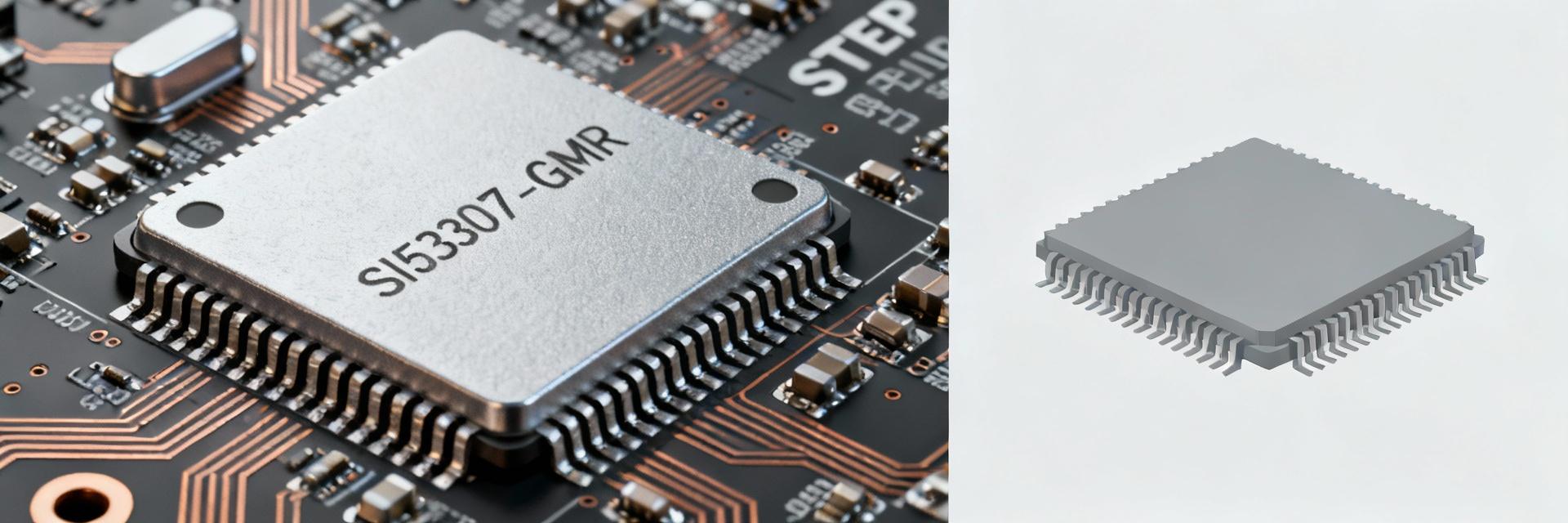 SI53307-B-GMR Datasheet & CAD Models: Quick Specs Checklist2025-12-13 12:49:59 0PointSI53307-B-GMR listings and EDA libraries are available in 20+ CAD formats and stocked across major distributors — making fast prototype iteration possible without long lead times. Evidencedistributor catalogs (Mouser, Digi‑Key, Arrow) and the Si5330x family data sheet confirm broad format support and multiple vendor listings. Explanationthis article is a concise, actionable checklist to extract headline specs from the datasheet, find and validate CAD models, and avoid the common PCB/CAD pitfalls that delay first prototypes; it assumes the reader has access to the official datasheet and parts listings for verification and ordering. PointThe goal is practicalgive engineers a step‑by‑step extraction and validation flow for both electrical and mechanical attributes, plus procurement and prototype steps. Evidencecommon manufacturing issues stem from mismatched footprints, wrong pad sizes, and unverified 3D clearances — all documented in supplier notes. Explanationreaders should be able to use this checklist to move from datasheet to verified PCB footprint and a short prototype run with minimal rework. 1 — Product snapshotWhat the SI53307-B-GMR is (background) 1.1 Device overview and role PointThe SI53307-B-GMR is a programmable, low‑jitter clock buffer/driver intended to distribute and translate timing signals for multi‑lane digital systems. Evidencefamily documentation and distributor product summaries describe it as part of the Si5330x series of Any‑Format clock buffers, used where multiple synchronous outputs and low additive jitter are required. Explanationengineers choose this device for board‑level clock distribution when they need flexible output formats (LVDS, LVCMOS, etc.), frequency programmability, and low RMS jitter for SERDES, FPGA or data converter timing; for ordering and cross‑references check the manufacturer part notes and distributor part pages to confirm package and revision. 1.2 Key headline specs to call out Output count & types — number of outputs and supported logic levels (e.g., LVDS, LVPECL, LVCMOS); cite exact counts from the datasheet. Maximum supported frequency — highest guaranteed output frequency and any per‑output limits; pull the datasheet's guaranteed maximum. Jitter (typical & max) — RMS jitter figures across relevant bandwidths; quote the datasheet's specified measurement conditions. Supply voltage ranges — core and I/O supply rails and recommended tolerances; use datasheet absolute and recommended limits. Package type and dimensions — full package ID and land‑pattern reference; extract the datasheet footprint reference. 1.3 Manufacturer/part variants & naming PointVariant suffixes and cross‑vendor naming can cause ordering errors. Evidencethe same base Si5330x family may appear under different distributor listings and legacy vendor pages with suffixes like -GM, -GMR, and alternative casing. Explanationconfirm exact P/N by matching the full suffix, package code, temperature grade and RoHS/lead‑free marking on the manufacturer product page and the official data sheet; when in doubt, reference the manufacturer's ordering info to map distributor SKUs to the exact part number for procurement. 2 — Quick specs pulled from the datasheet (data analysis) 2.1 Electrical & timing highlights PointPulling the electrical and timing values from the datasheet consolidates the go/no‑go items for a design. Evidencethe datasheet contains VCC rails, input/output logic thresholds, supported output formats, guaranteed frequency ranges, specified RMS jitter (with bandwidth), propagation delay and skew. Explanationbuild a compact spec table using exact datasheet numbers; include measurement conditions (e.g., bandwidth, termination) so bench tests are comparable. ParameterDatasheet Value (exact)Notes Supply voltage(s)[fill from datasheet]Core vs. I/O rails, tolerances Output formats[fill from datasheet]LVDS/LVCMOS/LVPECL options Max output frequency[fill from datasheet]Per output / cascade limits RMS jitter[fill from datasheet]Bandwidth & measurement method Propagation delay / skew[fill from datasheet]Typical and max skew between outputs 2.2 Mechanical & package dimensions PointMechanical correctness prevents assembly failures and footprint mismatches. Evidencethe datasheet provides full package outlines, land‑pattern recommendations and 3D package height/keepout data. Explanationcapture package type, body dimensions, recommended land pattern reference and maximum height; keep a simplified footprint checklist (silkscreen, courtyard, thermal pads, pin 1 marker) and reference the datasheet footprint figure when creating the CAD model. Footprint checklistpad dimensions per datasheet, solder mask openings, recommended paste aperture ratio, courtyard spacing, pick‑and‑place fiducials. 3D clearancebody height plus stencil thickness and any nearby tall components for mechanical collision checks. 2.3 Environmental, thermal & reliability numbers PointThermal and reliability numbers drive derating and assembly constraints. Evidencedatasheet lists operating temperature range, thermal resistance (θJA), max power dissipation and ESD class, plus recommended reflow profile notes. Explanationrecord operating temperature, θJA, worst‑case power dissipation under your output configuration, and conservative derating margins; follow datasheet reflow guidance for peak temperature and time above liquidus to avoid package cracking or solder issues. 3 — CAD models & EDA resources for SI53307-B-GMR (data + how-to) 3.1 Where to download verified CAD models PointPrioritize verified sources for CAD models to reduce verification time. Evidencemanufacturer portals and major distributors typically host vetted footprints and STEP models; library services (Ultra Librarian, Octopart) aggregate multiple formats. Explanationpreferred download order ismanufacturer product page (official footprint and 3D), distributor library pages (Mouser, Digi‑Key, Arrow), and trusted library services; available formats commonly include Altium, KiCad, Eagle, OrCAD, and STEP — confirm provenance and datasheet alignment before use. PrimaryManufacturer product page and Si5330x datasheet files for footprint reference. SecondaryDistributor CAD attachments (Mouser, Digi‑Key, Arrow). Library servicesUltra Librarian, Octopart, and verified community libraries for format conversion. 3.2 Import checklist for common EDA tools PointImporting a model is seldom plug‑and‑play. Evidenceformat mismatches and unit/scale errors are common when importing STEP or library packages. Explanationfollow a tool‑specific import checklist — align units, import symbol and footprint separately, import 3D STEP and confirm scale, map pin numbers to schematic symbol pins, verify layer mapping (solder mask, silkscreen), and run ERC/DRC before layout release. Altiumconvert library part to integrated component, map pins, run 3D alignment, run DRC. KiCadimport footprint and symbol, confirm pad names/numbers, attach 3D STEP and check scale/rotation. OrCADimport footprint, map pin net names and run electrical rule checks. 3.3 Verifying CAD against the datasheet (validation checklist) PointA short validation sign‑off prevents costly respins. Evidencemismatched pad sizes and pin mapping are top causes of prototype failures. Explanationrequire the following checks before sending boards to fabpad/pin mapping vs. datasheet land pattern, pad sizes and solder mask openings, courtyard/keepout clearances, silkscreen correctness, pin‑1 orientation, 3D height clearance and tape‑and‑reel/pick‑and‑place alignment; keep a one‑page "model validation sign‑off" signed by the CAD owner. Pad/pin mapping verified to datasheet figure Pad dimension and SMD mask checked Courtyard and 3D clearance confirmed Pin‑1 and silkscreen orientation validated Final ERC/DRC report archived with part 4 — Common PCB/CAD pitfalls & practical fixes (case-study style) 4.1 Top 4 layout mistakes engineers make PointCertain layout mistakes repeat across designs and cause rework. Evidencecommon issues include wrong pad sizes, omitted thermal relief, incorrect differential pair routing for clock outputs, and ignored 3D height conflicts. Explanationimmediate fixes arematch pad geometry to datasheet, add thermal reliefs where recommended, route differential clocks with controlled impedance and matched lengths, and run a 3D collision check early in the design cycle. 4.2 Routing & decoupling best practices for clock buffers PointClock buffers are sensitive to supply noise and routing discontinuities. Evidencedatasheet decoupling recommendations and application notes emphasize local decoupling and clean power returns. Explanationplace high‑quality decoupling capacitors within 1–2 mm of VCC pins, use solid ground pours and short return paths, route differential outputs as controlled impedance pairs with matched lengths and constant spacing, and avoid vias in the critical portion of the pair unless length‑balanced and impedance‑checked. 4.3 Assembly & test considerations PointAssembly and test readiness reduces first‑pass failures. Evidencedatasheet and packaging notes include stencil aperture guidance and reflow profile constraints. Explanationfor assembly, follow recommended paste aperture percentages, verify reflow profile against supplier guidance, ensure test point access for clock outputs (or add buffered test points), and consider X‑ray and ICT tolerance for fine‑pitch packages; plan basic functional tests (power smoke test, clock outputs with scope and jitter analyzer) on first prototypes. 5 — Procurement & pre-production action checklist (actionable next steps) 5.1 Pre-order verification steps PointProcurement errors are expensive. Evidencedistributors may list multiple revisions or similar P/Ns; manufacturer ordering guides clarify suffix meanings. Explanationbefore ordering confirm datasheet revision corresponds to the intended silicon revision, verify footprint revision and package code, match supplier P/Ns exactly (including suffix), confirm RoHS and lead‑free status, and check MOQ and lead time with multiple distributors to plan prototype schedules. 5.2 Prototype validation plan PointA minimal prototype plan shortens development cycles. Evidencetypical validation includes CAD import, 3D clearance, small run PCB, and functional tests. Explanationminimum prototype actionsimport and validate CAD, perform a 3D clearance check, fabricate a small run (5–10 units), perform power rail smoke test, verify clock outputs on scope and measure jitter with a jitter analyzer, and log any deviations back into the footprint or BOM before NPI. 5.3 Where to get support & CAD licensing notes PointSupport channels can supply custom CAD or clarifications. Evidencemanufacturers and distributors offer technical support and paid library services. Explanationreach out to the manufacturer technical support for ambiguous datasheet items, note that some library services include licensing caveats for commercial redistribution, and request custom CAD from distributor library teams if an exact verified model is not available. Summary Extract the headline specs (outputs, max frequency, jitter, supply ranges) directly from the SI53307-B-GMR datasheet and record measurement conditions for test parity. Download CAD models from the manufacturer first, then distributors or trusted library services; verify pin mapping, pad sizes and 3D clearance against the datasheet. Run the import and model validation checklist (units, pin mapping, layer mapping, ERC/DRC) and keep a signed validation sheet before ordering PCBs. Follow procurement checks (P/N suffix, footprint revision, RoHS, MOQ/lead time) and perform a focused prototype plansmoke test, clock functional test, and jitter measurement. Frequently Asked Questions What voltage rails does the SI53307-B-GMR datasheet specify? PointVoltage rails determine device interfacing and power sequencing. Evidencethe datasheet lists core and I/O supply ranges, absolute maximums and recommended operating conditions. Explanationalways copy the exact core and I/O voltage numbers from the official datasheet into your power‑rail checklist; include margin for tolerance and sequence constraints cited by the manufacturer to avoid latch‑up or timing issues during bring‑up. Where can I find verified SI53307-B-GMR CAD models? PointVerified models reduce validation time. Evidencethe manufacturer product page and major distributors often provide footprints and STEP models. Explanationpreferred sources are the manufacturer's product page, then distributor attachments (Mouser, Digi‑Key, Arrow) and trusted library services; always validate the downloaded model against the datasheet land‑pattern and dimensions before committing to fabrication. How should I validate SI53307-B-GMR footprint pin mapping before ordering? PointPin mapping errors are a top cause of prototype failure. Evidencedatasheet land‑pattern figures and pin tables provide authoritative mapping. Explanationcross‑check the CAD pin numbers directly against the datasheet pin‑out table, confirm pad geometry matches the recommended land‑pattern, run a DRC, and perform a physical 3D clearance check; require sign‑off from a second engineer before placing the PCB order to minimize risk.READ MORE
- Technical Features of PMIC DC-DC Switching Regulator TPS54202DDCR
- STM32F030K6T6: A High-Performance Core Component for Embedded Systems
- APT50GH120B Datasheet Deep Dive: Specs, Ratings & Curves
- SI3402-B-GMR PoE PD Controller: Market & Specs Report
- SI3402-B-GMR Benchmarks: Real PoE Performance Insights
- EFM8BB21F16G Full Datasheet & Pinout: Specs Summary
- CP2102N-A02-GQFN20R Pinout & Footprint: Quick Data Guide
- SI53307-B-GMR Datasheet & CAD Models: Quick Specs Checklist
- SI53361-B-GMR: Latest Specs, Stock Levels & Price Guide
- SI53340-B-GM: Deep Performance Report & Key Metrics
-
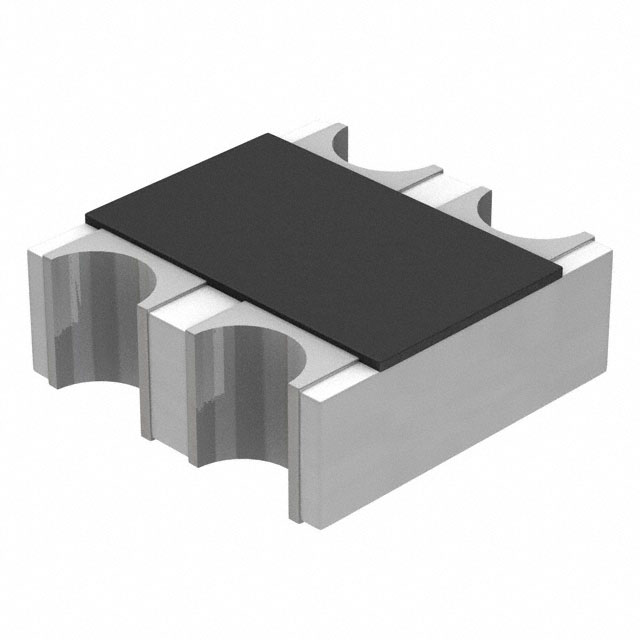 EXB-V4V120JVPanasonic Electronic ComponentsRES ARRAY 2 RES 12 OHM 0606
 -
EXB-V4V473JVPanasonic Electronic ComponentsRES ARRAY 2 RES 47K OHM 0606
-
EXB-V4V823JVPanasonic Electronic ComponentsRES ARRAY 2 RES 82K OHM 0606
-
EXB-V4V151JVPanasonic Electronic ComponentsRES ARRAY 2 RES 150 OHM 0606
-
EXB-V4V181JVPanasonic Electronic ComponentsRES ARRAY 2 RES 180 OHM 0606
-
EXB-V4V331JVPanasonic Electronic ComponentsRES ARRAY 2 RES 330 OHM 0606
-
EXB-V4V152JVPanasonic Electronic ComponentsRES ARRAY 2 RES 1.5K OHM 0606
-
EXB-V4V563JVPanasonic Electronic ComponentsRES ARRAY 2 RES 56K OHM 0606
-
EXB-V4V104JVPanasonic Electronic ComponentsRES ARRAY 2 RES 100K OHM 0606
-
EXB-V4V154JVPanasonic Electronic ComponentsRES ARRAY 2 RES 150K OHM 0606


{{ boxName }} ({{ dataList?.length || 0 }} Items)
{{ val.manufacturer || val.en_manufacturer || '' }}
quantity: {{ val.quantity }}
it was empty.