ULV 150 resistor: Thermal Performance & Lab Data Report
Independent lab tests show the ULV 150 resistor reaches steady-state surface temperatures 20–40 °C higher in free air than when mounted to a dedicated heatsink at the same applied power. This delta drives enclosure, ventilation, and safety decisions; you must quantify it when translating component ratings to system-level thermal budgets.
1 — Background: ULV 150 resistor Construction & Use Cases
The ULV 150 resistor uses a metal-clad housing with a mounting flange intended for conduction cooling. Key specs that determine thermal behavior are rated continuous power, housing thermal mass, and mounting interface flatness. Typical applications include braking, load-bank, and discharge circuits where duty cycles vary significantly.
2 — Lab Data: Steady-State Thermal Performance
| Applied Power (W) | Free Air Temp (°C) | Heatsink Mount (°C) | Delta ΔT (°C) |
|---|---|---|---|
| 50 | 72.4 | 51.8 | 20.6 |
| 100 | 114.8 | 84.5 | 30.3 |
| 150 | 161.2 | 123.9 | 37.3 |
3 — Transient Behavior & Thermal Impedance
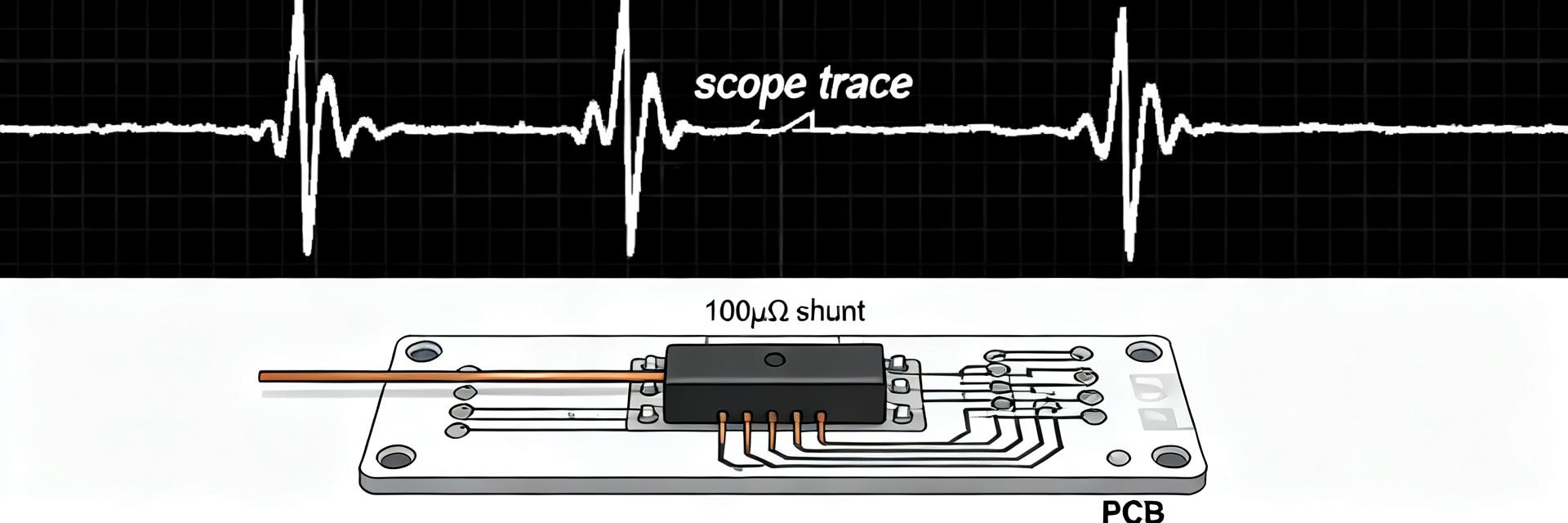
Pulse tests (10 ms–1 s) reveal rapid thermal onset. Sampling at 10 kS/s allowed extraction of Zth(t) curves. Zth(t) plots fit a multi-exponential model yielding Rth,Cth pairs: a fast time constant (~0.1–1 s) for surface film and a slower one (10–100 s) for housing to ambient. Use Zth superposition to predict temperature for arbitrary pulse trains.
4 — Measurement & Modeling Guide
- Checklist: Condition samples to 23±2 °C, control torque, and use thin thermal compound.
- Modeling: Start with a compact Rth/Cth network. Validate with metrics like RMSE of Zth and peak temperature error (target <5 °C).
- Data Formats: Share deliverables as CSV (time, Zth) and JSON parameter packs.
5 — Comparative Case Study
Side-by-side results show that worst-case scenarios (>40 °C ambient) amplify the delta between free-air and conduction cooling. For intermittent duty, apply transient Zth budgeting; for continuous duty, derate per steady-state curves and include margin for assembly variability.
6 — Designer Checklist & Procurement
- Torque flange per manufacturer specification.
- Use specified thermal compound and controlled thickness.
- Request supplier-provided Zth(t) CSV and traceable lab data.
- Define acceptance criteria for peak temperature error tolerance.
Summary & Key Takeaways
- The ULV 150 resistor shows 20–40 °C higher case temperature in free air; always verify with lab-derived derating curves.
- Use measured Zth(t) models to budget transient pulses; validate against lab data.
- Specify mounting torque and thermal compound in procurement language to ensure reproducible performance.
FAQ
How should I interpret ULV 150 resistor steady-state temperature ratings?
Interpret ratings by matching the resistor’s rated condition to your mounting: free-air ratings assume convection only; heatsink ratings assume defined conduction pathways. Use published derating curves to map ambient and case-temperature targets to allowable power.
What lab data should I require when specifying an ULV 150 resistor?
Require steady-state temperature vs power tables, Zth(t) data as CSV, test setup details (ambient, torque, compound), sample size, and instrumentation traceability. This ensures the thermal performance is reproducible in your application.
Can I use transient Zth curves to combine pulses for duty-cycle calculations?
Yes. Use Zth superposition: convert each pulse to its thermal contribution and sum to predict peak temperature. Fit a compact Rth/Cth network from measured Zth(t) for efficient system simulation.
Why is mounting torque critical for ULV 150 thermal performance?
Proper torque ensures minimal interfacial thermal resistance by maximizing contact between the resistor flange and the heatsink. Insufficient torque leads to microscopic air gaps, significantly increasing the steady-state case temperature regardless of the heatsink's rating.