BVM-F-R0005-5.0-D Specs: Decoding Key Metrics for Precision Current Sensing
You face a critical bottleneck in high-reliability power electronics design: accurately measuring current without introducing significant voltage drops or thermal drift that compromise system stability. The BVM-F-R0005-5.0-D offers a robust solution, bridging the gap between automotive-grade durability and precision sensing requirements.
This guide decodes its key metrics, helping you determine if this specialized shunt resistor is the right fit for your next design cycle. We will explore how understanding these specifications ensures optimal performance in demanding applications.
Understanding the Part Number Architecture

The alphanumeric code of the BVM-F series encodes vital physical and electrical characteristics. Correct interpretation ensures component selection aligns with circuit simulation parameters and mechanical constraints.
Decoding Resistance and Tolerance Values
The "R0005" designation signifies a nominal resistance value of 0.5 milliohms (mΩ). In datasheet naming conventions, decimal representations are standard for low-value resistors to avoid ambiguity. This ultra-low resistance minimizes voltage drop ($V = I \times R$), preserving efficiency in high-current paths.
The "5.0" indicates a tolerance of ±5%. While tight tolerances are preferred for calibration, ±5% is often acceptable in feedback loops where relative accuracy matters more than absolute precision. You must consider how this tolerance impacts measurement error budgets in both low-side and high-side configurations.
Material Composition and Thermal Stability
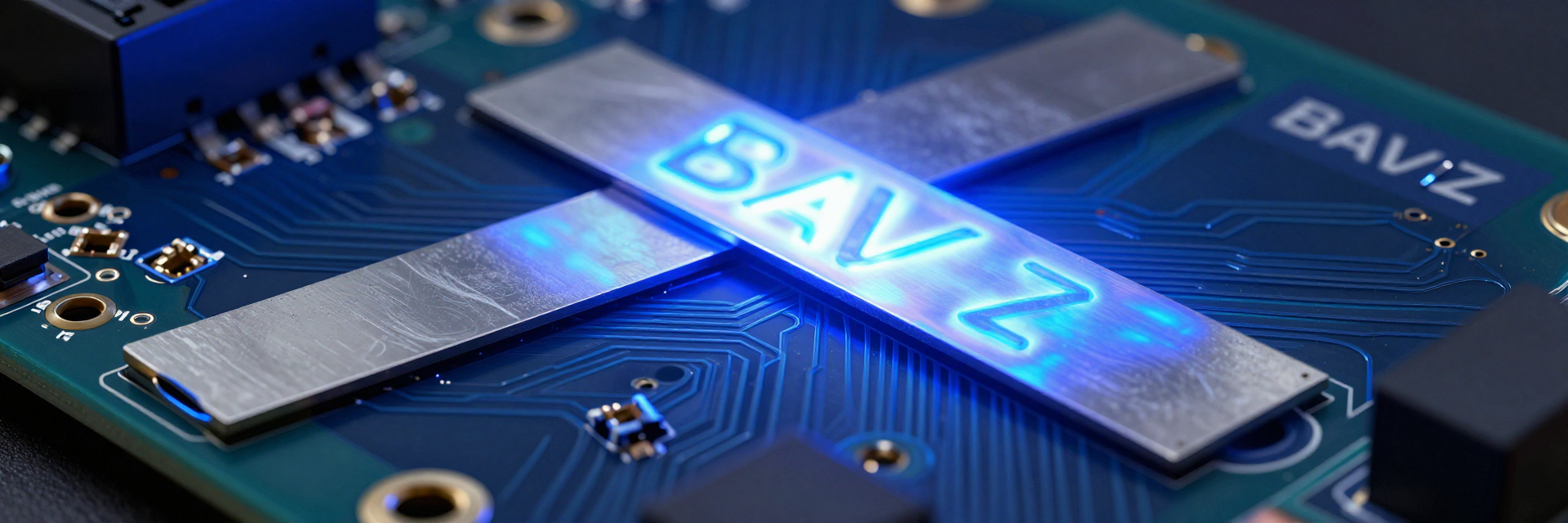
The core material plays a decisive role in long-term reliability. These components typically utilize Manganin® alloy or similar manganese-copper compositions. This choice achieves an exceptionally low Temperature Coefficient of Resistance (TCR), often below 50 ppm/°C.
A low TCR ensures that resistance values remain stable despite temperature fluctuations during operation. Material composition directly influences drift under continuous load conditions, preventing the gradual deviation that can destabilize control loops over time.
Critical Electrical Performance Metrics
Engineers require specific data points for accurate circuit simulation and validation. Focusing on power handling and frequency response ensures the component survives operational stresses while maintaining signal integrity.
Power Rating and Derating Curves
The BVM-F-R0005-5.0-D features a 5W nominal power rating at ambient temperatures up to 70°C. However, exceeding this limit causes irreversible resistance shift or failure. You must apply derating strategies based on the actual ambient temperature of your enclosure.
| Ambient Temp (°C) | Max Power (W) | Derating Factor |
|---|---|---|
| ≤ 70 | 5.0 | 100% |
| 85 | 3.5 | ~70% |
| 100 | 2.0 | ~40% |
Maintaining operation within safe thermal limits is crucial. Ignoring derating curves leads to premature aging, particularly in enclosed systems with poor airflow.
Inductance and High-Frequency Response
Parasitic inductance is inherent in chassis-mount resistors due to their internal structure and lead geometry. This inductance affects switching speed in modern MOSFET and IGBT applications, potentially causing voltage spikes or ringing.
Compared to wirewound alternatives, the BVM-F series offers lower parasitic inductance, making it suitable for high-frequency environments. Understanding the self-resonant frequency helps you predict behavior during fast transient events, ensuring clean current waveforms for control algorithms.
Key Takeaways
- Resistance Value: The 0.5 mΩ rating minimizes power loss but requires careful Kelvin connection implementation.
- Thermal Management: Strict adherence to derating curves prevents resistance drift and ensures long-term stability.
- Frequency Response: Low parasitic inductance supports accurate measurements in high-speed switching circuits.
- Material Quality: Manganin-based alloys provide superior TCR performance for automotive-grade reliability.
Frequently Asked Questions
Why is Kelvin connection important for the BVM-F-R0005-5.0-D?
Kelvin connections separate current-carrying paths from voltage-sensing paths. For a 0.5 mΩ resistor, even small contact resistances (e.g., 1 mΩ) can introduce significant measurement errors. Proper termination ensures you measure only the resistor's voltage drop, not the interconnect resistance.
Can I use this resistor in electric vehicle battery management systems?
Yes, provided it meets specific environmental certifications like AEC-Q200. Its low resistance and high power rating make it ideal for monitoring charge/discharge currents. However, verify that the mounting style fits your thermal dissipation strategy within the battery pack assembly.
How does ambient temperature affect the accuracy of precision current sensing?
Temperature changes alter resistance values via the TCR. Although the BVM-F series uses stable alloys, extreme variations still cause drift. Accurate sensing requires either thermal compensation in software or selecting a resistor with an even lower TCR class if operating in wide temperature ranges.
What is the significance of the 'R0005' designation in the part number?
The 'R0005' signifies a nominal resistance value of 0.5 milliohms (mΩ). This ultra-low resistance minimizes voltage drop in high-current paths, preserving system efficiency while allowing precise current measurement.