MPMA10015001AT5 Datasheet Deep Dive: Specs & TCR Footprint
Modern thin-film resistor networks commonly specify ratio drift in the single-digit ppm/°C range and absolute tolerances down to 0.1%—metrics that determine whether a divider or sense resistor meets high-precision system requirements.
This article delivers a practical, data-driven deep dive into the MPMA10015001AT5 datasheet, focusing on the specs that matter, TCR behavior in real use, and recommended PCB footprint and layout practices to ensure reliable performance in precision ADC front ends and sensor systems.
Quick background & what to look for in the MPMA10015001AT5 datasheet
Part family context & core role in designs
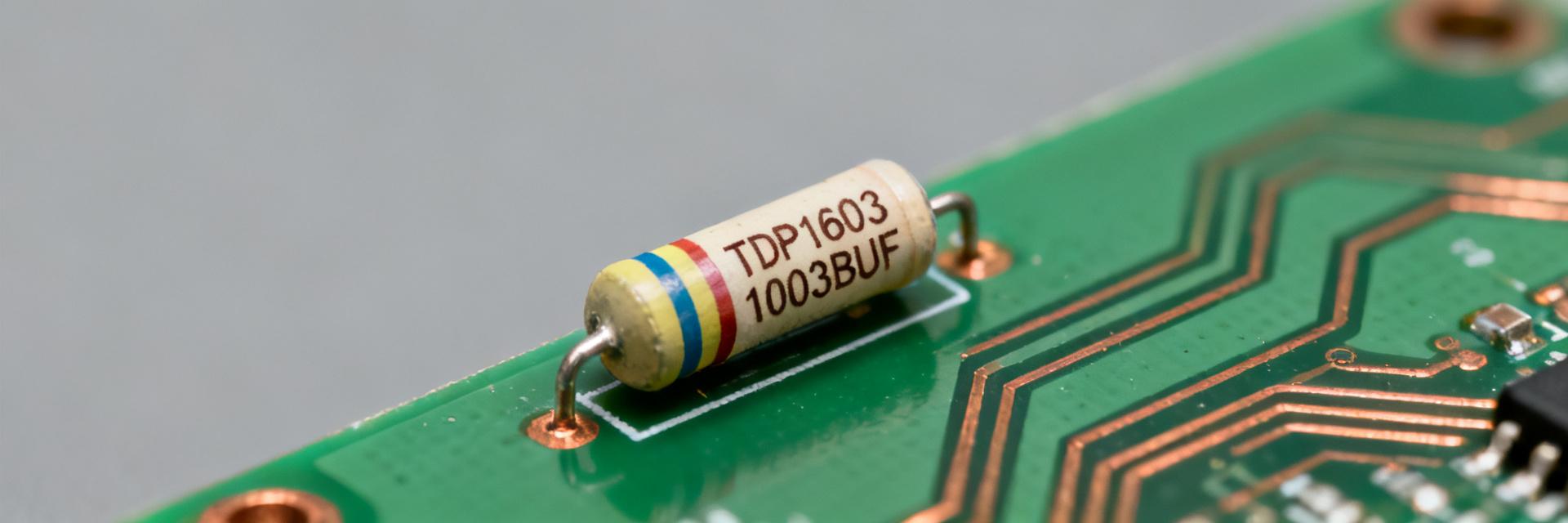
This part is a precision thin-film resistor network designed for matched divider and sensor bridge applications, commonly used at ADC inputs, voltage-reference dividers, and differential sense resistor networks. Designers should prioritize datasheet sections on resistance options, absolute tolerance, ratio matching, ratio drift, TCR, power per element, and mechanical/footprint drawings.
Recommended quick checks before layout or ordering
Before laying out or ordering, run a short checklist: confirm DC resistance and absolute tolerance, verify resistor-ratio tolerance and ratio-drift spec, check per-element power rating and derating instructions. Red flags include ratio mismatch greater than 0.1% and a TCR that exceeds system temperature drift allowances.
Key electrical specs — decode the numbers that matter
The datasheet lists available DC resistance codes and absolute tolerances; absolute tolerance (e.g., 0.1%) denotes initial deviation from nominal, while ratio tolerance quantifies matching between paired elements. For divider error translation: a 0.1% absolute tolerance on each resistor in a 2-resistor divider at 3.3 V can create up to ~3.3 mV of offset from tolerance alone.
| Parameter | Typical Datasheet Value | Why it matters |
|---|---|---|
| Absolute tolerance | 0.1% (example) | Sets initial DC offset and calibration load |
| Ratio tolerance | 0.02% (example) | Controls divider balance and common-mode rejection |
| TCR (per element) | ±25 ppm/°C (example) | Determines temperature-dependent resistance change |
| Ratio drift | ±2 ppm/°C (example) | Critical for divider stability over temperature |
| Power per element | 0.063 W (example) | Limits dissipation and self-heating errors |
TCR & ratio-drift deep-dive — what the numbers mean in practice
Absolute TCR (ppm/°C) describes how a single resistor's value changes with temperature; ratio drift (ppm/°C) describes how the balance between matched elements shifts. In many applications, ratio drift is the more critical metric.
* Visualizing the significant advantage of matched ratio drift over absolute drift in differential circuits.
"For matched networks, ratio drift is often more important because common-mode TCR cancels in a divider. Example: with absolute TCR = 25 ppm/°C and ratio drift = 2 ppm/°C, over a 125°C span, the divider imbalance shifts only ~0.025%."
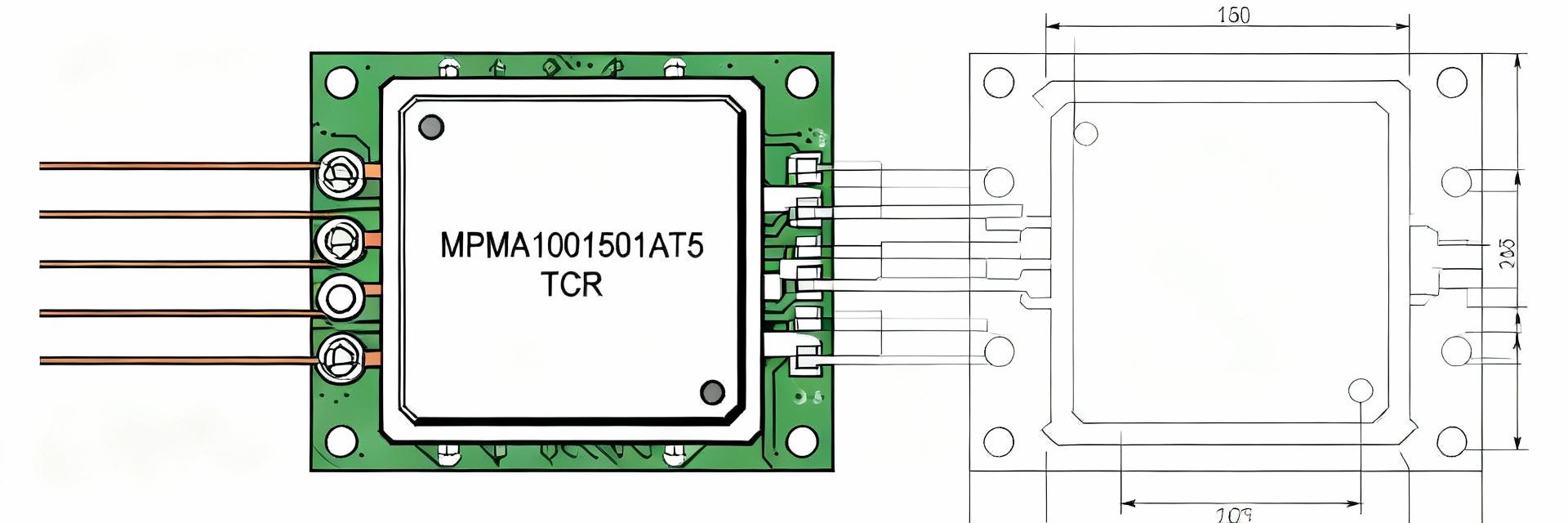
Footprint, package dimensions & PCB layout best practices
Thermal and layout tips
- • Keep matched resistors physically close on the same thermal island to promote common-mode temperature stability.
- • Avoid routing high-current traces or placing hot ICs adjacent to the resistor network.
- • Use thermal vias sparingly; maintain symmetry around the network.
The "Don'ts" Checklist
- × No large asymmetrical copper pours under the part.
- × Avoid thermal asymmetry under only one resistor element.
- × Don't ignore solder mask clearance guidelines.
Actionable design checklist & procurement notes
Design Sign-off
- ✔ Verify DC resistance vs. system error budget.
- ✔ Confirm ratio tolerance meets divider needs.
- ✔ Plan PCB thermal symmetry.
Procurement
Use long-tail search queries such as "MPMA10015001AT5 datasheet TCR performance" to locate independent test data. Keep a BOM alternative list with similar matched thin-film networks to mitigate long lead times.